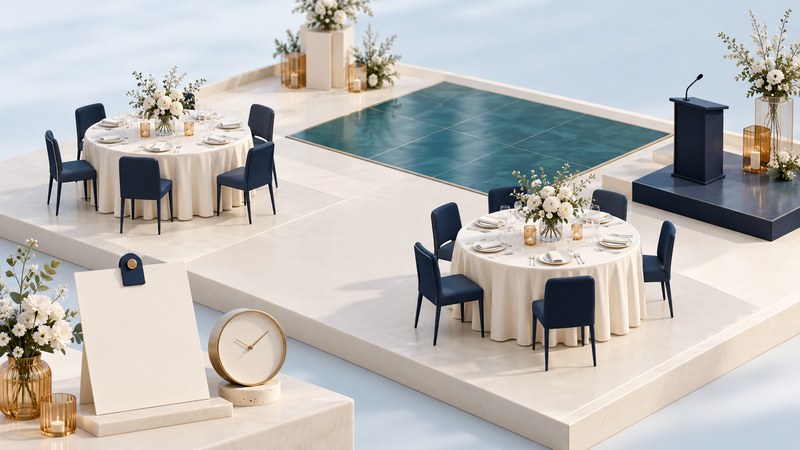
A good wedding reception plan gives guests time to settle, eat, talk and celebrate while giving the people running the day clear cues. Start with the venue's real access and finish times, fit the meal around the caterer's service plan, and assign someone to manage transitions.
Build around the fixed commitments
Collect the venue agreement, catering plan, music coverage, photography hours and transport details in one place. Confirm when suppliers can enter, when guests can arrive, when food service is ready, when music must finish, and when everyone and everything must be out. A party ending at 10 p.m. and a building that must be empty at 10 p.m. require different schedules.
Choose the moments you care about before adding traditions. You might want a welcome, a shared meal, two speeches and open dancing; another couple may prefer lunch and conversation. Include cultural or family activities because they matter to you, then ask the people involved how much time and preparation each requires.
Ask the caterer how the meal will move through the room: plated courses, buffet release, stations or family-style service. Confirm the table count, meal choices, dietary requests and final headcount deadline. Route allergy questions to the caterer for direct confirmation of what can be provided and how the correct meal reaches the correct person.
Ask your photographer which moments fall inside the agreed coverage and allow travel or equipment time between locations. Coordinate speeches with service staff so a key toast does not compete with clearing plates. The photography brief and speech-planning guide can supply those details.
Turn the plan into a run sheet
A run sheet pairs a time with an action, an owner and a readiness cue. The owner is the person who checks that the next step can begin. Use names and contact numbers in the private version; a guest schedule can simply show the broad milestones.
| Time | Activity | Owner and cue |
|---|---|---|
| 5:00–5:45 | Arrival, drinks and conversation | Coordinator confirms seating information and refreshments are ready. |
| 5:45–6:00 | Guests take seats; brief welcome | Host begins after coordinator confirms the room and catering team are ready. |
| 6:00–7:00 | Dinner service | Catering lead directs service and tells coordinator when to cue speeches. |
| 7:00–7:15 | Two speeches and transitions | Host checks speakers, microphone and photographer before starting. |
| 7:15–7:30 | Dessert introduction and reset | Catering and music leads confirm the planned transition. |
| 7:30–9:45 | Music, dancing and conversation | Music lead follows agreed cues; coordinator checks transport. |
| 9:45–10:00 | Last song, thanks and guest departure | Host announces departure details; transport contact is in position. |
The blocks total five hours. Setup, supplier meals, cleanup and load-out need separate entries outside this guest schedule, with times agreed by the venue and suppliers. The one-hour dinner block is an example to replace with the caterer's estimate for your menu, staffing and guest count.
Give transitions real space. If two speakers each have five minutes, the example's 15-minute block leaves five minutes in total for introductions, applause and changing speakers. Agree on the limit in advance and have the host manage the microphone. For a larger speech list, increase the block or move some contributions to another gathering.
Download the editable reception run sheet. It includes the example, a blank event row, supplier contacts, setup and cleanup fields, and a change plan. Open it in a text editor or paste it into your planning document; it has no automatic timing calculations.
Walk the room as a guest
Follow the route from arrival through seating, refreshments, restrooms and departure. Then repeat it with the proposed tables and chairs in place. Check how someone finds their table, gets help, hears announcements and reaches the areas they want to use.
The U.S. Department of Justice's archived accessible-meeting guide highlights the connected route from parking and entrances to the event room and restrooms, along with usable seating and communication. Use those topics to discuss arrangements with the venue and guests; this wedding checklist is not a determination of legal compliance.
- Ask guests privately what arrangements would help them participate, and confirm those arrangements with the responsible supplier.
- Keep the floor plan's circulation routes usable when chairs are occupied and pulled out. Have the venue approve the final layout.
- Place guests who want conversation where they can enjoy it, and ask the music lead about sound levels and speaker placement.
- Plan a clear way to communicate changes, including to guests who may miss an audio announcement.
- Tell the host where guests can ask about transport, meals, seating or a quiet place to pause.
For an outdoor celebration, confirm the venue's weather plan and the person authorized to activate it. Name the alternative space, the decision deadline, who contacts suppliers, and how guests will receive directions. Follow the venue's emergency procedures if conditions become unsafe.
Decide who changes the plan
Give one coordinator or designated lead the current run sheet and authority to cue agreed transitions. Establish what that person may change independently and what requires the couple's decision. Share one dated final version with the venue, caterer, host, music lead, photographer and transport contact; explain revisions directly when they affect someone's work.
If dinner runs 20 minutes late
In this example, the coordinator first asks the caterer for a realistic revised finish. They can move speeches to 7:20–7:35 and dessert to 7:35–7:50, then begin dancing at 7:50. Guest departure stays at 10:00, reducing the dancing block by 20 minutes. Confirm that the photographer and music team can cover the changed moments before giving those cues.
Finish with the less visible jobs: who collects gifts and personal belongings, who checks hired items, who handles any approved final payments, and who stays for the venue walkthrough. Put those names on the private sheet. Use the wedding planning checklist to connect this final-day handoff to the earlier decisions.