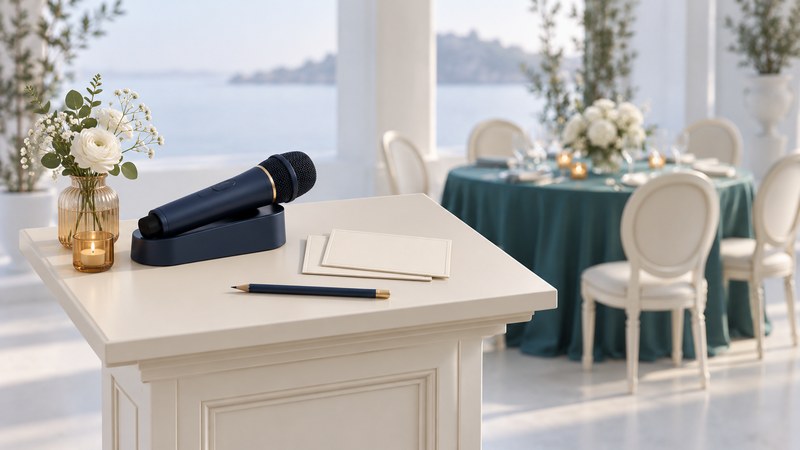
A good wedding speech gives the room one warm, specific picture of the couple and ends with a clear wish for their future. Start with a real memory, explain what it shows, and rehearse aloud within the time the couple or host has agreed.
Find out what the couple needs from you
Ask who else is speaking, when your turn happens and how long you have. Check names and pronunciations, how you will be introduced, whether anyone should be thanked and whether there are topics the couple wants kept private. Coordinate shared thanks with other speakers so the reception does not repeat the same list.
Toastmasters recommends sincerity, appropriate humor and brevity for social speeches, with two to three minutes as a useful length for many toasts. A wedding speech may have a different allotted time; follow the couple’s plan. Your timed rehearsal is a better guide than a word-count rule.
If you know one partner much better, give the room that genuine perspective and include the other partner with something you have actually observed. You can offer a thoughtful welcome without pretending to share years of history.
Build around one memory
- Introduce your connection. One sentence helps guests place you: “I’m Jordan, and I’ve been Alex’s friend since our first job together.”
- Tell a short, understandable story. Choose a moment that reveals a quality you value. Include just enough context for someone outside your circle to follow it.
- Connect the quality to the couple. Explain what you have seen them bring to one another or to the people around them.
- Offer a specific wish. End with a hope that fits what you have said, then invite the room to join you if a toast is appropriate.
Draft in the language you use when talking to people you care about. A single clear image often carries more feeling than a series of grand adjectives. If the story needs a long explanation, choose a simpler one.
Use these original examples as starting points
These are fictional samples, not accounts of real people. Replace their details with your own truthful observations. They are intentionally short; add one relevant memory if your allotted time allows.
A friend’s speech
“I’m Jordan, Alex’s friend from our first job. During a week when everything seemed to go wrong, Alex quietly made a list, brought everyone lunch and helped us take the next step. That is the kind of care I have known for years.
“When I met Jamie, I noticed how easily that care went both ways. Alex would start solving a problem, and Jamie would ask who needed a break first. Together, you make space for things to get done and for people to feel at home.
“My wish is that your home always has room for both: plans worth making and time to enjoy the people beside you. Please join me in wishing Alex and Jamie a happy life together.”
A parent or family member’s welcome
“For anyone I haven’t met, I’m Morgan, Jamie’s parent. One of the joys of today is seeing so many people who have helped these two become themselves.
“At our first shared family meal, Alex stayed at the table long after dessert, asking questions and listening to every answer. It was a small moment, but it told me something about the welcome Alex offers other people.
“Jamie and Alex, may you keep that curiosity about each other through the ordinary days as well as the celebrations. We are glad to share this day with you, and we wish you a home full of kindness.”
The couple thanking their guests
“Thank you for being here and for the many ways you have helped us reach today. Some of you have traveled a long way; others have given time, practical help or steady encouragement.
“We especially want to thank [names and a brief, specific contribution]. We are grateful to the team making the celebration happen. Having these people together means a great deal to us. Please enjoy the evening, and know how glad we are to share it with you.”
Edit for the whole room
Keep humor affectionate and understandable. Choose a story the people in it would feel comfortable hearing publicly. Ask permission when there is any doubt. Private relationships, health matters, money difficulties and stories that depend on humiliating someone are poor surprises at a celebration.
Read the draft once for the couple and once for everyone else. Does it include both partners? Can guests understand the memory without knowing your entire friendship group? Does each sentence advance the story or the wish? Remove repeated compliments and side stories until the central thought is clear.
If you mention someone who has died or cannot attend, agree on that moment with the couple first. A brief acknowledgment can carry considerable emotion; the couple should have a say in how it fits the day. Use quotations only when you know the wording and attribution, and keep the emphasis on your own words.
Practice the version you will actually deliver
- Read the speech aloud with a timer. Include pauses and the closing invitation. If it runs long, cut a passage instead of speeding up.
- Ask one trusted listener whether the story is clear and kind. Check names aloud again.
- Print large, easily scanned notes or use numbered cards. Mark a few natural pauses and keep a backup copy.
- Practice holding your notes while leaving one hand available for a microphone. Keep your glass on the table until the closing toast.
- Check the microphone with the sound operator before guests settle. Learn how to hold it and where to stand; keep the microphone with your voice when turning toward the couple.
When it is your turn, settle your notes, look up and begin with your first prepared sentence. Pause for laughter instead of speaking over it. If you become emotional, stop, breathe and resume from the next marked thought. If the microphone stops working, wait for help so everyone can hear.
Finish with the closing line you rehearsed. Invite everyone to join in whatever way is comfortable; a toast does not require alcohol. Then hand the microphone back to the host. The wedding planning guide can help the couple assign the speaking order and cues.