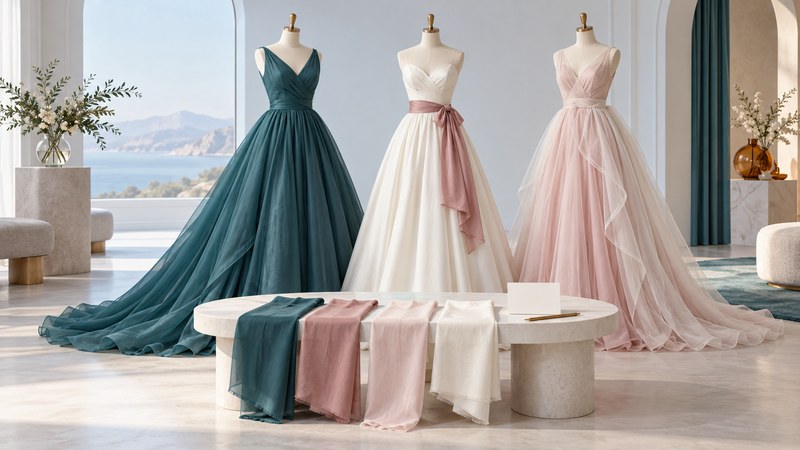
A colored wedding gown can make its effect through the whole dress, a visible underlayer or a small accent. Compare actual fabrics against the complete outfit, look at them in more than one light, and record the exact materials and changes you approve with the maker.
Decide how much color you want to see
Start with colors you enjoy and the part of the outfit you want to emphasize. A saturated skirt creates a different impression from colored embroidery or a removable sash. You can choose a color because it feels personal, without following a rule about season, complexion or formality.
David's Bridal's illustrated color guide shows approaches including blush underlayers, all-over color and color beneath lace. Treat its examples as design ideas; confirm the current availability and specification of any actual gown with the seller.
| Approach | What to compare | Question for the maker |
|---|---|---|
| Full-color gown | A large area of the actual fabric, draped and moving | What is the exact fabric and color reference? |
| Colored lining or underlayer | The proposed outer fabric layered over the proposed lining | Can I see the complete layer combination before approval? |
| Embroidery or trim | Thread, beads or lace against the gown fabric | Which details and areas will use this color? |
| Sash or removable accent | Width, position, fastening and the outline from front and back | How is it attached, and can it be removed without changing the gown? |
Compare materials you can hold
Ask for samples of the actual fabric and lining, with the maker's name, color code and material reference attached. A color name shared by two sellers can describe different results. Ask whether the sample represents the material being ordered and what variation the supplier allows.
The maker's wedding-color guidance recommends testing combinations with fabric swatches. For a gown, take that comparison further: place the proposed layers together and compare them against your chosen veil, shoes or jewelry. Let a large enough piece hang so you can see folds as well as a flat square.
- Label every sample. Record supplier, material, color reference and date received.
- Look in daylight. Compare the fabrics side by side without relying on a phone display.
- Look in the venue's lighting if possible. Otherwise ask about its lighting and arrange a useful approximation at the fitting.
- Compare the whole combination. Include outer layers, lining, trim and the accessories you intend to wear.
- Record what you prefer. Note the physical sample you approved and keep it with the order record.
A photograph is useful for recording placement and the overall outfit, but camera processing and screens can change how color appears. Make the final material decision from the actual sample or gown whenever possible. Ask the photographer how the outfit looks in a test image without expecting a screen to certify an exact match.
Check color in the finished shape
At the fitting, view the gown from the front, side and back, both close up and from the distance a guest might see it. Notice whether folds, sheer areas and different layers produce the effect you expected. Move, sit and turn so you can see how a sash or colored panel sits during ordinary movement.
Try a detachable accent before authorizing a permanent change. Discuss seams, fastenings and any interaction with a bustle or train with the alterations professional. Ask the maker about the suitability and consequences of proposed dyeing, painting or other color changes before any work begins.
Illustrative comparison: an ivory lace sample over a blush lining may give a softer overall effect than a solid blush outer fabric. Place both complete combinations beside an ivory gown with a rose sash. Record which amount and placement of color you prefer, rather than treating three pink labels as equivalent.
Turn the choice into a written specification
Before paying for customization, confirm the gown style, fabric, lining, color references, accent placement, attachment method, price and delivery date. Ask how changes will be approved and whether customization affects cancellation or return terms. Keep the approved sketch or photograph together with the labeled material sample.
At collection, compare the finished gown with that record under useful lighting. Raise any discrepancy with the maker before taking it for further work. Obtain care and storage instructions for the whole combination, including decorative materials.
Download the gown color comparison sheet. Use one copy per combination and record the final approval. For the broader purchase and alteration timeline, use the wedding dress guide; for the complete outfit trial, use the accessory kit guide.