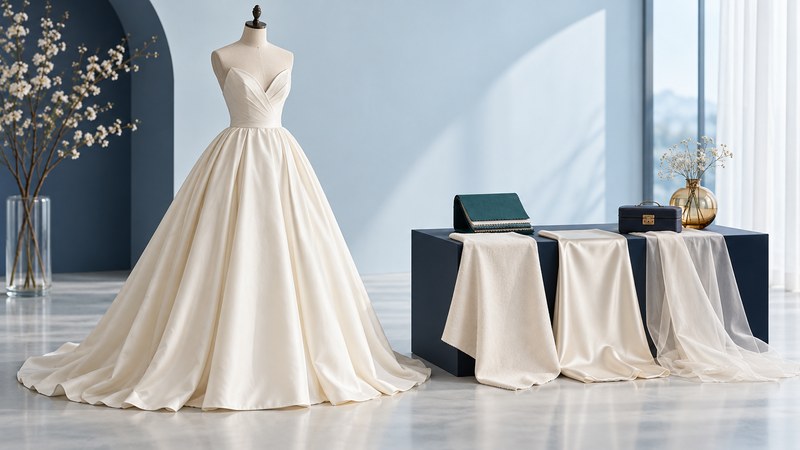
Describe a wedding gown in three parts: its shape, the materials in each layer, and how the complete garment feels when you move. This gives a maker or stylist something specific to respond to and makes two similar-looking dresses easier to compare.
Read the gown from the outside inward
Silhouette describes the overall outline. An A-line skirt widens toward the hem; a ball gown combines a fitted bodice with a full skirt; a mermaid shape stays close through the hips and flares lower down. These labels organize a conversation, while the actual pattern determines where a particular dress fits and flares. See David’s Bridal’s silhouette guide for illustrated examples.
The neckline is the upper edge around the neck and chest. The bodice is the upper section of the dress; its seams, darts or panels help create its shape. The skirt begins below it, and a train extends the back hem along the floor. Ask where the waist seam and fullest part of the skirt sit on the actual sample.
Look inside with the shop’s permission. The lining forms an inner layer; additional layers may support, shape or add fullness. Boning, cups and an internal waist stay are construction features to ask about, if present. Their names alone tell you little about the support or comfort you will experience. Have the fitter explain which parts carry the garment and which parts are decorative.
| Part of the gown | Observe | Ask the maker or fitter |
|---|---|---|
| Neckline and bodice | Edge position, gaping, pressure and movement when seated | Which internal features provide support, and what can be adjusted on this design? |
| Lining and skirt layers | Opacity, bulk, surface feel and whether layers catch together | Which fabrics and layers will be in the ordered gown, including any changes from this sample? |
| Seams and decoration | Where lace, beads or panels cross a seam or hem | How would the proposed alteration affect those details and the finished price? |
| Hem and train | Walking clearance and the space the skirt occupies | What hem and bustle arrangements are feasible, and who will demonstrate them? |
Separate fiber, construction and surface
Fiber content names the material, such as silk or polyester. Weave describes how woven threads are arranged. Finish or surface description describes an appearance or treatment, such as a matte or lustrous face. A fabric can have several of these descriptions at once. Ask for the composition and the exact fabric reference, alongside its familiar trade name.
Satin describes a weave with a lustrous face. Chiffon is sheer and flowing; organza is also sheer but generally more crisp; tulle is netting often used in layers. The maker’s fabric guide illustrates these distinctions. Use these terms to request samples, then assess the actual cloth and garment. Weight, lining and construction can change the result substantially.
A supplier listing such as Mood’s silk crepe-back satin also shows why a fabric’s complete name matters: the fiber and fabric construction are separate pieces of information. Match the sample reference to the specification for your order. Save a photograph of the label and retain the swatch if the supplier permits.
Compare samples under the same conditions
Put two labeled samples over the proposed lining, in the same light, and let them hang with the same amount of fabric unsupported. Observe how each falls, how much light passes through, how the surface reflects light and how it feels against skin. Ask before folding, pinning or handling a shop’s samples. A small swatch helps compare materials; a finished sample shows the combined effect of the cut and all its layers.
Original comparison example
Sam likes the soft folds of sample A and the more defined skirt of sample B. A looks more translucent over the proposed lining, while B feels bulkier when seated. Sam records those observations and asks to see A with the maker’s intended lining and B in the correct size. The next decision depends on those trials; the fabric names alone do not resolve it.
In a fitting, try ordinary movements with the fitter’s guidance: sit, walk, turn, raise your arms comfortably and hold the bouquet or bag you expect to carry. Note a specific issue—“the edge moves when I sit”—so the fitter can assess it. Ask for alteration feasibility, cost and timing in writing before assuming a sample can become the dress you imagine. Leave cutting, seam changes and support adjustments to the agreed professional.
Download the editable gown comparison card (TXT). Record observations in your own words and mark anything still untested. For buying routes and fitting schedules use Wedding Dresses; for color and layer comparisons use Wedding Gowns with Color.