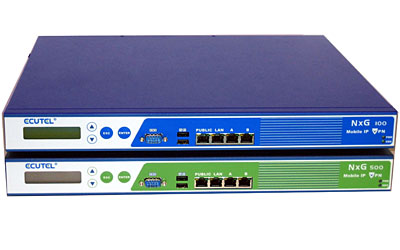
A VPN appliance is a dedicated hardware or virtual gateway that provides encrypted access between users, sites, devices, and private networks. In the 2000s, appliances were attractive because they bundled encryption, authentication, firewall policy, roaming, logging, and management into a rack-mounted box that could be installed at the network edge or in a DMZ, often near the same trust boundaries discussed in IP network borders.
The basic need has not disappeared. Organizations still need to protect traffic over untrusted networks, connect branch offices, support remote workers, and provide controlled access to internal applications. What changed is the threat model. Users now work from anywhere, applications live in public cloud and SaaS platforms, endpoints vary widely in trustworthiness, and internet-facing VPN gateways have become high-value targets for attackers.
What VPN Appliances Do
- Remote access: allow employees, contractors, and administrators to reach private applications from outside the corporate network.
- Site-to-site tunneling: connect branches, data centers, clouds, and partner networks with encrypted IPsec tunnels.
- Authentication: integrate with RADIUS, LDAP, Active Directory, certificates, smart cards, SAML, OAuth, or other identity systems.
- Policy enforcement: limit which users, groups, devices, networks, and applications can communicate.
- Address and NAT traversal: handle private addressing, roaming clients, changing networks, and traversal through NAT devices.
- Logging and auditing: record who connected, from where, to what resources, and under which policy.
IPsec, SSL VPN, and WireGuard
IPsec is a network-layer security framework commonly used for site-to-site VPNs and many managed remote-access deployments. NIST SP 800-77 Rev. 1 describes IPsec as a widely used control for protecting communications over IP networks, usually configured with the Internet Key Exchange protocol. Modern IPsec deployments should use current IKE versions, strong encryption, integrity protection, perfect forward secrecy, short-lived credentials, and well-maintained implementations.
SSL VPN products use TLS to provide remote access, often through a portal, client, or application proxy. They became popular because they were easy to deploy through firewalls and convenient for users. They also became attractive attack targets because a vulnerable SSL VPN gateway may expose authentication, web, file, and network-access logic directly to the internet.
WireGuard is a newer VPN protocol known for a small codebase and modern cryptographic design. It is popular in Linux, cloud, and site-to-site use cases, though enterprise deployment still depends on identity integration, key lifecycle, device posture, logging, and policy tooling around the protocol.
VPNs and Zero Trust
A traditional VPN extends a network boundary to a remote device. That was useful when most applications lived inside one corporate network and most users worked from known offices. Zero trust architecture changes the model: access decisions are made per resource and per request, based on identity, device, context, policy, and continuous evaluation rather than implicit trust in a network location.
NIST SP 800-207 describes zero trust as a shift from broad perimeter defenses toward protecting individual resources or small groups of resources. That does not mean every VPN disappears overnight. It means VPNs should not automatically grant broad internal network reach. Many organizations now combine VPNs with zero-trust network access, identity-aware proxies, microsegmentation, endpoint posture checks, conditional access, and SaaS-native controls.
Modern VPN Hardening
- Require phishing-resistant MFA where possible, especially for administrators and privileged access.
- Patch VPN appliances quickly; internet-facing gateways often appear in attacker playbooks soon after vulnerabilities are disclosed.
- Disable legacy protocols, weak ciphers, old TLS versions, password-only access, and unused portal features.
- Use least-privilege network access. A remote user should not receive the same reachability as a device plugged into a trusted office switch.
- Check device posture before access: disk encryption, EDR status, patch level, certificate, jailbreak/root status, and managed-device state.
- Log authentication, tunnel establishment, source IPs, device identifiers, assigned addresses, accessed resources, and administrative changes.
- Protect management interfaces on separate networks with strict access controls.
- Test backup authentication paths and lockout procedures so emergency access does not become a permanent bypass.
Split Tunnel or Full Tunnel
Full-tunnel VPN sends all client traffic through the enterprise gateway. This can simplify inspection and policy enforcement, but it may add latency, create bottlenecks, and hairpin traffic that is already destined for SaaS or public cloud services. Split tunneling sends only selected traffic through the VPN, improving performance but requiring stronger endpoint, DNS, identity, and cloud-policy controls.
The right choice depends on the application. Administrative access to production systems may justify full tunneling or a privileged access path. SaaS email and collaboration traffic may be better handled by identity, device compliance, browser isolation, cloud access security, or secure web gateway controls rather than forced backhaul through a data center.
The 2005 Ecutel Viatores Appliances
In 2005, two appliances were built on Ecutel's flagship Viatores software, a Mobile IP and IPsec solution that gave customers the ability to roam across network boundaries while maintaining application session persistence and VPN security.
Ecutel's appliances were branded Viatores NxG 100 and Viatores NxG 500 Mobile IP VPN Appliances, supporting 100 or 500 simultaneous users. They were designed to let mobile workers remain connected to corporate resources and protected over any IP network.
"Most users and network managers tend to think of wireless security as being purely a wireless problem," said Craig J. Mathias of Farpoint Group. "They really need to think in terms of overall network security, and Mobile IP combined with IPSec offers a powerful solution for the mobile worker."
Viatores NxG 100 and NxG 500 were promoted as plug-and-play Mobile IP VPN appliances with a browser-based administrative interface and quick setup. Features included a 1U rack-mountable design, dual Ethernet adapters, authentication support for RADIUS, LDAP, Microsoft Active Directory and local accounts, browser-based management and monitoring, endpoint policy enforcement, load-balanced scaling across multiple appliances, a hardened Linux kernel, integrated firewall capability, logging and reporting, NAPT traversal, PKI support for certificates and smart cards, public/private/DMZ deployment options, trusted Intel architecture, and FIPS cryptographic algorithms.
What Changed Since 2005
The 2005 focus was mobility across changing IP networks. Laptops moved between wired LAN, Wi-Fi, hotspot, and cellular connections, and the goal was to keep application sessions alive while preserving an encrypted tunnel. That problem still exists, especially for field workers, public safety, industrial operations, and transportation, but the broader enterprise problem has changed.
Remote access now has to integrate identity, endpoint security, SaaS, cloud workloads, privileged access, contractor access, unmanaged devices, and continuous monitoring. A VPN appliance that only answers "can this user join the network?" is no longer enough. The better question is "should this identity on this device, from this context, reach this specific resource right now?"
Ecutel's own history also moved on. Smith Micro announced in 2007 that it would acquire Ecutel Systems, citing Ecutel's IPRoam and Viatores products for seamless mobile security and enterprise connectivity. The Viatores appliance story is therefore best read as part of the evolution from Mobile IP/IPsec roaming products toward today's identity-centric remote access systems.
Planning Checklist
- Separate use cases: site-to-site connectivity, employee remote access, privileged admin access, vendor access, cloud connectivity, and mobile session persistence may need different controls.
- Inventory exposed VPN gateways and confirm firmware, support status, certificates, cipher suites, and administrative access controls.
- Integrate with central identity and MFA rather than relying on local VPN-only accounts.
- Limit network reach after connection with ACLs, segmentation, application gateways, or ZTNA policies.
- Design for cloud and SaaS traffic directly, not only for backhauling everything to a corporate data center.
- Monitor VPN logs alongside identity, endpoint, DNS, EDR, and SIEM telemetry.
- Have a migration plan for legacy appliances that are out of support or cannot enforce modern authentication and posture controls.
VPN appliances remain useful for encrypted connectivity, especially site-to-site tunnels and controlled remote access to private resources. But in 2026 they should be treated as one component in a broader access architecture, not as a blanket grant of trust to anyone who can establish a tunnel.
References
- Light Reading: Ecutel launches Viatores NxG Mobile IP VPN appliances
- LinuxDevices archive: Ecutel Linux VPN appliance profile
- Smith Micro to acquire Ecutel Systems
- NIST SP 800-77 Rev. 1: Guide to IPsec VPNs
- NIST SP 800-207: Zero Trust Architecture
- CISA: Zero Trust Maturity Model Version 2.0
- NIST SP 800-46 Rev. 2: Enterprise telework, remote access, and BYOD security