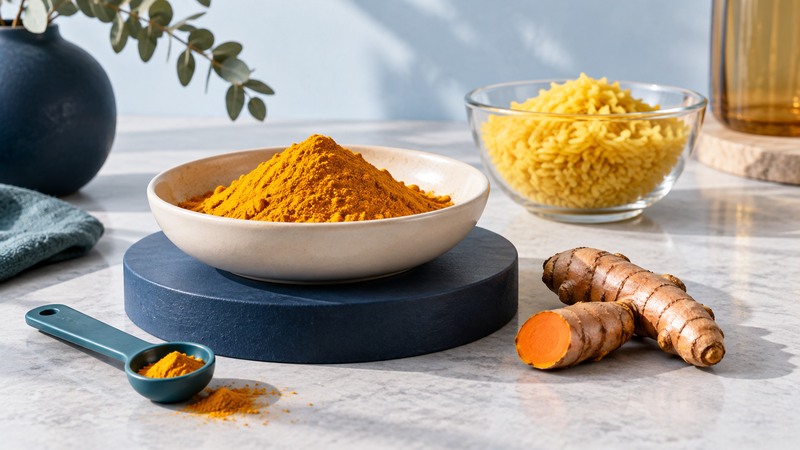
Turmeric brings a golden color and an earthy, slightly bitter flavor to food. Choose ground turmeric when you want easy, even distribution in rice, lentils or a sauce; choose fresh turmeric when a recipe calls for grated or sliced rhizome. For health questions, the form of the product and the evidence behind the claim matter as much as the ingredient name.
Choose a form that fits the dish
The part sold as turmeric “root” is a rhizome, an underground stem. Fresh turmeric needs washing and preparation; ground turmeric is ready to measure. A curcumin extract is a different product with its own concentration and formulation.
On a narrow screen, scroll the table sideways. Keyboard users can focus it and use the arrow keys.
| Form | Useful starting point | What to check |
|---|---|---|
| Ground spice | Rice, lentils, soups and spice mixtures | Use the amount specified for ground turmeric; measure with a dry spoon. |
| Fresh rhizome | Grated into a wet paste or sliced for an infusion | Scrub well, trim damaged parts and peel where needed; account for pieces or fibers. |
| Prepared paste | A convenient addition to a sauce | Check for added salt, oil, sweeteners and other spices; follow the storage label. |
| Curcumin supplement | A health product requiring a separate decision | Check the full formulation and discuss intended use with a health professional. |
Fresh and dried forms change texture as well as intensity. When switching forms in a delicate dish, use a recipe written for the form you have. A spoonful of grated rhizome contains moisture and fibers; a spoonful of powder disperses differently.
Add color without overwhelming dinner
McCormick’s ground-turmeric guidance includes adding it to the water used to cook rice. The useful habit is to distribute the powder in the cooking liquid before the grains absorb it.
For a soup, blend a small measured addition into a ladleful of hot liquid before stirring it through the pot. Let it cook with the dish and taste again. If you overshoot, increase the unseasoned base; adding more salt or sugar changes the dish without removing the turmeric.
Turmeric stains pale work surfaces, fabric and some plastics. Set out a washable board and wipe spills promptly. Store ground spice tightly closed, away from heat and moisture; Penn State Extension’s pantry guidance explains why the space above a stove is a poor spice-storage location.
Read curcumin claims in context
NCCIH’s turmeric evidence summary finds that research has yet to establish definitive benefits for health purposes. Early findings for some conditions warrant further study. Studies of particular extracts, concentrations or delivery systems cannot be converted into a kitchen-spice treatment plan.
Some formulations designed to increase curcumin absorption have been associated with liver injury. Supplements can also cause digestive effects; pregnancy and breastfeeding require additional caution. Discuss a planned supplement with a clinician or pharmacist, especially if you take medicine. Stop a supplement and seek medical advice if symptoms such as jaundice or dark urine develop.
For a claim about cystic fibrosis or another named disease, look for human clinical outcomes, the exact product studied and current guidance from the treating team. A laboratory finding or a trial announcement establishes a research question, not a treatment recommendation. Continue prescribed care.
Choose the next ingredient deliberately
For fresh-rhizome preparation, see the ginger preparation guide. If a recipe calls for saffron, consult the saffron guide: turmeric can add yellow color, but it brings its own flavor and changes the result.
Explore all seasoning and ingredient guides · Food, cooking and meal planning