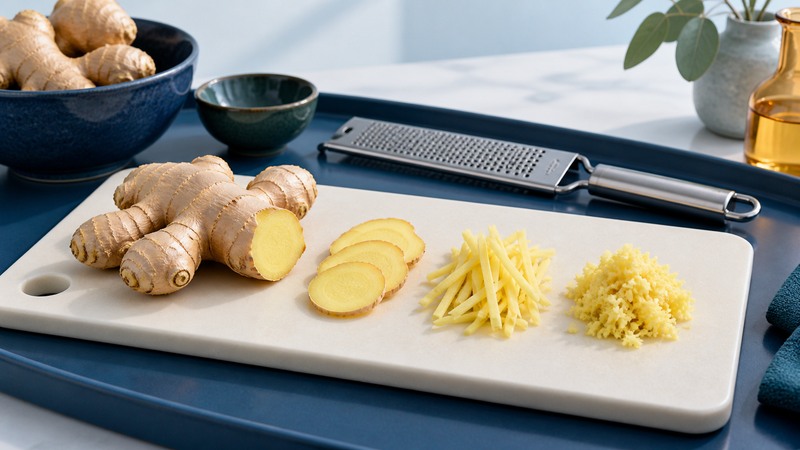
Prepare ginger according to the texture you want in the finished food. Thin slices work well when you plan to infuse and remove them; minced or grated ginger spreads through a sauce. Buy a firm rhizome, prepare only what you need, and refrigerate or freeze the remainder while it is still in good condition.
Choose the form before you shop
Ginger “root” is a rhizome. Choose a firm piece with sound skin and an aroma characteristic of ginger when cut. Young ginger tends to have thinner skin and a less fibrous texture; mature ginger can require more attention to peeling and cutting.
Fresh, bottled, pickled, candied and ground ginger solve different tasks. Colorado State University’s ginger guide distinguishes these forms and notes that prepared ginger may contain additional ingredients. Read a jar’s salt, sugar and acid ingredients before using it as a fresh-ginger substitute.
Ground ginger belongs with dry spices, while candied ginger adds sugar and chewy pieces. The existing ginger-spice profile covers that sweetened form. Purchase food-grade culinary ginger; similarly named wild plants require their own identification and safety assessment.
Prepare the texture the recipe needs
Wash the rhizome under running water and clean the crevices. Use a stable board. Skin removal is optional where the skin is thin and sound; scrape or peel tough areas and trim away unusable ends. Cut off a manageable piece before working near a grater’s teeth.
On a narrow screen, scroll the table sideways. Keyboard users can focus it and use the arrow keys.
| Preparation | Method | Why use it? |
|---|---|---|
| Coins | Slice across the rhizome into thin rounds. | Easy-to-find pieces for broth or another infusion; remove before serving if desired. |
| Matchsticks | Stack a few thin slices and cut into narrow strips. | Distinct bites in a stir-fry or cooked garnish. |
| Mince | Cut strips across into small pieces. | Small visible pieces in a sauce or filling. |
| Grate | Use a fine grater; collect both pulp and juice. | Even distribution in dressings, marinades or wet batters. |
Slice across long fibers before mincing when the ginger is stringy. If a sauce should be smooth, grate finely or use an infusion that can be strained. Choose the texture before changing the quantity; more ginger will not solve unwanted fibers.
Refrigerate some and freeze the surplus
Iowa State Extension’s storage guidance recommends airtight refrigerated storage for fresh unpeeled ginger and describes freezing sliced, grated or chopped portions. Refrigerated keeping time depends on starting condition; inspect for mold, softness or off odors and discard spoiled ginger.
- For near-term use, keep unpeeled ginger dry in a closed bag or container in the refrigerator.
- For surplus ginger, wash, dry and prepare it in the form you usually cook with.
- Freeze small measured portions on a lined tray, then transfer to a freezer bag or container, removing excess air.
- Label the date, form and quantity. Keep frozen portions frozen until needed; add directly to a cooked dish when its recipe permits.
As a planning target, Iowa State gives three months for best frozen quality. Texture after freezing suits cooked dishes better than a crisp fresh garnish. Keep the amount you expect to use soon accessible so the main supply stays closed.
Use ground ginger as a flavor adjustment
Oregon State University’s Food Hero guide gives ¼ teaspoon ground ginger as a starting substitute for 1 teaspoon fresh ginger. This changes texture and aroma; it is most useful where the recipe can tolerate that difference.
Make repeat use easier
If you freeze 1-teaspoon portions, a recipe calling for 1 tablespoon needs three portions. Portion size is more repeatable than a “thumb” of ginger, since rhizomes vary in thickness. If you work by weight, label the weight instead and keep using that unit.
For a golden rhizome with a different flavor, see fresh and ground turmeric. The separate galangal profile introduces another ingredient that deserves its own recipe quantity.
Explore all seasoning and ingredient guides · Food, cooking and meal planning