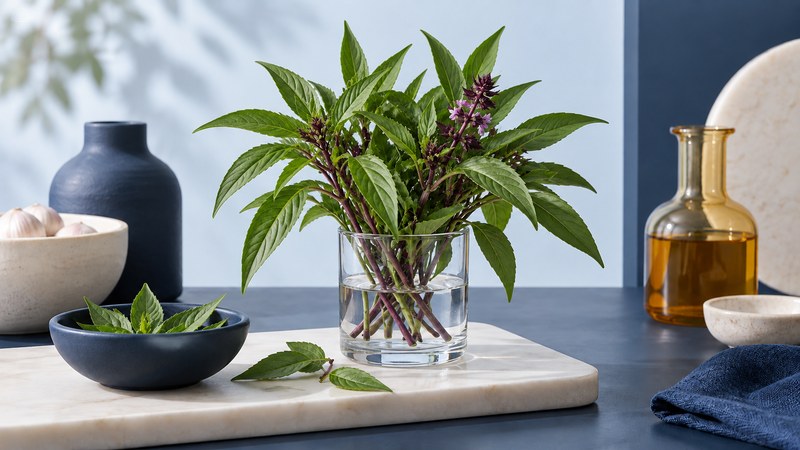
Thai basil brings a distinctive anise-like aroma to food. Buy the basil named in the recipe when possible, prepare the leaves before cooking starts, and add them at the recipe’s intended stage. When you need a substitute, decide which flavor you are willing to change.
Match the basil to the dish
Iowa State Extension’s basil guide describes Thai basil’s narrow leaves, purple stems and pink-purple flowers. Use those as supporting clues alongside a reliable shop label; other basil cultivars can also have purple coloring.
On a narrow screen, scroll the table sideways. Keyboard users can focus it and use the arrow keys.
| Basil | Flavor or recipe role | Substitution decision |
|---|---|---|
| Thai basil / horapa | Sweet, fragrant, with an anise or licorice association. | Use where the recipe wants this aroma, including many curries. |
| Holy basil / gaprao | A more peppery character, central to pad gaprao. | Seek the named herb when reproducing that dish’s characteristic flavor. |
| Sweet Italian basil | A familiar alternative with its own aroma. | Can make a useful adapted dish when Thai or holy basil is unavailable. |
Chef Pailin Chongchitnant’s Thai ingredient guide distinguishes horapa and gaprao and offers Italian basil as a practical substitute. The result is an adaptation: increasing the quantity of a different basil cannot recreate every aroma in the original herb.
Prepare the leaves before the pan is ready
- Choose a bunch with sound leaves and a fresh aroma. Discard slimy, moldy or decayed material.
- Rinse the portion you need gently under running water, then drain and pat dry. Wet leaves can introduce unwanted water into a quick stir-fry.
- Pick leaves from tough stalks. Follow the recipe if it specifically calls for tender tips or another part of the herb.
- Measure leaves in the form requested: a loose cup, a packed cup and a chopped tablespoon represent different amounts. Keep the prepared leaves beside the other finishing ingredients.
Whole leaves give recognizable bites; tearing or slicing makes them easier to distribute through a salad. Cut close to serving when appearance matters, and use a sharp blade to minimize bruising.
Give the herb its own finishing step
For a recipe that adds basil at the end, finish cooking the main ingredients first. Fold in the measured leaves, let them wilt as directed, and serve while their aroma is fresh. Other methods deliberately cook herbs longer, so retain the author’s sequence.
A concrete example is Pailin’s green curry recipe, which adds Thai basil at the finish. The herb step complements the cooked curry; it does not replace the cooking requirements for the other ingredients.
Keep a fresh bunch; freeze the surplus
Illinois Extension recommends holding cut basil in a glass of water at room temperature; refrigeration can discolor the leaves. For an intact fresh bunch, place the cut stem ends in water while keeping leaves above it. Refresh the water daily and inspect the bunch. Follow package instructions for commercially packed or processed herbs.
When you have more than you can use promptly, the National Center for Home Food Preservation’s herb-freezing method is straightforward: wash, drain and pat dry, wrap a small portion of leaves or sprigs in freezer wrap, place in a freezer bag, seal and freeze. Label the herb and date.
Frozen leaves become limp after thawing. Reserve them for cooked dishes; use fresh leaves when you want an attractive garnish. Portioning before freezing lets you remove enough for one meal without repeatedly handling the full supply.
For other aromatics in a curry or soup, see galangal preparation and the makrut lime leaf profile.
Explore all seasoning and ingredient guides · Food, cooking and meal planning