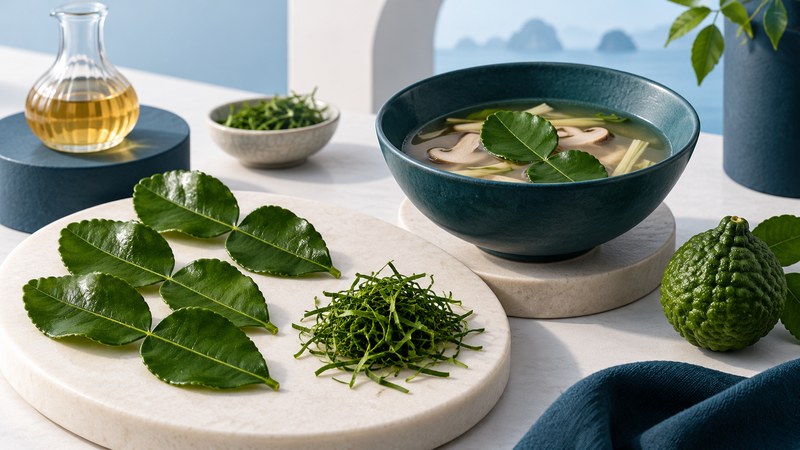
Decide whether the leaf will be removed or eaten before you prepare it. Makrut lime leaves, also sold as kaffir lime leaves, bring a distinctive citrus aroma to cooking. Whole or roughly torn leaves suit infusion; leaves intended to remain in a bite need much finer cutting.
Choose the form and check the leaf count
Buy leaves sold for culinary use under either familiar name. ImportFood’s fresh-leaf listing shows their characteristic connected lobes and identifies freezing as a practical way to keep a supply. A supermarket lime and a packet of makrut leaves are different purchases: match the ingredient named in the recipe.
On a narrow screen, scroll the table sideways. Keyboard users can focus it and use the arrow keys.
| Form | Useful job | Preparation decision |
|---|---|---|
| Fresh leaves | Infusion or very fine ribbons. | Decide whether diners will eat the leaf. |
| Frozen leaves | A convenient supply for cooked dishes. | Take out the recipe portion and follow its preparation. |
| Dried leaves | Infusing a soup or curry. | Use a recipe suited to dried leaves; remove large pieces. |
Chef Pailin Chongchitnant’s makrut lime leaf guide explains an important counting difference: her recipes count one individual lobe as one leaf, rather than the connected pair. Other writers may count differently. Read the recipe’s notes before doubling an amount.
Prepare for removal or for eating
The Herb Society of America’s makrut lime cooking notes distinguish whole-leaf infusion from very thin slicing when the leaf is eaten. Its illustrated recipe collection also provides examples of strained infusions and minced leaves.
- Rinse the leaves and dry them. Separate the amount needed before starting the rest of the dish.
- For infusion, keep pieces large enough to retrieve. Add them at the recipe’s indicated stage; remove them before serving.
- For edible ribbons, remove a thick central rib, stack a few leaf sections and slice across them as finely as you can with a sharp knife on a stable board.
- Inspect the cut pieces. Broad, leathery strips need further slicing; adding more of them will not solve an uncomfortable texture.
Keep an infusion portion separate from a garnish portion while preparing a meal. A small bowl for each makes the sequence clear and helps prevent large tough pieces from being scattered over the finished food.
Freeze a supply you can portion
Pailin recommends washing leaves, drying them completely and sealing them in a freezer bag with excess air pressed out. Freeze surplus leaves when you have no near-term use for them. Keep a small working portion accessible, label the bag and return the rest promptly to the freezer.
A practical kitchen note should record the purchase date, leaf form and recipe you expect to use. If leaves arrive already frozen, follow their package instructions. For dried leaves, keep the container closed and dry; use the recipe’s infusion method instead of treating them as a fresh garnish.
Choose the flavor compromise deliberately
For the closest match, look for frozen makrut leaves when fresh are unavailable. Pailin suggests ordinary lime zest as a fallback with a different aroma. It offers a citrus direction, so choose a recipe that allows that adaptation and use its specified amount. Juice also adds acidity and liquid, which changes a different part of the dish.
Before substituting, identify what you most want to preserve: a recognizable leaf garnish, a particular curry aroma, or simply a citrus note. A garnish-led dish may justify another shopping trip; an adaptable sauce may be a reasonable place to experiment. Record the change so you can judge it separately from the original recipe.
For companion aromatics, see preparing galangal for soup or paste and choosing and handling Thai basil.
Explore all seasoning and ingredient guides · Food, cooking and meal planning