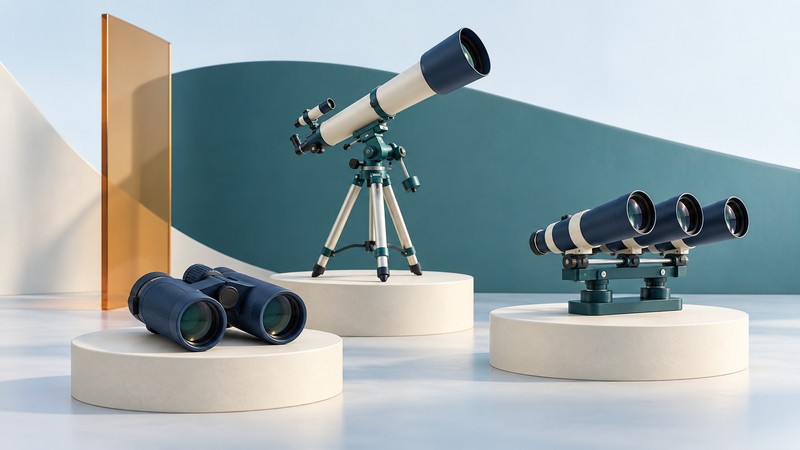
Choose viewing equipment with confidence and understand how optical systems form an image. These two guides connect everyday binocular decisions with the principles behind multi-aperture telescopes.
Choose your starting point
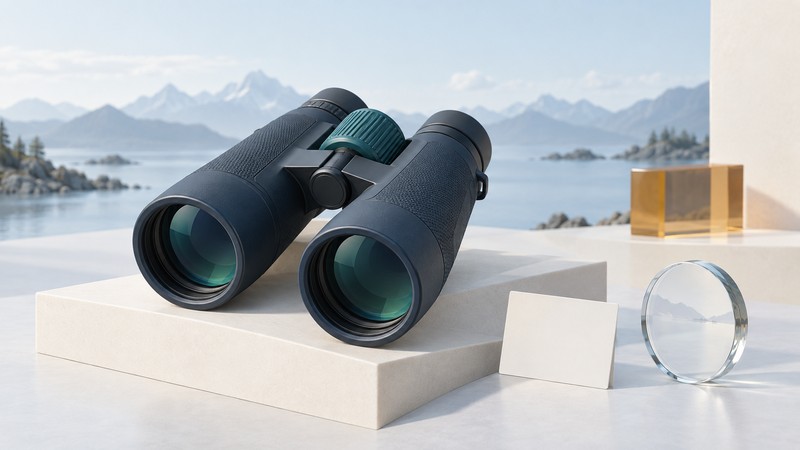
Choose binoculars
Compare magnification, field of view, stabilization, weather resistance, and comfort. Work through the specifications and take a printable comparison sheet with you.
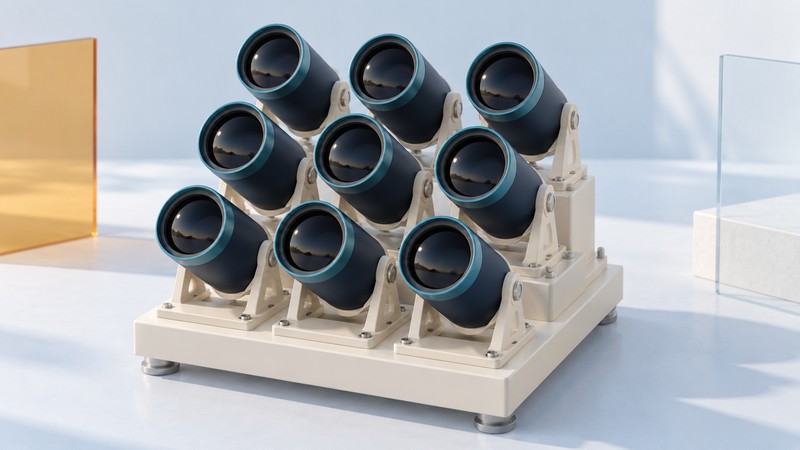
Understand telescope arrays
Explore collecting area, aperture spacing, phasing, and image combination. Use a worked example to interpret performance claims and learn from the Star-9 prototype.
Three ideas to keep in view
Magnification describes how large a subject appears. Collecting area describes the aperture area admitting light. Resolution describes the ability to distinguish nearby details. A useful optical system brings these together with the viewing conditions and the way the image is formed.
Start with the binocular guide when you want to choose and handle an instrument. Start with telescope arrays when you want to understand what a multi-aperture design can measure.