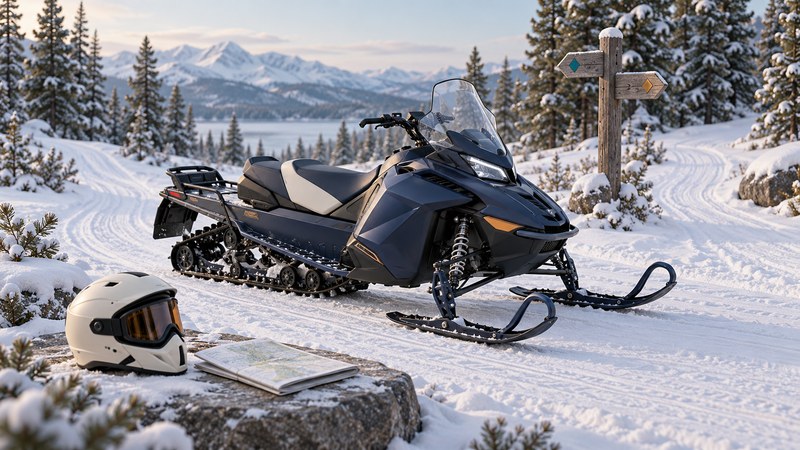
For a first snowmobile outing, organize instruction and a supported trail ride before considering a purchase. Learn on equipment suited to the route and rider, with someone qualified to explain its controls. This guide focuses on recreational trail planning; mountain travel adds terrain, avalanche and rescue decisions that need separate preparation.
Arrange instruction and understand access
Ask a rental operator or guide about beginner training, rider eligibility, required certification, insurance arrangements and what the price includes. Confirm who may operate or carry a passenger on the supplied machine. Choose an outing whose pace and route fit the least experienced participant.
Rules depend on jurisdiction and route. Use the relevant state or provincial agency for registration, trail passes, age requirements and training. Minnesota’s snowmobile regulations and safety-training page show the kinds of requirements to resolve; they apply in Minnesota, not automatically elsewhere.
Save the current route map and contact information. A line on a recreation map can cross land with seasonal restrictions. Get current opening and grooming information from the land manager or trail organization, and confirm permission for private land.
Plan the ride and the return
The Minnesota DNR’s safety guidance emphasizes checking weather and trail conditions, riding with a companion, appropriate helmet and clothing, sober operation and staying on permitted trails. It advises avoiding lakes and rivers; use a land route when planning an introductory outing.
- Before departure: agree on the route, turnback point, fuel or range plan and what to do if separated. Leave the plan and expected contact time with someone outside the group.
- At handover: have the operator demonstrate steering, throttle, braking, stop controls and any tether or reverse function. Resolve unfamiliar controls before moving.
- On the route: follow signs, maintain sight and stopping space appropriate to conditions, and slow for corners, other users and poor visibility. Reassess when conditions change.
- For a delay: carry navigation, communication and emergency supplies appropriate to remoteness and temperature. A phone connection can disappear beyond the trailhead.
For travel in avalanche terrain, use the NWS avalanche resources to find local forecasts and training. A vehicle’s ability to climb a slope does not establish the snowpack’s stability.
Evaluate an older machine as a service project
| Area | Ask for or arrange |
|---|---|
| Identity | Model year, identification number and ownership documents that meet local requirements. |
| Condition | A qualified inspection of track, skis, suspension, steering, brakes and drivetrain. |
| History | Maintenance records, storage history, known damage and modifications. |
| Support | The correct manuals, parts identifiers and a willing service provider. |
| Budget | Purchase plus transport, inspection, repairs, protective gear and storage. |
Ask the inspector to separate work required before use from cosmetic issues. Confirm actual availability of the parts that matter before committing. A seller’s statement that an engine starts is only one observation; it leaves braking, structure and service support unresolved.
For a rare machine, decide whether the goal is riding, collecting or restoration. A restoration project can be worthwhile while being a poor choice for dependable first-season transport. Keep those purposes explicit.
Redline 800 Revolt: read the historical evidence carefully
Redline’s 2003 SEC prospectus described the 800 Revolt as a planned high-performance trail snowmobile with an 800cc two-cycle engine. It documented a small early production effort and named the T-15 rear suspension and clutch-isolation design among its features. The filing also discussed financing, production and supplier risks.
Its projected shipments and future models were plans at the time of filing. They should be read separately from documented completed production. For an individual surviving machine, establish identity, condition and parts support from its records and an experienced specialist; an early prospectus cannot establish its present serviceability.
This distinction is useful for any uncommon powersports purchase: historical design interest, verified operating condition and practical support are three separate questions.
Sources checked October 11, 2026. Use current local information and the instructions for your actual equipment when planning an activity.