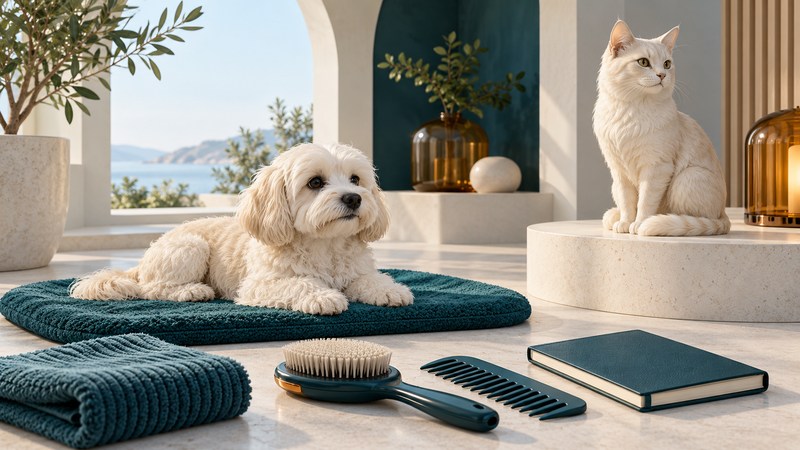
A useful pet makeover makes everyday care more comfortable and easier to maintain. Start with one manageable goal: a coat that can be brushed without pulling, a calmer grooming appointment, or a home dental routine your veterinary team has demonstrated. Appearance is one result; the animal’s comfort determines the plan.
Start with a care baseline
Before buying products, write down what already works. Record your pet’s coat type, current tools, tolerance of touch, previous grooming experiences and any instructions from the veterinary team. Note where tangles recur and which handling steps cause the animal to move away. These observations help a professional tailor the appointment.
Arrange veterinary advice for painful areas, skin changes, persistent scratching, mouth discomfort or a sudden change in handling tolerance. A groomer can discuss coat maintenance; a veterinarian assesses possible illness and pain. Avoid trying to finish a cosmetic goal while the underlying problem remains unclear.
The RSPCA’s dog-grooming guidance recommends suitable tools, gentle brushing and stopping when the dog is uncomfortable. Close-to-skin mats and uncertain clipping tasks deserve professional help. Ask for a demonstration on your own dog and a realistic maintenance interval for that coat.
Choose the next useful change
Scroll the table horizontally; keyboard users can focus it and use the arrow keys.
| Area | Record before the visit | Agree on a next step |
|---|---|---|
| Coat and skin | Where tangles form; tools tolerated; any sore areas | Groomer demonstrates maintenance; veterinarian assesses skin concerns |
| Nails and handling | Response to paw touch and earlier trims | Professional demonstrates a suitable approach and stopping point |
| Mouth care | Current routine and changes in chewing or breath | Veterinary examination and an achievable home-care plan |
| Food and routine | Foods, treats and amounts currently offered | Veterinary review of nutritional needs and practical daily care |
Use the WSAVA nutrition toolkit to prepare a food discussion. Bring the actual food details and feeding amounts. A makeover package or a shinier coat alone provides little basis for choosing a different diet.
Build cooperation in small steps
Choose a quiet place with secure footing and allow an easy exit. Begin with a step the animal already accepts, such as approaching the brush. Reward participation, keep the session brief and finish before it becomes a struggle. Repeated pulling away is information to make the next session easier, rather than a reason to hold the animal still for longer.
AAHA’s discussion of cooperative care describes reward-based training and voluntary participation in care procedures. A veterinary team or qualified trainer can help turn a difficult task into smaller teachable steps.
Cats need their own plan. The RSPCA’s kitten-care guidance emphasizes comfortable, gradual grooming and explains that cats generally manage bathing themselves unless a medical situation calls for help. Adapt handling to the individual cat, including the option to leave.
A workable first-week example
Illustrative example: an owner wants a long-coated dog to look tidy, but brushing repeatedly catches behind the ears. The first goal is a professional assessment of the tangles and a demonstration of the right tool. At home, the owner practises one comfortable brushing step and records the dog’s response. Progress means that this step becomes easier to repeat; a full grooming session can wait.
Dental care deserves a separate appointment discussion. The AVMA’s dental-care brochure (PDF) explains the role of regular toothbrushing and professional assessment. Ask the team to demonstrate brushing and recommend suitable products; visible clean teeth alone cannot reveal everything happening below the gumline.
Download the grooming and care planning sheet to record one goal, professional advice and a review date. For related decisions, see choosing pet shampoo and planning a bath and recognizing changes in cat health.