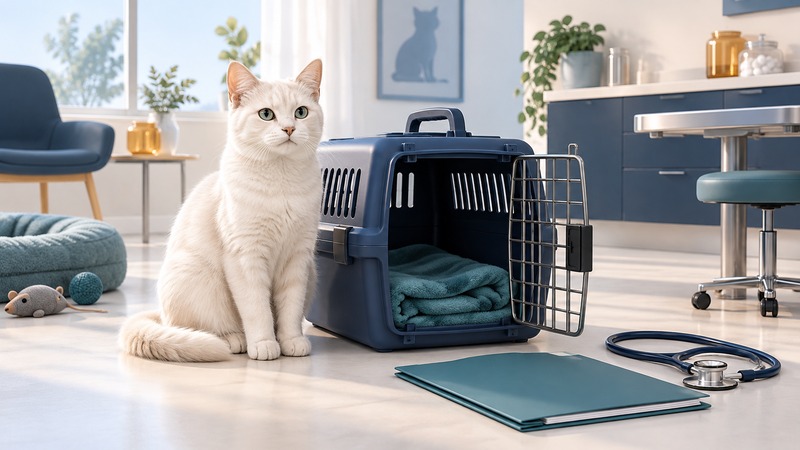
A useful first veterinary visit brings together the cat’s history, examination, and existing records. Ask what testing and preventive care fit this cat’s age and exposure risk, and leave with a written follow-up plan. At home, pay attention to changes in eating, activity, comfort, and litter-box use.
Put urgent symptoms first
A cat repeatedly straining and passing little or no urine needs immediate veterinary attention. Urinary obstruction can become life-threatening; Cornell’s feline urinary-tract guide describes this emergency. Do not assume repeated litter-box visits are constipation.
Difficulty breathing, collapse, major injury, seizures, or suspected poisoning also call for urgent veterinary help, consistent with Cornell’s emergency-care guidance. Go promptly for life-threatening signs. A planned first visit or a test-result discussion can wait until an immediate health problem is addressed.
Bring the record, including what is unknown
Request adoption or previous veterinary records before the appointment. Include vaccination dates, parasite treatments, surgeries, medications, laboratory reports, and the scanned microchip number. Record where the cat has lived, contact with other cats, outdoor access, known bites, and any recent change of home.
Bring the original test report if possible, rather than a note saying only “tested.” The test name, sample date, result, and clinic help the veterinarian decide what the evidence means now. Mark missing history as unknown; an invented date can distort the follow-up plan.
Ask the practice about a comfortable carrier journey and low-stress arrival. Keep the carrier available at home ahead of the visit so preparing it becomes part of the routine.
Understand what FIV and FeLV testing measures
On a small screen, focus this table and use the arrow keys, or swipe, to read all columns.
| Test topic | What it commonly assesses | Why context matters |
|---|---|---|
| FIV screening | Antibodies to feline immunodeficiency virus. | Recent exposure, maternal antibodies in kittens, and vaccination history can affect interpretation. |
| FeLV screening | A viral antigen associated with feline leukemia virus. | Follow-up testing may be needed; one result does not classify every infection outcome. |
| Follow-up plan | The veterinarian’s choice of test and timing for this cat. | Age, exposure dates, examination, and prior results determine the useful next step. |
Cornell’s FIV guide explains that screening commonly detects antibodies. A recently exposed cat can test negative before detectable antibodies develop. A young kitten can carry maternal antibodies, and prior FIV vaccination can complicate some results. Ask the veterinarian whether a result needs confirmation or a later sample, and record the planned date.
The Cornell FeLV guide explains that a single test at one time cannot determine whether infection is progressive. Confirmatory testing and follow-up interpretation belong with the veterinarian. Ask separately about FeLV vaccination and exposure prevention; the appropriate plan depends on the cat’s circumstances.
Make the household plan specific
Discuss introductions and separation before mixing a newly acquired cat with resident cats. Tell the veterinarian about fighting, shared living arrangements, outdoor access, and each cat’s known test history. FIV is transmitted primarily through bite wounds; Cornell notes that risk differs with the household’s social conditions. A label alone leaves important details about living arrangements unanswered.
At home, note which cat ate, used the litter box, or showed a change whenever you can identify the individual. In a multi-cat household, a shared bowl or automated visit count may conceal who did what. Report new appetite loss, weight change, elimination changes, or altered behavior promptly to the veterinary team.
Leave each visit with three concrete answers: what care to provide now, which changes require a call or emergency care, and when the next visit or test is due. Keep instructions, results, and daily observations together so the next decision builds on a reliable history.
Save a working record
Cat veterinary visit and test follow-up record (plain text). Save a copy and fill it in with a text editor. Keep completed personal and medical records private.