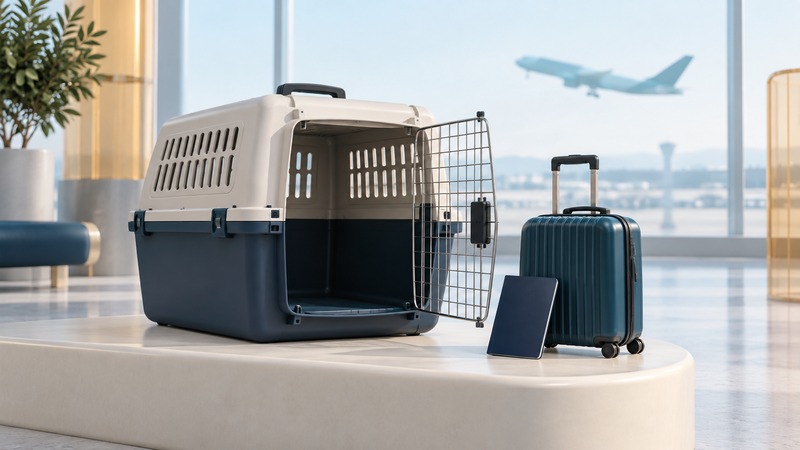
A workable pet flight needs an accepted animal, an accepted container, and valid documents for every part of the route. Start with the operating airline and the destination’s official animal-entry rules before buying a nonrefundable itinerary. Then ask your veterinarian to help build the health and document timeline.
Write down the whole journey
List origin, destination, transit countries, airports, operating carriers, travel dates, the person accompanying the pet, and the return route. Include how and when the pet is reunited with its caregiver after each handoff. A connecting flight can introduce a different carrier or entry requirement.
Ask each operating airline which transport method it accepts for this animal and route: cabin, accompanied baggage where available, or cargo. Confirm species, breed, age, size, booking procedure, seasonal restrictions, container rules, and check-in location. Record the answer and its date. A passenger reservation by itself leaves the pet’s acceptance unresolved.
USDA APHIS’s pet-travel overview explains the distinction between destination requirements and airline requirements. Recheck both after an itinerary change.
Plan veterinary work and the container early
Share the itinerary and all available vaccination and identification records with the veterinarian. Ask who prepares the destination’s certificate, whether government endorsement is required, and what original documents must travel with the animal. Some steps depend on earlier steps; last-minute paperwork cannot repair every timing problem.
Measure the pet using the airline’s required container method and verify the actual model, construction, ventilation, fasteners, and food or water arrangements. Practice calm time in the accepted container well before departure. IATA’s traveler guidance for pets helps explain preparation and container considerations; the operating airline confirms acceptance.
IATA discourages sedation for air transport because of the risks involved. Discuss travel anxiety and any medication plan with your veterinarian and airline in advance. Do not improvise a sedative or give a human medicine to make the journey easier.
Worked planning example: United States to Great Britain
This example concerns a privately owned dog traveling from the United States to England, Scotland, or Wales with its owner under the noncommercial pet-travel rules. Northern Ireland has a separate route. Rehoming, a pet traveling more than five days apart from its owner, or other circumstances can change the applicable process. The Great Britain entry guide is the starting point for checking eligibility and approved routes.
On a small screen, focus this table and use the arrow keys, or swipe, to read all columns.
| Stage | What to establish | Evidence to keep |
|---|---|---|
| Before committing to travel | The planned route and carrier accept this dog under the applicable entry process. | Official rule links, airline acceptance, and dates checked. |
| Identification and rabies | The chip and vaccination sequence meets the destination requirements. | Scanned chip number and original veterinary vaccination record. |
| Veterinary paperwork | The appropriate certificate, endorsement process, and validity window match the arrival date. | Completed official documents and the vet’s document checklist. |
| Dog tapeworm treatment | Any required treatment falls within the permitted arrival window. | Veterinarian’s dated and timed entry in the travel document. |
| Departure and return | Documents, check-in, collection, and U.S. re-entry requirements remain satisfied. | Accessible original papers and contacts for disruptions. |
For this route, APHIS’s U.S.–Great Britain instructions specify identification requirements and the rabies sequence. A qualifying primary rabies vaccination requires a waiting period of at least 21 days, or longer if the vaccine’s labeled validity requires it. The veterinarian should determine the valid-from date from the actual records.
Great Britain’s dog tapeworm rules require applicable treatment by a veterinarian 24 to 120 hours before entry, with specified exceptions. Plan against arrival time, including time zones and delays. Have the veterinarian confirm the treatment and record requirements; this guide is a planning aid, not a travel certificate.
Give the return and a delay their own plan
For dogs returning to the United States, use the CDC dog-importation process. Requirements depend on factors including where the dog has been during the preceding six months and where rabies vaccination occurred. Check the current branch that fits your dog; an outbound document does not settle every return requirement.
Before departure, save airline and handling contacts, the destination collection procedure, veterinary contacts, and the document set where you can reach them without relying on one phone. Ask what happens if a flight changes or a document window expires. Recalculate time-sensitive steps whenever arrival changes, and have the responsible airline, veterinarian, or authority resolve any uncertainty before travel.
Save a working record
Pet flight route and document planner (plain text). Save a copy and fill it in with a text editor. Keep completed personal and medical records private.