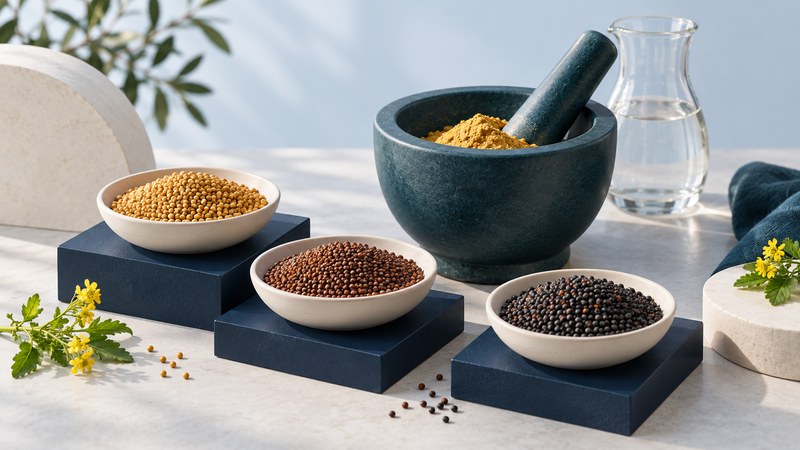
Choose mustard by both its form and its role. Whole seeds can remain visible in pickles or be heated in oil as part of a cooked dish. Ground mustard disperses through sauces, while prepared mustard already contains liquid and often acid and salt. Matching those roles makes a substitution easier to judge.
Choose the seed the recipe specifies
On a narrow screen, scroll the table sideways. Keyboard users can focus it and use the arrow keys.
| Type | Useful distinction | How to shop |
|---|---|---|
| Yellow or white mustard | Generally milder; commonly used in yellow condiments and pickling. | Look for a culinary seed or powder labeled for the recipe’s form. |
| Brown mustard | Typically more pungent than yellow; used in condiments and cooked dishes. | Match a recipe that specifies brown seed when possible. |
| Black mustard | Used whole in many Indian cooking methods. | Buy a clearly labeled culinary product; follow its recipe rather than judging by color. |
SaskMustard’s production manual distinguishes yellow mustard (Sinapis alba) from brown and oriental mustard (Brassica juncea). Oriental mustard can have a yellow seed coat despite its stronger flavor. Color alone therefore cannot identify the type or predict a finished condiment’s intensity.
Whole seed and prepared mustard also have very different textures. A spoonful of condiment adds liquid and seasoning; it cannot supply intact seeds in a pickle or the same behavior in hot oil.
Use whole seeds within a complete cooking method
Some recipes heat mustard seeds in oil before adding vegetables. This step releases aroma and can make the seeds pop. Set out the next ingredients and a lid before starting, keep your face away from the pan, and use the recipe’s heat and quantities.
In The Spice House’s curried cauliflower method, brown seeds go into hot oil under a cover, followed by curry powder and cauliflower. The sequence matters: leaving the seeds in hot oil while you chop the vegetables can burn them.
If seeds smell acrid or burn, restart that seasoning step with fresh oil and seed. If they remain quiet, check the recipe’s pan temperature rather than immediately adding more spice. Treat popping as a cooking cue for that method, not as proof that the whole dish is done.
Give ground mustard the preparation it needs
Crushing seeds and adding water allows mustard’s pungent flavor to develop. SaskMustard’s prepared-mustard explanation describes how water temperature and the addition of acid affect the result. Follow a complete condiment recipe so its order, resting time and storage instructions work together.
As a specific manufacturer example, Keen’s table-mustard directions mix its powder with water and allow it to stand before serving. A dry powder added directly to a cooked sauce follows a different route; use the quantity and addition stage written for that sauce.
McCormick’s ground-mustard product lists ground mustard as its sole ingredient. Check your own tin: a prepared blend may contain additional ingredients. For smooth mixing, work the measured powder into a little of the recipe’s liquid before combining it with the remainder.
Store dry seed separately from prepared foods
Keep dry seed and powder tightly closed, cool and dry. Use a dry spoon and close the container away from steam. Follow the label for an opened prepared mustard; follow the complete recipe for a homemade version.
Mustard seed also seasons preserved vegetables. For home canning, use a tested process such as the National Center for Home Food Preservation’s fresh-pack dill pickles, including its acidity, jar sizes and altitude-adjusted processing. Adding mustard seed to an improvised brine does not establish a safe canning process.
For another salty, tangy sauce ingredient, see preparing and using capers. The Cajun-style blend guide shows how separating seasoning from salt can make adjustments easier.
Explore all seasoning and ingredient guides · Food, cooking and meal planning