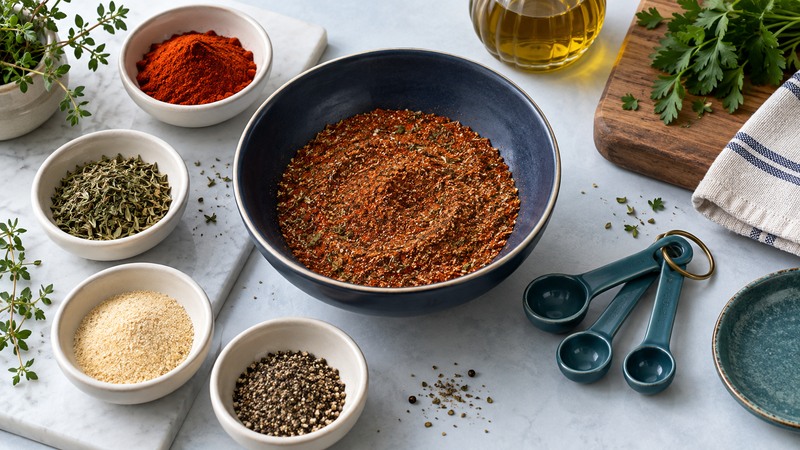
A homemade Cajun-style blend lets you choose the pepper heat and add salt to the food separately. The original house formula below combines paprika, garlic, onion, herbs and peppers. It is a practical starting blend with its own flavor balance; family recipes and commercial products vary.
Mix one small batch
Use dry measuring spoons, a small bowl, a spoon or whisk and a clean dry jar. All quantities below use level US teaspoons; 3 teaspoons equal 1 tablespoon. Use single-ingredient garlic and onion powders.
On a narrow screen, scroll the table sideways. Keyboard users can focus it and use the arrow keys.
| Ingredient | One batch | Double batch |
|---|---|---|
| Sweet unsmoked paprika | 6 tsp | 12 tsp |
| Garlic powder (not garlic salt) | 2 tsp | 4 tsp |
| Onion powder (not onion salt) | 2 tsp | 4 tsp |
| Dried oregano leaves | 1 tsp | 2 tsp |
| Dried thyme leaves | 1 tsp | 2 tsp |
| Ground black pepper | 1 tsp | 2 tsp |
| Ground cayenne | ½ tsp | 1 tsp |
Yield: approximately 4½ tablespoons before settling. Mixed powders and herbs can pack together, so measured jar volume may differ slightly from the sum. A double batch totals 27 teaspoons, or 9 tablespoons.
- Rub the dried oregano and thyme lightly between clean fingers to break up large leaves.
- Combine all ingredients and stir thoroughly, breaking up powder clumps.
- Transfer to the dry jar. Label it with the date, cayenne quantity and “no salt added.” Shake or stir before measuring.
Download the Cajun-style blend card (TXT) for the formula, mixing instructions and usage notes. The formula and arithmetic have been checked; the blend is an original proposal and has not been kitchen-tested by Yenra.
Change one flavor at a time
For less heat, use ¼ teaspoon cayenne; ingredient volumes then total 13¼ teaspoons. For a hotter batch, use 1 teaspoon, giving 14 teaspoons total. The peppers you buy vary in strength, so these are relative adjustments to this recipe. Black pepper still contributes pungency when you reduce the cayenne.
For a smoky variation, replace 1 of the 6 teaspoons of sweet paprika with smoked sweet paprika. Keep the total paprika quantity unchanged and label the variation. The paprika guide explains why smoked hot paprika would change two things at once.
Compare store-bought blends by their actual label. For example, the McCormick Culinary Cajun seasoning ingredient list includes salt. Replacing a salted blend with this one changes seasoning and salt together unless you account for both.
Start small, then taste cooked food
On a narrow screen, scroll the table sideways. Keyboard users can focus it and use the arrow keys.
| Food | Starting quantity | How to evaluate |
|---|---|---|
| 1 pound (454 g) vegetables | 2 tsp blend with enough oil to coat lightly | Cook using an established vegetable recipe; taste before adding salt or more blend. |
| 1 US cup plain yogurt or sour cream | ½ tsp blend | Mix, let flavors combine in the refrigerator, then taste and adjust. |
| 2 US cups cooked beans or soup | ½ tsp blend | Stir in, heat through and taste; account for salt already in the base. |
These are seasoning trials, not tested complete recipes. Weigh vegetables before cooking for a repeatable starting point. For four pounds of vegetables at the suggested rate, the calculation is 4 × 2 = 8 teaspoons of blend; cook in suitably sized batches using your usual method.
If applying a blend to raw meat, portion the seasoning into a separate bowl first. Discard any portion that becomes contaminated with raw meat or its juices. Taste only safely cooked food and follow the recipe’s required internal-temperature checks.
Store the dry blend and learn from a batch
Keep the mixture dry in a tightly closed jar away from the stove and sunlight. Penn State Extension recommends checking spice aroma as freshness declines. Write down when you mixed the blend and whether its flavor still meets your needs; an ingredient already faded in its original jar will also be faded in the mix.
A wet dip or marinade has the storage requirements of the finished food, not those of the dry spice jar. Keep the dry mix separate. For a gentler herb-focused alternative, use the poultry seasoning blend.
Explore all seasoning and ingredient guides · Food, cooking and meal planning