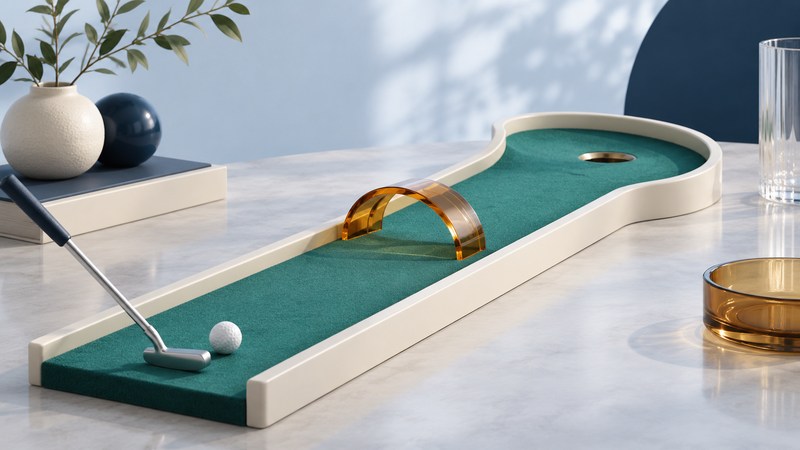
Miniature golf is easy to start: choose a venue that suits the group, learn its house rules and roll the ball toward the cup with a short, controlled stroke. The best first outing gives everyone room to participate and enough time to enjoy the obstacles.
Choose the outing before choosing the course
Check the number of holes, expected visit length, indoor or outdoor setting, booking requirements and the age policy for your intended time. Some entertainment venues combine golf with a bar or restaurant; their evening admission rules can differ from daytime rules. Ask whether equipment is included and whether smaller putters are available.
For accessibility, ask specific questions: step-free entry, routes between holes, ramps or steep slopes, reaching the putting surface, rest seating and accessible toilets. Explain the needs of your group so staff can describe the actual route. A general accessibility symbol may leave important details unanswered.
At an outdoor venue, check the forecast and the cancellation or rain-check policy before leaving. Have a plan to move indoors if conditions change. A shorter round or a quieter booking time can suit young children and anyone who benefits from a slower introduction.
Read the house rules together
Swipe the table, or focus it and use the arrow keys to see every column.
| Question | What to confirm |
|---|---|
| How do we win? | Lowest stroke total, highest points or another venue-specific format |
| When does a turn end? | Whether one player finishes a hole or players alternate strokes |
| Is there a stroke limit? | The maximum, when to pick up and what score to record |
| What happens at a wall or obstacle? | Permitted repositioning and whether a penalty applies |
| What if a ball leaves the lane? | The replacement point and any added strokes |
| How are ties handled? | The venue’s rule or an agreed friendly result |
Traditional stroke scoring rewards fewer strokes, but some venues use points. For example, Puttshack’s published nine-hole scoring explanation uses a higher-points-wins game with bonuses and hazards. Follow the system for the venue and game you booked. Organized tournaments have their own published rules; casual house rules are not interchangeable with them.
Start with direction and pace
- Stand comfortably with the ball within easy reach. Hold the putter securely and aim its face along the intended starting line.
- Look from the ball toward the cup or the next useful opening. Notice slopes, rails and obstacles before choosing the route.
- Use a small smooth stroke. Watch where the ball starts and how far it rolls; use that observation to adjust the next attempt.
- For a bank shot, choose a visible point on the rail. Try a gentle rebound when play permits and observe the result. Rail shape, speed and surface affect the bounce.
A straight-looking line can still break on a slope. Focus on learning one feature of the hole rather than hitting harder after every miss. Keep the club low and wait until the playing space is clear; a miniature-golf lane calls for putting, not a full swing.
Keep a friendly, accurate record
Read the score aloud when a hole finishes and let the group confirm it. Agree beforehand whether the outing is a competition or simply practice. For a cooperative version, celebrate each player’s best putt or work toward completing the course together; keep that separate from any official venue leaderboard.
Keep the course pleasant for the next group
Wait until the group ahead has cleared the hole, keep bags out of the route and let staff resolve a jammed ball or equipment problem. Follow the venue’s group-size limit and instructions for moving between holes. Return equipment at the end.
After the round, ask which hole everyone would like to try again and what they noticed about pace or rebounds. That gives the next visit a simple purpose while keeping the game enjoyable.