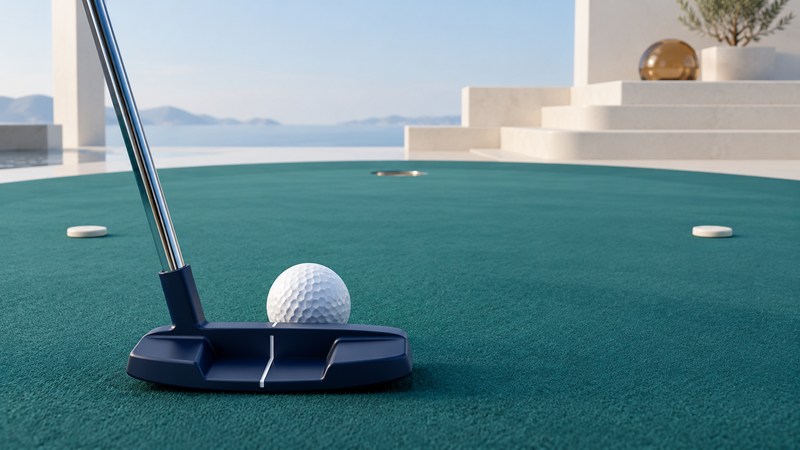
A putt combines a starting direction with a pace chosen for the slope. Separate those tasks in practice, then bring them back together. Use a practice green, your usual ball and putter, and a small set of markers permitted by the facility. Measure progress against the same task on another day.
Choose a line and a pace together
Look at the broad slope first, then consider the ground the ball will cross near the hole. Decide how you want the ball to arrive: a firmer putt generally follows a different path from one that approaches gently. Pick a starting line for that intended pace and commit to both through your routine.
After a miss, ask two questions: did the ball start where you intended, and did it travel the intended distance? If either changed, the result is weak evidence about your read. This simple separation helps you choose the next exercise instead of changing everything at once.
Exercise 1: observe the starting line
On a fairly straight part of the practice green, choose a short target line. Place two small markers beyond the ball to form a generous gate, safely clear of the putter’s movement. Putt five balls through it, resetting your aim each time. Begin with a gap you can use successfully, then make the task a little more demanding.
Score one point when the ball passes between the markers without touching them. Record the gate width, distance from ball to gate and number of successes so the next session is comparable. This is a ball-path exercise. A gate around a putter head tests a different task: centered contact and head movement. PGA professional Will Robins demonstrates a putting gate drill for contact work.
If misses alternate left and right, check that your setup and target stay consistent before narrowing the gate. Passing a short gate establishes an initial direction; it does not prove that the whole putt was read correctly.
Exercise 2: control finishing distance
Choose a target on the practice green and mark starting points at approximately 10, 20 and 30 feet, or shorter distances appropriate to the available space. Putt one ball from each in changing order. Around the target, imagine or mark a three-foot-radius finishing zone without damaging the surface.
Record whether each ball finishes inside the zone, short of it or beyond it. Complete three circuits for nine attempts. Keep the same start points and zone for a later comparison. The distances and scoring here are an adaptable practice example, not a required standard of skill.
For a demonstration focused on lag putting, see PGA professional Trish Holt’s distance-control exercise. On a shared practice green, leave other golfers room and collect balls before changing stations.
Exercise 3: read, commit and finish the hole
Choose three practice putts with different slopes and lengths. Give each a single first attempt, then putt out. Count total strokes for all three holes and note where the first putt finished. Repeat from different positions so you must make a fresh decision.
Swipe the table, or focus it and use the arrow keys to see every column.
| Pattern | What to check | Next practice task |
|---|---|---|
| Starts off your intended line | Aim and consistency of delivery | Return to the starting gate. |
| Starts on line but finishes far short or long | Pace choice and distance control | Repeat the distance circuit. |
| Starts as intended with suitable pace but misses | The selected line and slope assessment | Read a similar putt again and compare. |
| Works only after repeated attempts | How you choose and commit on the first ball | Use the three-hole exercise. |
Repeat with context
Note the green, weather, approximate speed, ball and putter. A wet morning and a dry afternoon may produce different distances from similar strokes. Before a round, use the available practice green to get a feel for pace, while recognizing that individual greens can differ.
Keep a brief record in the practice log or your own notebook. These drills belong in permitted practice settings; competition rules govern practice during and between rounds. If you repeatedly struggle to aim comfortably or control contact, a lesson or putter fitting can test the cause with you.