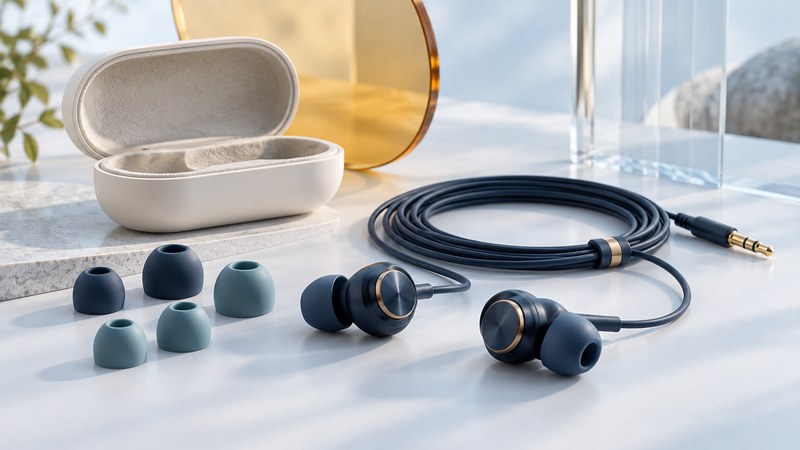
Premium earphones earn their place through comfortable fit, a sound you enjoy, dependable connections and a useful service life. Start with the listening situation you want to improve, then compare those qualities on the device you actually use.
A quiet desk, a noisy train and video calls place different demands on the same pair. Write down your two most important uses before comparing materials, driver counts or accessories. A short, repeatable audition is more useful than a long list of specifications without context.
Establish a comfortable seal first
For earphones designed to seal the ear canal, try the supplied compatible tips according to the manufacturer's instructions. Check each ear separately, then listen at a low, comfortable level and gently move your head. The fit should remain comfortable and stable. Stop if insertion causes pain.
Shure's earphone guide (PDF) explains that a poor sleeve seal can reduce bass response. If bass changes markedly when you reseat the earphone, resolve fit before judging its tuning. A larger or smaller compatible tip may work better; pressing harder is a poor substitute for suitable fit.
Try the earphones long enough to notice pressure, cable rubbing and case or stem contact with your outer ear. Follow cleaning and fitting instructions for the exact product. Shared demonstration units should use the retailer's hygienic audition procedure.
Make a comparison you can repeat
- Use familiar material. Choose a spoken passage, a vocal recording and a busier musical passage you already know. Replay the same short sections on each pair.
- Keep the source consistent. Use the same recording version, device and app. Establish a baseline with equalization and optional sound effects off; test your preferred effects afterward.
- Compare at similar perceived loudness. Begin quietly and avoid turning up to make a pair seem more exciting. This is a personal audition, not a calibrated laboratory test.
- Write specific observations. Can you follow the voice? Do bass notes remain distinct? Are bright sounds comfortable? Does the fit stay secure? Distinguish a preference for stronger bass from an audible fault.
- Test your real tasks. Try calls, playback controls, device switching and a video if these matter. Repeat a short fit check after handling the controls.
A useful comparison note
“Pair A stays comfortable and keeps speech clear during my desk test; Pair B has bass I prefer but loses its seal when I move my jaw.” That observation identifies a tradeoff you can act on. “Pair B sounds more expensive” does not explain what to keep or change.
For interpreting widening and other optional effects, see what Audistry's sound enhancements did. Compare the earphones themselves before changing several processing settings at once.
Pay for the features you will use
| Priority | What to check | Useful audition or documentation |
|---|---|---|
| Quieter travel | Passive fit and, where offered, active noise cancellation. | Try the fit and cancellation modes separately. Cancellation uses electronics; the physical seal still matters. |
| Simple wired playback | Plug type, source output and required audio adapter. | Test sound and controls with the actual phone or player. |
| Wireless convenience | Charging routine, controls, pairing and device switching. | Check manufacturer support for your devices and try the complete connection sequence. |
| Calls and meetings | Microphone intelligibility and control behavior. | Make a test recording or call with consent in a representative environment. |
| Long ownership | Replacement tips, cables where detachable, battery service and warranty. | Look up the exact replacement parts and service process before buying. |
Apple's wired-headphone compatibility guide gives a concrete example of why sound and controls need separate checks: some older iPods can play audio from certain EarPods while some controls remain unavailable. Apply model-specific documentation to the equipment you own.
Use noise reduction to keep listening comfortable at a lower level. The WHO's safe-listening guidance emphasizes lower volume, limited exposure, breaks and well-fitting headphones. Persistent ringing or hearing difficulty warrants advice from a hearing-health professional.
Judge lasting value before you buy
Check the return policy for opened earphones, the warranty's regional coverage and the cost and availability of consumable tips. For a detachable cable, verify the exact connector and approved replacement. For a wireless pair, establish the battery-service options and the replacement process for a lost earbud or case.
A finish you enjoy and a case you will carry can be worthwhile, but assign them their own value. Keep comfort, preferred sound, useful features and ownership support as separate decisions. Choose the pair that passes your essential tasks within your budget; a premium label supplies no substitute for that evidence.
If you prefer room listening, the speaker-dock reuse guide can help make existing equipment useful. For keeping the same test recordings available across devices, see the offline music-library guide.
Explore all Digital Audio guides. Technical sources are linked beside the claims they support.