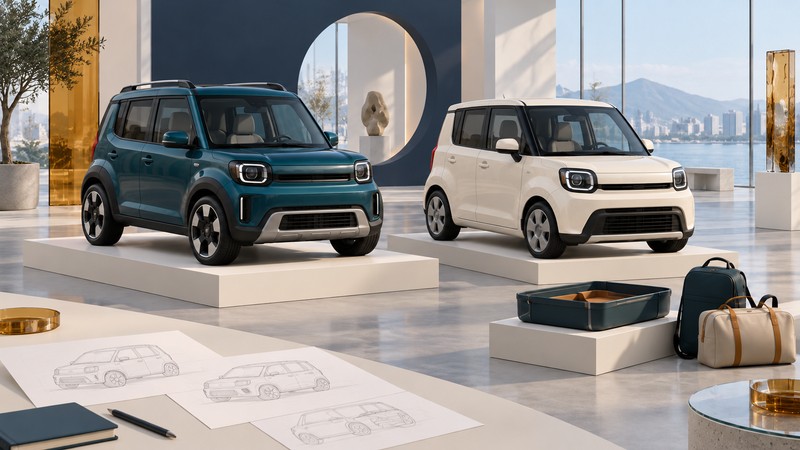
The Soul’s early story is a useful exercise in reading concept cars: follow the design idea, then check each feature against a dated production document. A preview sketch can explain intent, while a model-year brochure establishes the equipment offered to buyers.
This guide connects Kia’s December 2005 preview of the 2006 Soul concept with the US 2010 production model. Keep those dates and stages visible in your notes. An announcement year, a show year and a sales model year can all describe different moments in the same vehicle’s development.
Put the documents in order
- December 15, 2005: concept preview. Kia’s sketch announcement describes the planned Detroit debut, compact exterior, reconfigurable cargo space and a liftgate drawer intended for wet or muddy items.
- 2006: concept-show context. The preview identifies the forthcoming North American International Auto Show and a January 9 press conference. Read its features as a proposal for that show vehicle.
- March 9, 2009: US production introduction. Kia’s 2010 Soul release describes a five-passenger, five-door production vehicle and its US trims. The model-year label is 2010 even though the release was published in 2009.
Save the document title, publication date, market and vehicle stage before extracting details. When a later retrospective compresses the timeline, return to these contemporary records to resolve which event it means.
Compare the same feature across stages
On a narrow screen, scroll the table sideways. Keyboard users can focus the table region and use the arrow keys.
| Feature or idea | Concept-preview evidence | US 2010 evidence and interpretation |
|---|---|---|
| Compact, useful cabin | A small exterior with adaptable interior space. | The production release specifies five passenger places and a 60/40 split-folding rear seat. |
| Wet-item storage | The preview explicitly describes a drawer in the rear liftgate. | The checked production release and brochure do not establish that drawer as production equipment; retain the evidence gap. |
| Exterior character | The sketch announcement emphasizes wheel flares, headlamps and a sloping roofline. | The production release describes a rising beltline and vertical rear lamps. Compare the actual photographs for visible form. |
| Personal expression | A show vehicle presents a selected design treatment. | The production brochure separates trim-specific equipment and options; identify a configuration before making a claim. |
Use the 2010 Kia US Soul brochure, equipment table near the end, to follow a production question further. For example, it marks 60/40 rear-seat folding as standard across the listed trims, while Bluetooth is absent from the base trim and standard on the higher trims shown. Equipment claims should retain that distinction.
Make a small, traceable feature record
Choose a feature narrow enough to check: “liftgate storage drawer” is more useful than “practical interior.” Record whether each document describes a proposal, lists equipment or shows a visible detail. A rendering can suggest a shape; it leaves dimensions, operation and production availability to other evidence.
- Write the exact question and the relevant market or model year.
- Summarize the concept evidence in your own words and save its location in the source.
- Find the corresponding production description or equipment row.
- Label the result as documented at both stages, changed specification, or not established in the sources checked.
- Identify the document or physical check that could close the remaining gap.
For an actual used car, add the build record and fitted equipment. Then demonstrate the function you need. A design-history conclusion and a present-day usability result are complementary records.
Turn a storage idea into a real-use question
If the original wet-gear idea interests you, bring the items you actually carry to a permitted viewing. Record which passenger seats must remain usable, the bags’ dimensions and how wet items would be contained. Have the owner demonstrate seat movement under the matching handbook, then check the complete seating-and-luggage arrangement.
This trial answers your own packaging question. Keep it separate from claims about concept equipment: a removable tray you supply is your chosen solution, and its fit should be recorded as such. For broader guidance on interpreting prototypes, see Automotive Design and the separate RD-X to RDX transition.
Save the feature trail
Download the Soul concept-to-production feature record. Preserve the uncertainty label until a suitable production source or vehicle-specific record resolves it.
Explore Autos: vehicle guides, technology and design · Cars: buying, maintenance and ownership