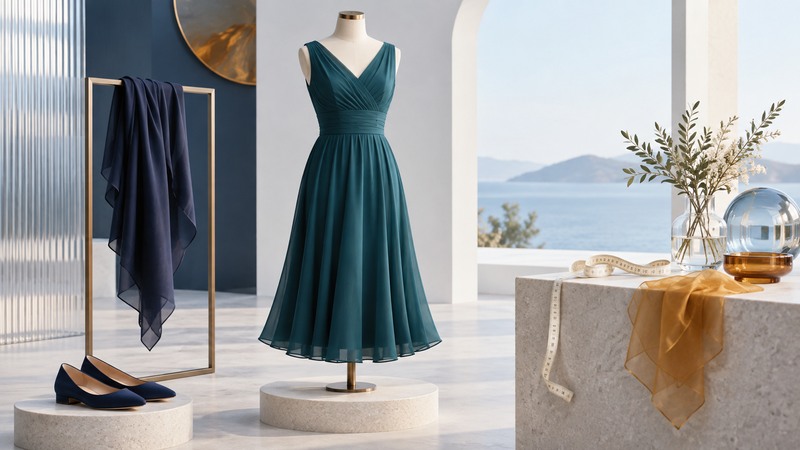
Choose a holiday dress by starting with the invitation and the way you will spend the evening. The right outfit lets you sit, walk, greet people and enjoy the event comfortably. Fit, shoes, outerwear, care and return timing deserve space in the decision alongside color and decoration.
Translate the invitation into a starting point
Read the host's wording, venue, time and planned activities together. A seated hotel dinner, a workplace reception and an informal gathering at home create different demands. If the wording is unclear, ask the host for an example of suitable attire before buying.
| Invitation | An outfit to consider | Detail to resolve |
|---|---|---|
| Casual gathering | A comfortable day dress with an appropriate layer, or another relaxed outfit you already enjoy. | Indoor temperature, outdoor walking and whether shoes come off. |
| Festive or dressy casual | A simple dress with a distinctive texture, jewelry or a polished layer. | How the host interprets festive; color or sequins alone do not define formality. |
| Cocktail or semi-formal | A dress with a polished finish, or a dressy separates outfit. | Length, footwear and level of embellishment appropriate to this venue. |
| Black tie | A formal evening dress; a sufficiently dressy cocktail option may suit some events. | The host's expectations and any cultural or venue-specific requirements. |
These are planning suggestions. Emily Post's attire guide offers conventional U.S. dress-code examples, while its black-tie guide includes both evening gowns and dressy cocktail dresses. Let the actual invitation settle the remaining ambiguity.
Check measurements and movement
For online shopping, compare your measurements with the specific brand's chart and read whether it lists body measurements or finished-garment dimensions. Use a flexible tape, keep it level, and follow the chart's stated measurement locations. Record bust or chest, waist and hips where requested. Compare length against a dress that already works on you, including where the seller measures from.
Fit includes ease: the room between your body and the garment. Stretch fabric and a fitted lining can behave differently, so check both. If your measurements span sizes, examine the cut at the tightest area and ask the seller about the garment rather than selecting by a familiar size label alone.
- Try the intended underlayers and shoes with the dress.
- Sit in a chair, reach forward as if across a table, raise your arms and take normal walking steps.
- Check that closures stay comfortable, straps remain in place and the hem allows the movement you need.
- View the lining, opacity and finish in ordinary daylight and indoor light.
- Add your coat or wrap and carry the bag you intend to use.
Do this while the item remains eligible for return: keep required tags attached and follow the seller's try-on conditions. An outfit that needs constant adjusting in a short try-on is worth reconsidering before a long evening.
Budget for the outfit you will actually wear
Start by assembling an outfit from your wardrobe. Then identify the missing piece: perhaps the dress, a suitable layer, or comfortable shoes. This makes the shopping list specific and gives a new purchase a clear role.
For alterations, obtain a quote and completion date before committing. A straightforward hem and a structural change to a beaded bodice are different jobs. Ask how a change affects the lining, decorations and proportions. Treat a promised repair as an assumption until the person doing the work confirms it.
Renting, borrowing and secondhand shopping can serve occasional events. Compare the full cost, condition requirements, availability and return schedule. Rental fit uncertainty deserves a backup plan; a secondhand final-sale dress deserves especially careful measurements.
Read the care label before choosing delicate details
Ask to see the care instructions when an online listing omits them. Think through how you will clean the dress after food, travel or dancing, and where you will store it. A fabric name alone does not tell you how the complete garment, including trim and lining, should be treated.
The FTC's care-label guidance explains that instructions account for garment components such as linings and trim. Follow the actual label and seek qualified cleaning advice when instructions are unclear. Avoid improvising heat or stain treatments on a special outfit immediately before wearing it.
Examine seams, loose embellishments and closure operation while you can still resolve a problem. Plan any cleaning or pressing early enough to discover a concern before the event.
Make one final outfit check
A few days beforehand, lay out the dress, underlayers, shoes, bag, layer and accessories. Check weather and travel arrangements. Walk in the shoes on the kinds of surfaces you expect; account for stairs and time standing. Dressy flats or another stable option can be a deliberate part of the outfit.
Record the last eligible return date and the alteration collection date. Once the event is over, follow the care instructions, repair minor issues and store the outfit ready for another occasion. A successful purchase has a place in your wardrobe beyond a single photograph.