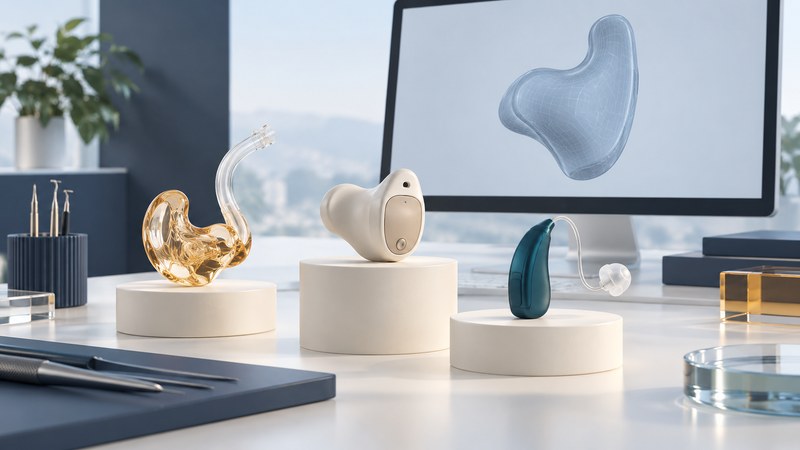
Custom hearing-aid shells and earmolds connect a device's design to the shape of a person's ear. Digital scanning, modeling and manufacturing can help produce that shape. The useful result is a fitting that supports the person's hearing needs, comfort and daily handling.
This is an explanation for hearing-aid users and interested readers preparing a conversation with a hearing-care professional. Ear impressions, fitting decisions and physical modifications belong with qualified professionals following the applicable product instructions.
Know which part is being discussed
The NIDCD hearing-aid overview describes styles worn behind the ear and within the outer ear or canal. The location of the electronics and the way sound reaches the ear help explain why different physical parts are used.
| Part | Role | Question to ask |
|---|---|---|
| Custom shell | A shaped housing used in a custom in-ear hearing aid. | How will I insert, remove and operate this design? |
| Custom earmold | A shaped coupling between the hearing system and the ear. | How does this design fit my device and hearing needs? |
| Dome or standard tip | A replaceable component used with some receiver or tube arrangements. | Which exact type and size does my provider specify? |
Ask the provider to identify the part on your own device. Similar-looking tips can have different acoustic or retention properties. Keep the exact model and component information with your fitting records.
Understand the digital production path
One current manufacturer example is 3Shape Audio's design software, which supports shells and several earmold types. Its documentation describes importing scans, shaping a model and preparing material-specific outputs. That describes a production capability; it does not establish that one process will give every wearer a better result.
- Clinical information and ear shape: the professional and laboratory establish the required product, ear-shape data and fitting specifications. Ask how the shape will be captured and who checks it.
- Digital design: the laboratory develops a model around the selected product and production process. Features such as receiver placement, retention and openings are design decisions, not decorative details.
- Manufacture and finishing: the approved material and equipment workflow determines the steps needed to produce and finish the component. Some workflows produce a final shell; others produce a mold used in making a softer part.
- Assembly and checks: the part is checked with the intended hearing system before the professional evaluates its use with the wearer.
- Fitting and follow-up: handling, physical comfort and hearing performance are reviewed together; adjustments or remakes may be considered when needed.
3Shape's receiver-in-canal earmold explanation discusses comfort, retention, venting and receiver placement. These are useful subjects for questions, rather than settings for a wearer to change independently.
Prepare for the fitting conversation
Bring your hearing aid, the relevant accessories and any previous fitting notes. Tell the professional which activities matter: conversation at a table, wearing glasses, using headwear, putting the aid on independently or cleaning it with your available dexterity and vision.
- Ask to practice insertion and removal with the professional's instruction.
- Explain whether the difficulty is physical handling, discomfort, sound quality or a wireless connection. These may require different investigations.
- Ask which observations should prompt you to stop use and contact the practice, and obtain the provider's contact route.
- Confirm the prescribed cleaning method, replacement components and follow-up arrangements.
- Ask about trial, adjustment and remake terms before ordering, including which costs or conditions apply.
The NIDCD guide recommends discussing maintenance, service and instruction when choosing hearing aids. Record the actual agreement from your provider; another person's experience or a general article cannot establish your terms.
Describe the problem without guessing its cause
Use ordinary descriptions: where the sensation occurs, when it begins, what you were doing and whether it repeats. Follow the provider's instructions for discomfort or other concerning symptoms. Do not file, drill, heat or add material to an earmold or shell yourself.
Sound changes also deserve specific observations. Tell the provider whether the issue occurs with your own voice, conversation or a connected audio source, and whether it follows a change of component. Let the professional determine what needs checking.
Keep physical fit and connectivity records together
Save the device model, specified parts, service contact and care instructions in a format you can use. Ask what happens if the component needs repair, replacement or a new fitting, and how the practice will review changes in your needs.
For phone streaming and calls, use checking an exact phone and hearing-aid pair. For remote microphones and other listening paths, see wireless hearing aids and listening accessories. A well-described issue helps the provider investigate the relevant part of the complete system.
Explore the library
Assistive Technology: Practical Guides for Everyday Access
Sources appear beside the claims they support. Reviewed October 4, 2026. Check current product instructions for your version, location and intended use.