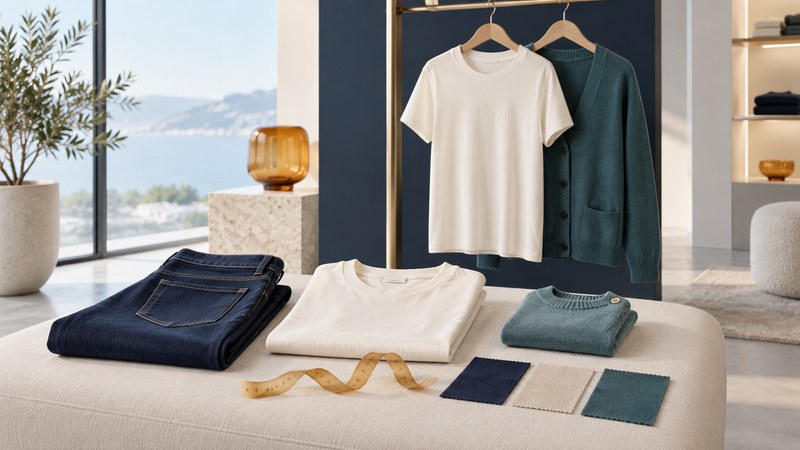
Gap is a useful place to compare everyday clothing across adult, kids and baby ranges: jeans, tees, shirts, knitwear and layers that can work together. Start with the garment you need, your measurements and the way you will wear it. Then compare the exact fabric, fit, final price and return route.
This guide uses U.S. shopping examples checked in October 2026. Assortments and policies vary by country and selling channel; the terms attached to your order govern the purchase.
From a jeans shop to a family wardrobe
Don and Doris Fisher opened the first Gap in San Francisco in 1969, selling jeans and music. Gap-label products followed in 1974, and GapKids opened in 1986. The company's history helps explain why denim and casual clothing remain central to its identity.
Gap is a brand within Gap Inc. Keep the brand name on the product and receipt in view when shopping across the company's websites. A shared corporate owner does not make another brand's size chart or return counter interchangeable.
The current Gap catalog separates adult clothing, girls, boys, and baby and toddler ranges. Shop by the wearer's measurements and intended use. For a child, compare height and other chart measurements as well as the age label; for an adult, check the relevant garment category and any available length or proportion option.
Choose a fit before choosing a size
A size label and a silhouette answer different questions. Size describes a position within a particular chart; fit describes the garment's shape and ease. For jeans, consider rise, room through the hip and thigh, leg shape, and inseam separately. A wider leg can change the look without solving a tight waistband.
- Measure for the correct chart. Follow Gap's measuring and fit guides, using the same units throughout. Keep a short note of your measurements and the date.
- Read the individual listing. Check fit description, rise, inseam options, model information and material composition. Distinguish body measurements from finished-garment measurements.
- Compare with a garment you already wear. Lay it flat and compare equivalent measurements where the listing supplies them. A body circumference and a flat waistband width need different interpretation.
- Test normal movement. Sit, reach, bend and walk in the shoes or layers you expect to use. Check whether seams twist, the waistband pulls or the hem catches.
For a gift, ask for the recipient's preferred fit and an existing garment reference. If fit remains uncertain, choose an eligible return route and keep the gift documentation.
Read what the garment is made of
Compare the listed fiber percentages, care instructions and construction for the exact color and style. Similar photographs can conceal different fabrics. Stretch content is useful information, while the actual feel, thickness and recovery still need inspection.
- Jeans and trousers: check waistband comfort, pocket placement, seam alignment and how the fabric feels when seated.
- Tees and shirts: inspect opacity in normal light, shoulder position, neckline shape and the room needed for movement.
- Knitwear: check skin comfort, surface texture, seam finish and whether the care routine suits your household.
- Children's clothing: test fastenings and ease of dressing, and check the item's age and use guidance.
Include laundering, drying and any alterations in the decision. A garment that needs a care routine you will rarely follow can be a poor match even when the initial price is attractive. For a broader value comparison, use the guide to deciding when paying more is worthwhile.
Check whether you are shopping Gap or Gap Factory
Use the official store locator to distinguish Gap retail and Factory locations. Gap's locator explicitly separates their return routes: retail merchandise cannot be returned to a Factory store, and Factory purchases have their own route.
Compare the actual product number, fiber content, construction and measurements when two items look similar. Evaluate each item on its own description; a familiar name or photograph alone cannot establish that the merchandise is identical. Confirm the destination website and store type before applying a promotion or planning a return trip.
Make the checkout total and return route explicit
Record the final item price after eligible discounts, delivery, tax and any expected alteration cost. Check promotion exclusions and the cost of extra items added to reach a shipping threshold. A larger discount percentage is less useful than the final cost of the items you actually need.
For pickup, verify the selected store and wait for the order's ready notification before traveling. Check the collection deadline and identification instructions in the confirmation.
Read the current return-policy FAQ before checkout. It specifies original-condition requirements, final-sale exclusions and restrictions for certain merchandise and sales channels. Save the applicable deadline, its starting date, the permitted return method and the order number. Try eligible items promptly while keeping them in returnable condition.
A five-point purchase check
- I know the range, style, size and length I selected.
- The fit and care requirements suit how I will wear it.
- I compared the total cost, including delivery and alterations.
- I know whether this is Gap retail or Gap Factory.
- I saved the receipt, return deadline and correct return route.
For occasion clothing, see choosing an outfit for the invitation, fit and total cost. For secondhand alternatives, see thrift shopping and secondhand style.