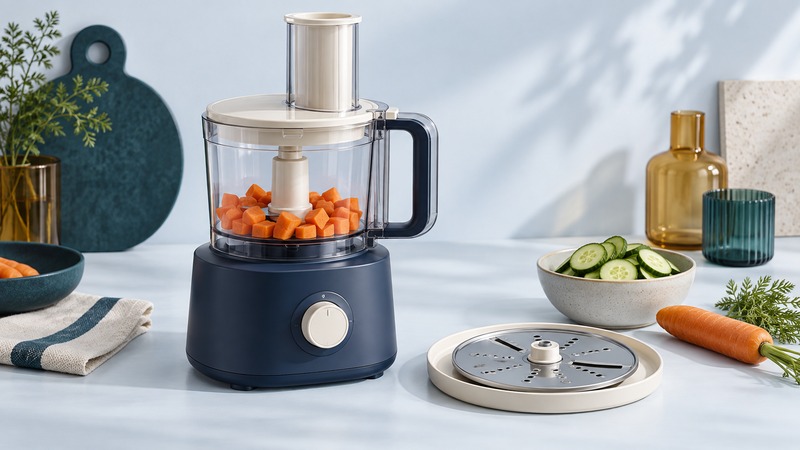
A food processor is most useful when it removes repeated preparation work: chopping a batch of vegetables, slicing evenly or mixing a supported dough. Choose it from those jobs. A bowl capacity and a motor claim alone leave out the working fill limit, the attachments and the cleanup you will do afterward.
Choose from your recurring preparation
Write down the three jobs you expect to repeat. Include the amount, desired texture and frequency. Someone making small portions of dressing has a different requirement from someone slicing vegetables for several meals. Bring the largest realistic batch into the comparison, while also asking how the machine handles your smallest one.
A processor's advertised bowl volume is not a universal working capacity for liquids, chopping and dough. The KitchenAid food-processor manual distinguishes fill guidance by mixture type. Use the exact model's limits and recipe quantities. Leave room for food to move through the cutting path.
Compare the time saved with the work of assembling, emptying and washing the bowl. If a knife already handles your usual amount quickly, the processor needs another recurring job to justify its storage space. A liquid smoothie is a different task; see personal blenders.
Match the tool to the texture
| Task | Typical tool | What to check |
|---|---|---|
| Chop ingredients | Multipurpose blade with pulse. | Permitted foods, preparation size and working fill. |
| Make a puree | Multipurpose blade and supported continuous setting. | Liquid limit and the texture needed for the recipe. |
| Slice or shred | The matching disc and feed tube. | Disc orientation, thickness option and correct food pusher. |
| Mix or knead dough | Only the attachment and recipe supported by that model. | Maximum flour quantity, run time and dough type. |
KitchenAid's step-by-step guide explains the different jobs of the blade and slicing or shredding discs. Check which accessories are included rather than judging by the number shown in a product photograph. Also check how they store without exposed cutting edges.
Use pulse to stop at the right texture
Prepare similarly sized pieces within the manual's guidance. Assemble the bowl, attachment and lid correctly before starting. Use brief pulses and inspect the result between them. The useful stopping point is the texture your recipe needs; an extra burst can turn a coarse mixture into something much finer.
The KitchenAid 13-cup operating instructions illustrate a pulse control that stops when released. Control behavior varies, so learn yours with a modest batch. For slicing, use the supplied pusher as directed and keep hands away from the feed opening and moving blade.
Diagnose the result and clean promptly
Large pieces among a paste: revisit starting piece size, mixed textures and batch size. Food smeared on a disc: check whether the ingredient and its temperature suit that disc. Liquid escaping: stop and check the model's liquid limit and assembly. Motor will not start: use the manual's lock and assembly checks; never defeat an interlock.
Before clearing or changing attachments, stop the machine, wait for movement to cease and disconnect it according to the manual. Handle cutting parts by their intended hubs or grips. Wash only the parts approved for the selected cleaning method, then dry and store them securely. Keep the motor base out of wash water.
For an older Viking or another inherited processor, begin with its model plate and correct manual. Identify missing discs or pushers by part number before buying replacements. A complete, supported tool set matters more than a close visual match to a listing.