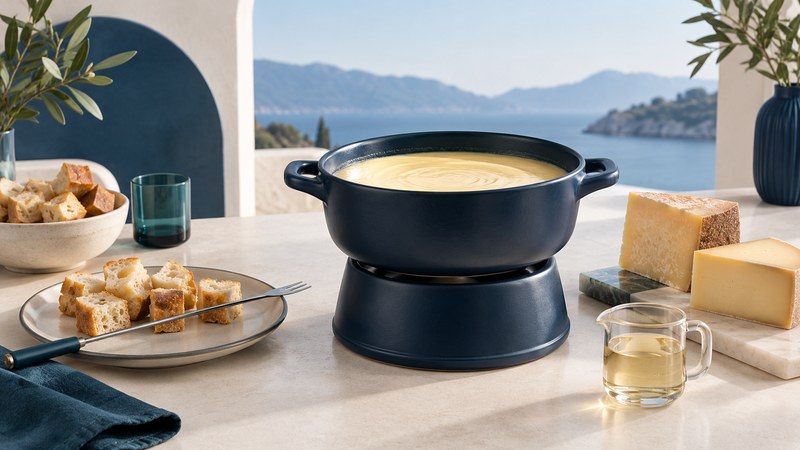
Smooth fondue starts with a matched cheese blend, measured liquid and starch, and controlled heat. Prepare the bread and table before melting the cheese. Once the mixture is ready, it needs gentle attention and prompt serving.
A defined blend for four
Le Gruyère AOP’s moitié-moitié recipe (French) uses equal weights of Gruyère AOP and Vacherin Fribourgeois AOP. Here are its quantities, with the wine converted from deciliters to milliliters. “Corn flour” in this context means the fine thickening starch sold as cornstarch in the United States.
On a narrow screen, focus the table and use the arrow keys to scroll.
| Ingredient | Four people | Two people |
|---|---|---|
| Gruyère AOP, grated | 400 g | 200 g |
| Vacherin Fribourgeois AOP, small pieces | 400 g | 200 g |
| White wine | 350 ml | 175 ml |
| Cornstarch | 4 teaspoons | 2 teaspoons |
| Garlic | 1 clove | ½ clove |
This is a cheese-centered meal quantity: 800 ÷ 4 = 200 g cheese per person. For a starter, plan smaller portions and additional dishes. Keep the cheese-to-liquid ratio when scaling; the pan size and heating time still require judgment.
Melt in a deliberate sequence
Following the French-language source method: rub the fondue pot with garlic. Combine the Gruyère and starch, add the wine and heat while stirring until the mixture comes to a boil. Reduce the heat, incorporate the Vacherin and stir until melted. Keep the finished fondue warm over very low heat; avoid boiling after the Vacherin is added.
Use a pot rated by its maker for your heat source. If the serving pot is unsuitable for a stovetop, use compatible cookware and transfer according to the equipment instructions. Set the serving stand on a stable heat-resistant surface. Have bread cubes, cooked potatoes or prepared vegetables ready in separate bowls so water from the accompaniments does not drip into the cheese.
Adjust one thing at a time
A useful serving texture coats a bread cube while still flowing from the spoon. Temperature and consistency are connected: a cooling fondue thickens, so check the heat before changing the recipe.
On a narrow screen, focus the table and use the arrow keys to scroll.
| What you see | First response | Next decision |
|---|---|---|
| Thick but smooth | Stir and check that it is still gently warm | Add a little of the recipe’s liquid, stirring before adding more |
| Thin but smooth | Allow the starch in the recipe time to work | Follow a recipe-specific thickening adjustment |
| Oily or separated | Lower the heat and stir | Use a documented starch-slurry correction appropriate to that blend |
| Burned layer on the bottom | Stop heating | Transfer the unburned portion without scraping up the scorched layer |
Coop’s fondue preparation and troubleshooting guide describes liquid and starch adjustments, including a brief reheating step for its own mixture. That method differs from the Vacherin finishing step above. Follow one recipe’s sequence and avoid combining conflicting heat instructions. Dry starch added directly to a finished pot can form lumps; disperse it in the specified cool liquid first.
Plan an alcohol-free version from the start
Coop suggests apple juice in place of wine for its fondue method. This changes sweetness and flavor, so make a small trial before serving it to guests. Choose a recipe written for the blend and liquid you intend to use; keep optional kirsch or brandy out of an alcohol-free meal. Cooking with wine is not a dependable way to make a dish alcohol-free.
When Vacherin is unavailable, choose a complete recipe written for the replacement cheese. A bag labeled simply “Swiss” gives less information than a named style. Cheddar sauce is another useful route when your ingredients suit a milk-based sauce better.
Serve promptly and manage the leftovers
Transfer food from a dipping fork to a plate before eating, and use a separate eating utensil. Keep cords and hot equipment away from the table edge. Follow the warmer’s instructions and keep the meal moving. For food held for an extended period, FDA: serving safe buffets gives a hot-holding target of 140°F or above; a barely warm decorative pot may not maintain it. Cool and refrigerate leftovers promptly within the applicable serving-time limit.