Delta II helped build the operational GPS constellation and sent spacecraft to study Earth and other worlds. Its history is easiest to understand through three questions: which configuration flew, what trajectory it supplied, and what the spacecraft did afterward.
A career from GPS to Earth science
Delta II first flew in February 1989 and completed 155 launches over a career of nearly three decades. ULA’s Delta II history records GPS, Mars exploration, and commercial satellite missions, followed by the final ICESat-2 flight. Its closing run of 100 consecutive successful missions describes the end of the program, rather than all 155 launches.
The final launch took place on September 15, 2018, from Vandenberg in California. NASA’s retrospective on the Delta II museum display connects that flight to the vehicle’s earlier role in deploying GPS. Today, Delta II is a historical vehicle: use its mission records to understand the hardware and its achievements.
Decode 7925-9.5
The designation is a compact hardware description. Read the digits in order, then the fairing suffix. The following interpretation follows the December 2006 Delta II Payload Planners Guide, Table 1-1 and its vehicle illustrations.
On a narrow screen, scroll the table sideways. Keyboard users can focus the table region and use the arrow keys.
| Part | Meaning | What to picture |
|---|---|---|
| 7 | 7000-series first-stage engine and booster family | An RS-27A main engine with graphite-epoxy solid motors. |
| 9 | Nine strap-on solid motors | Boosters clustered around the central first stage. |
| 2 | AJ10-118K second-stage engine | A separate liquid-propellant upper stage. |
| 5 | Star 48B third-stage motor | An additional solid-propellant stage. |
| 9.5 | Fairing diameter in feet | The protective enclosure around the spacecraft. |
For example, a final digit of 0 in the four-digit code indicates a configuration without a third stage. Additional suffixes distinguish other hardware choices, so retain the complete designation when comparing two flights.
Follow the hardware through a mission
A launch vehicle discards hardware as its job is completed. The central first stage and strap-on boosters provide the initial acceleration. The second stage continues the climb and shapes the trajectory. Where fitted, a third stage supplies another increment of velocity before spacecraft separation. A fairing protects the spacecraft early in ascent and is discarded when mission conditions permit.
ULA’s October 2007 GPS IIR-17 mission account identifies an RS-27A first stage, an AJ10-118K second stage, and a Star 48B third stage in a 7925-9.5 vehicle. This is a useful worked example of matching a code to a specific flight.
Keep the launch vehicle separate from the payload in your notes. The launcher provides a trajectory and separation conditions; the spacecraft then performs its own operations. A successful launch and a successful multi-year science mission are related achievements with different evidence.
Read the mission, then the rocket
GPS: building infrastructure
Repeated satellite launches helped establish and replenish a navigation system. Read the satellite generation and mission identifier, then the launch date and configuration. A single launch report describes one addition to a larger constellation.
Mars: the beginning of a journey
Spirit, Opportunity, and Phoenix appear in ULA’s mission history. Their journeys illustrate why launch performance must be tied to a destination and trajectory, with cruise, arrival, and surface operations left to the spacecraft.
Earth observation: the closing flight
ICESat-2 provides a clear endpoint for the launcher’s career. The spacecraft’s Earth-observation purpose also shows how a rocket associated with GPS became useful to several scientific communities.
When a brochure gives a payload capacity, read the orbit, inclination, launch site, fairing, and stage combination beside it. Those conditions explain why two capacity figures for “Delta II” can legitimately differ.
Make a useful launch-history record
- Identify the flight: write the mission name, date, and launch site from an official mission account.
- Keep the whole configuration: include the fairing suffix and any Heavy designation.
- Separate the milestones: record liftoff, spacecraft separation, and later spacecraft accomplishments independently.
- Check the wording: distinguish a planned date from an actual launch and an individual mission result from a program-wide record.
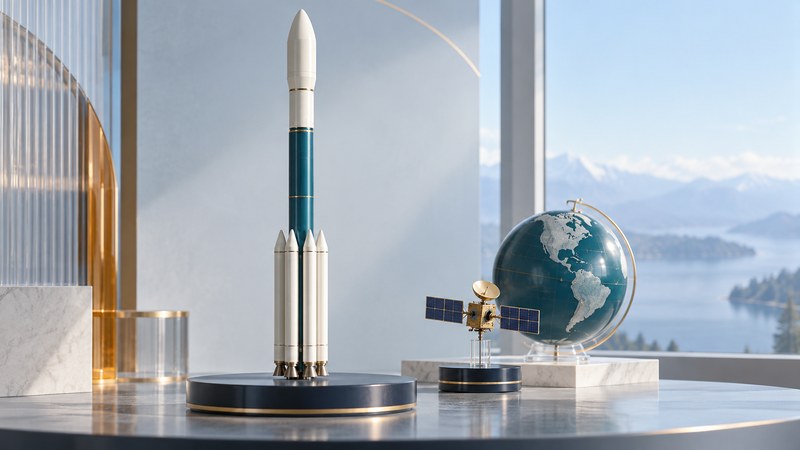
For a museum visit, compare the full vehicle’s slender proportions with the size of the payload enclosure. An exhibit model helps with overall arrangement; the payload guide supplies the exact hardware definitions. The fuel guide explains the RP-1/oxygen combination used in the first stage.