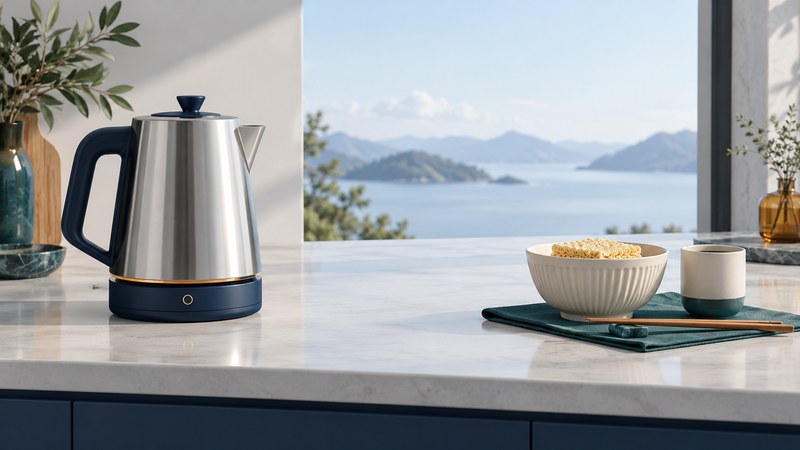
Choose by the permitted contents in the manual. A water kettle heats water that you pour into a cup or bowl. A cooking hot pot may heat food inside its vessel when its instructions expressly allow that use.
“Cordless” commonly describes a kettle that lifts off its powered base for pouring. Its base still connects to an outlet. “Hot pot” is a broader product name, so those two words together leave the cooking question unresolved.
Identify the appliance before choosing a recipe
Look for a model number on the cool, unplugged appliance and its base. Use the complete identifier and country of use to locate the manual. Check the permitted contents, fill limits, matching base, controls, and cleaning instructions together.
The Hamilton Beach 40852 kettle manual specifies water-only use and the supplied base. By contrast, the Proctor Silex 48507 product reference describes preparing ramen and heating soup in the pot, and links its use-and-care guide. These are examples of different permitted uses, not interchangeable instructions or a purchase recommendation.
For an older Chef’sChoice appliance marked 675, start with the manufacturer’s Warranty & Manuals directory and its customer-service route. If the matching manual is absent, request it using photographs of the kettle and base labels. A description promising convenience for soup or cocoa leaves open whether the ingredients go in the appliance or a separate serving vessel.
Match the preparation to the vessel
| Preparation | Role of a water-only kettle | Where the ingredients belong |
|---|---|---|
| Tea or pour-over coffee | Heat the amount and temperature of water required | Tea vessel or coffee brewer, following its directions. |
| Instant soup, cocoa, or oatmeal made with added water | Supply hot water for the package’s preparation method | Suitable cup or bowl specified by the package. |
| Noodles that require simmering | Supply water only if the cooking method calls for it | A cooking vessel or appliance approved for the required cooking step. |
| Milk or milk-based drinks | Use separate equipment approved for milk | The approved saucepan, frother, or other appropriate appliance. |
| Soup heated inside an appliance | Use a cooking appliance whose manual permits the food | Its approved cooking vessel, observing that model’s limits. |
Read the food’s directions as well as the appliance manual. A product requiring several minutes of active cooking needs that cooking step; pouring hot water over it may serve a different purpose. Keep powders, tea leaves, oils, milk, and food out of a water-only kettle.
Treat the base as part of the appliance
Confirm that the kettle and base belong together. Similar-looking connectors or a vessel that seems to sit neatly on a base are insufficient evidence of compatibility. Ask the maker to match replacement parts to the exact model.
For filling and cleaning, follow the manual’s sequence and keep electrical connections dry. The Hamilton Beach instructions above require removing the kettle from its base for filling and prohibit immersing the kettle, base, or cord. A metal-bodied electric kettle still uses its specified electrical base; it does not become stovetop cookware.
Read the start, cancel, and keep-warm behavior before first use. Automatic boiling shutoff and cooking-temperature control serve different tasks. The automatic kettle guide explains those control distinctions.
A useful one-person lunch setup
When choosing equipment for a dormitory or workplace, check that location’s appliance rules too. Record the model and manual link so another user can tell immediately whether the vessel is for water or food.