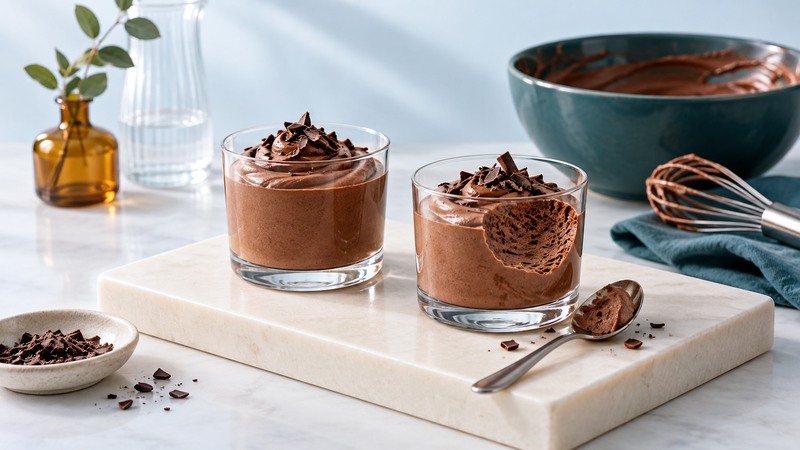
Mousse holds air in a chocolate mixture. The goal is a base cool enough to accept whipped cream, yet fluid enough to fold without clumping. A cooked-yolk recipe adds a temperature checkpoint and gives you a clear route from ingredients to chilled dessert.
Choose the method before buying ingredients
A cream-based mousse obtains its foam from whipped cream. Egg-white methods use a different foam; cooked-yolk versions add a custard base. Gelatin-set recipes introduce another structure. Follow one complete method, since swapping milk for cream or changing the chocolate can alter how it sets.
The recipe below uses cooked yolks and whipped cream. Have a digital food thermometer, saucepan, heatproof bowl, fine sieve, whisk, flexible spatula and six to eight small serving dishes ready. Read the chilling time before starting a dinner-party batch.
Make the cooked-yolk version
This condensed method follows King Arthur’s Rich Chocolate Mousse. Use 140 g finely chopped chocolate, preferably 60–66% cacao; 2 room-temperature large yolks; 50 g sugar; ⅛ teaspoon table salt; 284 g cold heavy cream, divided into 113 g and 170 g portions (rounding accounts for the 1 g difference); and ¾ teaspoon vanilla.
- Put chocolate in a heatproof bowl with a sieve above it.
- Whisk yolks, sugar, salt and 113 g cream in the saucepan. Cook over medium heat, whisking continuously, to 160°F (71°C). Strain onto the chocolate; add vanilla and stir smooth.
- Cool the chocolate base to room temperature, about 20–30 minutes, stirring occasionally.
- Whip the remaining 170 g cream to stiff peaks. Whisk one-third into the chocolate, then fold in the remainder.
- Portion, cover and refrigerate at least six hours.
Yield: about 3½ cups, or six to eight servings. The source permits covered refrigerated storage up to four days. Yenra has not kitchen-tested this recipe.
Read the mixture while folding
The first small addition of whipped cream lightens the chocolate so the remaining foam is easier to incorporate. For folding, draw the spatula down through the mixture, sweep across the bottom and lift it over itself. Turn the bowl as you repeat. Stop when the color is even and large white streaks have disappeared.
Watch what the spatula reveals at the bottom: a heavy layer of chocolate means the mixture is still uneven. Scrape the bowl’s curves as well as its center. Repeated forceful beating after adding the remaining cream spends the air you just incorporated.
Scroll the table sideways. With a keyboard, focus it and use the arrow keys.
| Result | Likely checkpoint to review | Useful adjustment |
|---|---|---|
| Dense but smooth | Chocolate choice, foam volume and folding | Use the specified cacao range; preserve the whipped cream’s air. |
| Small firm chocolate flecks | Base may have cooled too far before folding | Have the whipped cream ready while the base remains smoothly stirrable. |
| Loose after the full chill | Chocolate or cream substitution, insufficient whipping | Recheck the written ingredients before changing quantities. |
| Oily or grainy cream before folding | Whipping may have gone too far | Address the cream before combining it with the chocolate. |
Handle eggs and chilled portions carefully
FDA’s egg-safety guidance gives 160°F for egg dishes. Measure the custard itself while stirring; the appearance of a thick spoon coating alone is an imperfect substitute for a thermometer. Recipes served with raw or undercooked egg need pasteurized eggs or pasteurized egg products.
Keep the finished mousse refrigerated at 40°F (4°C) or below. FDA limits cooked egg dishes outside refrigeration to two hours, or one hour above 90°F (32°C). Include preparation and serving time in that plan. Divide a party batch into individual dishes so only the needed portions leave the refrigerator.
A spoonful taken from a spare test portion tells you more about readiness than shaking every glass. Before guests arrive, check that it holds a soft mound and tastes pleasantly creamy. Add a little whipped cream or a few chocolate shavings at serving time so the topping stays distinct.