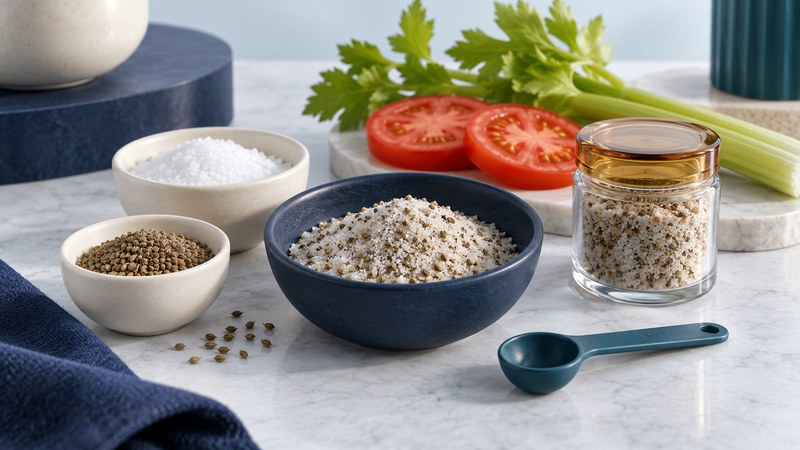
Treat celery salt as both an aromatic seasoning and a source of salt. If a dish already tastes salty enough but needs more celery flavor, reach for celery seed or ground seed. Adding more celery salt changes both at once.
Read the ingredients before substituting
McCormick Culinary Celery Salt lists salt and celery seed. Its celery-seed product lists celery seed alone. These examples were checked in October 2026; use the current package for the product you buy.
On a narrow screen, scroll the table sideways. Keyboard users can focus it and use the arrow keys.
| Ingredient | What it adds | Good reason to choose it |
|---|---|---|
| Whole celery seed | Celery aroma and tiny seed texture. | The recipe wants visible seeds or you will grind them. |
| Ground celery seed | Celery flavor dispersed through food. | You want to control salt separately. |
| Celery salt | Celery flavor plus salt. | Both flavors need increasing together. |
An ingredient list identifies what is present, but may not reveal the proportions. A house blend with known measurements gives you useful starting arithmetic; it cannot establish how much seed is in another brand. Keep that distinction when replacing one product with another.
Mix a small, measured house blend
This optional Yenra starting blend uses 2 level teaspoons of fine salt and 1 level teaspoon of ground celery seed. Measure the seed after grinding. It is a house formulation for adjustment, not a tested copy of a commercial product or a claim of reduced sodium.
- Use a clean, completely dry bowl, measuring spoons and a small jar.
- If starting with whole culinary celery seed, grind a small amount with a suitable spice grinder or mortar, then measure 1 level teaspoon of the powder.
- Add 2 level teaspoons of fine salt. Stir thoroughly, breaking up loose lumps so the color and texture look even.
- Transfer to the dry jar. Label it with the ingredient quantities, salt type and mixing date. Stir or shake before measuring a serving.
The measured ingredients total 3 teaspoons before mixing; the settled blend may occupy a slightly different volume. For a fourfold batch, use 8 teaspoons of the same salt and 4 teaspoons of the same ground seed. Try the small batch first: coarse and fine salts pack differently in a spoon.
Keep the mixture dry and tightly closed away from heat. Fresh celery or wet celery leaves would introduce moisture and create a different preparation; they are outside this dry-blend method.
Season a sample and track both ingredients
For an original flavor trial, sprinkle a small measured pinch over one tomato slice or stir it into a spoonful of your unsalted dressing. Compare with the unseasoned food, then make a measured addition to the larger batch. This tasting suggestion has not been kitchen-tested; the useful result is your record of what works with your ingredients.
Already salty food needs a different correction: add celery seed for more aroma, or add unseasoned base if the overall salt concentration is too high. Extra vinegar changes acidity without removing the salt.
Choose the replacement by what is missing
If you need celery salt but have only plain salt, using a smaller, cautiously tasted salt addition can address seasoning while leaving out celery aroma. If you have celery seed and salt separately, keep them separate until you know how much of each the dish needs. This is especially useful with salty condiments already in the recipe.
Some broader blends contain celery salt plus other spices. OLD BAY’s ingredient list, for example, includes celery salt, pepper-containing spices and paprika. Substituting it introduces additional flavors; treat that as a recipe change.
For a blend built around separate salt adjustment, see the Cajun-style seasoning guide. For controlling a brined ingredient’s salt contribution, see preparing capers.
Explore all seasoning and ingredient guides · Food, cooking and meal planning