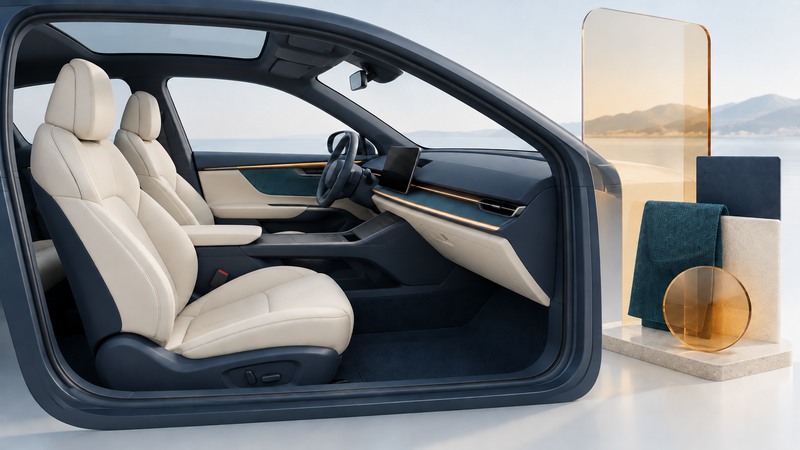
An interior works well when it fits the people using it, supports their routine and is in acceptable condition. A material name or premium trim badge leaves those questions open. Use the same parked checks and a comparable test route for each candidate, then separate personal comfort from faults that need inspection.
Set the seat before judging the cabin
Wear the shoes and ordinary clothing you drive in. While parked, adjust the seat, steering wheel, head restraint and mirrors following the owner manual. Check that you can reach and operate the pedals comfortably, see the instruments and use the seat belt as intended. Repeat for each regular driver; their adjustments may produce a different view and posture.
NHTSA’s air-bag guidance recommends at least 10 inches between the breastbone and air-bag cover, with an appropriate seating position and comfortable pedal reach. Use the vehicle’s restraint instructions too. If you cannot achieve a suitable position, seek advice on vehicle fit or appropriate adaptations rather than improvising cushions or modifying restraint equipment.
Pay attention to pressure behind the knees, side-bolster contact, lower-back support and shoulder position. Try the full range of the adjustments supplied. Check ingress and exit several times, including whether the door opens far enough in a space similar to your parking area. A seat that feels comfortable for a moment still deserves a drive of representative duration.
Use a repeatable drive
Choose a permitted route that includes the road surfaces and speeds you normally encounter. Keep the audio off for part of the drive so you can hear the cabin. Set climate controls before moving and have a passenger record observations where possible. If vehicles are driven on different days, note wind, rain and road conditions before comparing noise.
On a narrow screen, scroll the table horizontally. Keyboard users can focus its region and use the arrow keys.
| Check | Record precisely | Useful next step |
|---|---|---|
| Seat support | Location and onset of pressure; available adjustment | Readjust while parked and repeat; compare another seat option |
| Visibility | Specific obstructed view from your driving position | Check mirrors and direct sight lines in a suitable demonstration |
| Noise | Road type, speed, wind and source if apparent | Compare on the same route; refer abnormal sounds for inspection |
| Access | Door opening, step height and contact points | Repeat with each regular occupant |
| Temperature and surfaces | Seat warmth, ventilation and glare under observed conditions | Check trim features and repeat in relevant weather if important |
Use “comfortable,” “needs another check,” and “unsuitable for me” with a reason. Avoid adding the labels into a scientific-looking total. A serious fit problem deserves its own decision even when several other categories feel good.
Identify the surface and its care instructions
A cabin can mix coated leather, synthetic upholstery, fabric, textured plastics and decorative finishes. Ask which material is on the actual seating surface and which is on bolsters or trim. Compare how it feels, the visible wear and the care burden you are willing to accept. Softness in a showroom does not establish long-term durability.
Use the exact manufacturer’s care section before selecting a cleaner or treatment. Ford’s owner-manual lookup is one example of a route to model-specific instructions. Products permitted on one trim may be unsuitable on another; restraint webbing, displays, perforated seats and air-bag areas can have separate instructions. For an unfamiliar stain, identify the material and seek approved care advice first.
For a new-car choice, ask to see the exact trim or a physical sample. For a used car, inspect high-contact areas: seat outer bolsters, steering-wheel surface, armrests and door pulls. Record peeling, splits, loose stitching, sticky coatings or mismatched replacement panels with photos taken with permission.
Separate cosmetic wear from unresolved faults
Check seat adjustment, windows, door latches, interior lighting and other fitted features while parked. Inspect carpets, visible seams and accessible storage areas without dismantling the car. Persistent odors, dampness or staining call for an explanation and inspection; a fragrance or a freshly cleaned surface cannot establish that the cause is resolved.
Ask the independent inspector about warning lights, restraint condition, water-entry evidence and any abnormal seat movement or electrical operation. The FTC’s used-car buying guidance recommends an independent inspection even when a vehicle is certified. An interior walk-through helps you brief that inspection, but cannot determine hidden damage on its own.
Keep the evidence that matters
Finish with the exact trim, drive conditions, fit concerns, visible defects and promised repairs. Request written details for any repair on which your purchase depends and inspect the result before accepting it. Keep child-seat and cargo-fit tests in the family-car comparison, and assess screen or control usability separately, so a favorable cabin impression does not hide a different practical requirement.
Save a practical worksheet
Download the car interior worksheet (plain text). Open it in any text editor, save a private copy, and fill in the prompts while you work. It includes the article link and supporting references. Record “unknown” when a question still needs evidence.