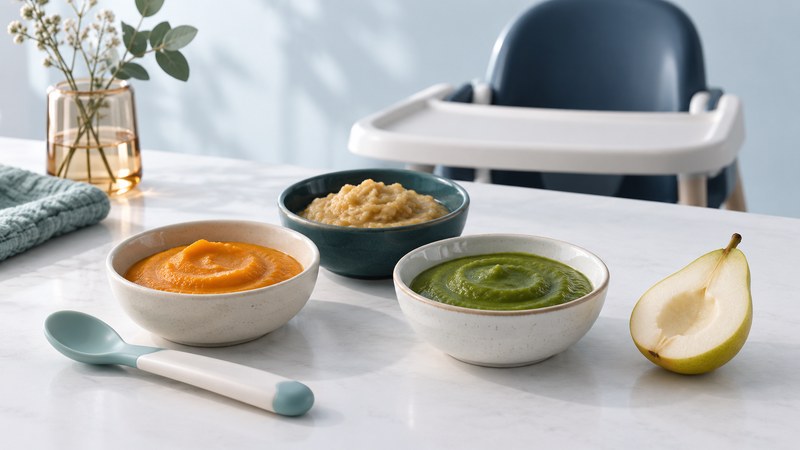
Starting solid foods is a gradual process of learning to manage new tastes and textures. Begin when your baby is developmentally ready, usually around 6 months, and keep breast milk or infant formula as the main milk feed throughout the first year. The first goal is a safe, calm eating experience.
This guide uses U.S. feeding recommendations. Ask your clinician about timing and texture for a premature baby or a child with feeding, swallowing, growth, or allergy concerns.
Look for skills as well as age
A baby ready to start generally has good head and neck control, can sit with support or independently, opens their mouth for food, and can swallow it. Solids are usually introduced at about 6 months; introduction before 4 months is not recommended. The CDC readiness guide describes the full set of signs.
Interest in your dinner is a useful observation, but it is only one part of readiness. If the baby cannot stay well positioned or repeatedly struggles to swallow, pause and get guidance. A feeding plan should fit the child's abilities.
Make the first meal small and manageable
- Choose a calm moment. Settle the baby upright in a safe feeding seat and stay close enough to watch throughout.
- Offer a little food. Begin with a soft, smooth or mashed texture the baby can manage. Give time to respond instead of rushing another spoonful.
- Follow the baby's signals. An open mouth or leaning toward food may invite more; turning away or closing the mouth is a reason to pause or finish.
- End without a target to finish. Note what you offered and any questions, then return to the usual milk-feeding routine.
For most babies there is no required sequence of first foods. Work toward variety across food groups, including iron-rich choices such as iron-fortified infant cereal, appropriately prepared meat, beans, or lentils. Offer different fortified cereals rather than relying only on rice cereal. CDC provides guidance on hunger and fullness cues and iron in the infant diet.
Match preparation to the baby's eating skills
As skills develop, progress through textures your child can handle with guidance when needed. Food that adults chew easily may still be a choking hazard for a baby. Whole nuts, whole grapes, popcorn, hard raw vegetable pieces, and thick spoonfuls of nut butter are examples to avoid. Cooking, mashing, and appropriate shaping matter.
Keep the baby sitting upright and watch throughout every meal. Avoid food in a moving car or stroller. The CDC choking-hazard guide covers food preparation and supervision.
Before starting solids, ask your care team about infant choking first aid and CPR training. Gagging and choking require different responses; learn the signs and actions from an accredited instructor. If a baby cannot breathe or cry, treat it as an emergency, call 911, and follow infant choking first aid and the dispatcher's directions. See the American Red Cross infant-choking guide.
Plan allergen introduction around your baby's risk
Common allergenic foods can be introduced in suitable forms alongside other complementary foods. Introduce them individually so that a reaction is easier to identify. A baby with severe eczema, egg allergy, or both needs an early discussion with the clinician about peanut introduction: the NIAID-sponsored guidelines describe evaluation and possible introduction as early as 4–6 months for this group.
Peanut-containing food for an infant must have a safe texture, such as smooth peanut butter thinned appropriately under the introduction plan. Whole peanuts and a sticky spoonful of peanut butter are choking hazards. For a child with a known allergy, follow the allergy team's plan.
Stop the new food and seek medical advice for a suspected reaction. Breathing difficulty, tongue or throat swelling, collapse, or symptoms affecting multiple body systems need emergency care. If prescribed, give epinephrine according to the child's action plan and call 911. The AAP's anaphylaxis guide explains why a severe reaction needs immediate treatment.
Keep preparation and storage as simple as the meal
Wash hands, utensils, and food-preparation surfaces. Cook animal foods thoroughly and prepare produce for the child's abilities. Spoon a small portion from a jar or container into a separate bowl before feeding. Discard food left in the feeding bowl; saliva can carry germs back into stored food. Follow the product's refrigeration and after-opening instructions. See FDA baby-food safety guidance.
- Before 12 months: avoid honey, including honey added to food, and avoid juice. Cow's milk as a drink should wait until 12 months; pasteurized yogurt and cheese can be complementary foods.
- Choose unsweetened foods. Avoid added sugars and unpasteurized products.
- Keep solids out of bottles unless a clinician prescribes a specific feeding treatment.
These distinctions are explained in CDC foods and drinks guidance. For safe milk-feed preparation, use our infant formula guide.
Use observations to plan the next meal
A rejected food can be offered again another day without pressure. Notice comfort, positioning, and the texture the baby handled. Ask for help if coughing or choking recurs, meals are consistently distressing, or growth is a concern.
Download first-food notes to record the food, preparation, response, and questions for your clinician. Keep allergy concerns separate from ordinary preferences, and seek care for symptoms rather than waiting to complete a record.
Continue exploring
Explore baby care, feeding, and safety. Sources are linked beside the guidance they support. Updated October 11, 2026.