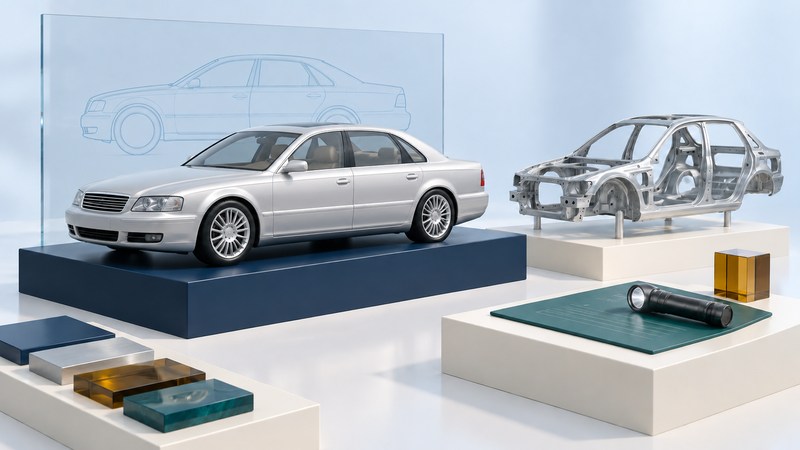
An early Audi A8 L W12 needs an inspection brief tied to its actual generation and equipment. Begin with identity, then investigate body history and the systems that make the car useful to you. This guide keeps the early D3-era W12 focus of Yenra’s original article; it does not apply newer A8 specifications to an older car.
Separate the generations before comparing features
Audi’s A8 history in Audi Magazine Australia places the D3’s introduction in 2002 and associates it with MMI and adaptive air suspension. The same article covers later generations too. Read its dates carefully: a feature discussed for the D4 or D5 is not evidence about a D3 listing. Audi’s Neckarsulm retrospective also places the 6.0-liter W12 in the A8’s earlier history.
Obtain a VIN-based equipment record, original-market information and the correct manual. Confirm engine, transmission and fitted suspension with the workshop. A grille, badge or wheel design can change during a car’s life; appearance is supporting evidence rather than a unique identifier.
Treat body-repair evidence as its own subject
The A8’s association with aluminum construction makes the quality and documentation of previous repairs particularly relevant. Ask for photographs, invoices and the repairer’s identity for any known collision work. Have a body specialist familiar with the generation assess questionable repairs using the appropriate manufacturer information. A vehicle-history report can help frame that conversation but cannot certify the structure.
During an initial viewing, record uneven gaps, paint differences, damaged trim and water marks as observations. Do not try to prove repair quality with a household magnet or a single paint reading; materials and measurement methods matter. If a concern remains, include a separate body assessment in the inspection scope.
The FTC’s used-car guidance recommends an independent inspection; a vehicle-history report does not replace it. Ask for findings, limitations and written estimates before deciding.
Check functions as complete paths
Scroll horizontally on a narrow screen. Keyboard users can focus the table region and use the arrow keys.
| Observation | Record first | Ask the workshop |
|---|---|---|
| A screen or audio function fails | Which source and controls were used; whether the fault repeats | Which devices and connections were tested, and what remains untested? |
| Abnormal ride height or warning | Conditions, timing and exact message | What fitted system is present, and what diagnosis explains the observation? |
| Intermittent starting or electrical behavior | When it occurred and any recent battery work | What battery, charging and system tests are justified? |
| Unclear service history | Actual invoices and gaps | What baseline work follows from the exact specification and evidence? |
Test seats, windows, climate, locks, mirrors and luggage access while parked. Use the manual and let the specialist handle workshop procedures. Do not clear diagnostic information before recording it. A working dashboard display does not establish that all modules or external services are functioning.
Avoid replacing parts from an explanation alone
The same discipline applies to suspension and powertrain concerns. Keep observations, test results and proposed repairs in separate fields. This prevents an unverified seller explanation from becoming your ownership budget.
Confirm service access and close the record
Find a workshop prepared to inspect this W12 configuration and its installed systems. Confirm appointment availability and how parts would be identified, sourced and, where necessary, configured. An internet listing for a visually similar component is not a confirmed repair route.
For U.S. cars, check NHTSA recalls and manufacturer campaign records. VIN results omit completed repairs and may omit campaigns over 15 years old.
Choose from the combined record: verified identity, body-history assessment, service chronology, functional checks and written findings. Price the unresolved work and decide which gaps must close before purchase. That produces a more defensible choice than comparing the car’s original launch claims with its current asking price.
Save a working record
Download the working record (plain text). Open it in a text editor and save a private copy. Fill in the prompts, write “unknown” where evidence is missing, and attach the documents behind each conclusion. It includes this article’s address and source links.