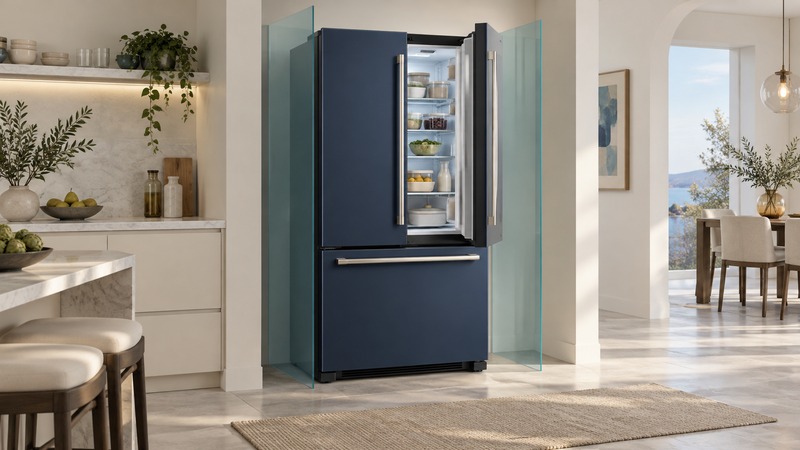
A three-door French-door refrigerator typically combines two upper fresh-food doors with a lower freezer drawer. Its wide refrigerator compartment can suit trays and family meals, while the freezer arrangement changes how you reach everyday items. Choose it by testing fit and storage together.
Check three kinds of fit
Delivery fit: walk the route from unloading point to kitchen, including gates, steps, narrow doors and turns. Installed fit: measure the opening at several heights and note baseboards, hinges and nearby counters. Operating fit: allow the doors and freezer drawer to open far enough for normal access and drawer removal.
LG's Measure First guide illustrates the delivery route and distinguishes case, hinge and handle dimensions. Its example clearances are not universal: use the installation drawing for the exact model. Have the delivery team confirm any planned door removal.
Ask the supplier to mark the dimensions that include handles and the depth needed with doors open. A counter-depth description is a starting category, not a promise that every part sits flush. Nearby walls can limit access even when the cabinet opening is wide enough.
Test the storage you actually use
| Bring or measure | Try in the display model | Why it matters |
|---|---|---|
| Largest tray or casserole | Slide it in with normal shelves installed. | Wide access can still be limited by shelf layout. |
| Tall bottle or pitcher | Check the intended door bin and shelf height. | Avoid sacrificing an entire shelf unnecessarily. |
| Weekly produce | Compare drawer space and visibility. | Hidden items are harder to include in meal planning. |
| Common frozen packages | Reach the lower basket and pull-out tray. | A large freezer volume can still require frequent rearranging. |
Describe what the refrigerator must hold on the busiest day of your week. Then decide which features earn their space. An ice maker or dispenser may be convenient, but its footprint and maintenance should be part of the comparison. Open and close the doors as you would while carrying a dish; notice reach, effort and visibility.
Compare ownership, not just the price tag
Create a complete quote: refrigerator, delivery, installation, any water connection work, removal of the old appliance and any cabinet changes. Ask who handles damage or a failed fit at delivery. For energy, compare the exact models' energy labels and their stated assumptions rather than inferring consumption from door count.
Record replacement filter identifiers, cleaning access, warranty terms and a local service contact. A longer feature list does not answer whether a repair can be completed conveniently. If an appliance depends on an app for a feature you value, establish which functions remain available from its controls.
Verify cooling after installation
Follow the model's startup and stabilization instructions. Confirm that the doors close properly and the controls are set as intended. USDA refrigeration guidance calls for 40°F or below and recommends an appliance thermometer to verify conditions. Keep raw meat, poultry and seafood contained so juices cannot contaminate other food.
The USDA freezer target is 0°F for best frozen-food quality. Use thermometers according to their instructions and allow the appliance's stated adjustment time when changing controls. Record persistent warm readings and operating conditions for service rather than repeatedly changing settings without a record.
Arrange food so the model's air outlets remain clear. Label leftovers with their dates and put items you need soon where you can see them. Cooling performance and storage organization are both part of making the appliance useful. See the microwave guide when reheating those leftovers.
Take the worksheet with you
Download the refrigerator delivery and fit worksheet (plain text). Save a copy to fill in with your own measurements or observations. It includes instructions and a link back to this guide.