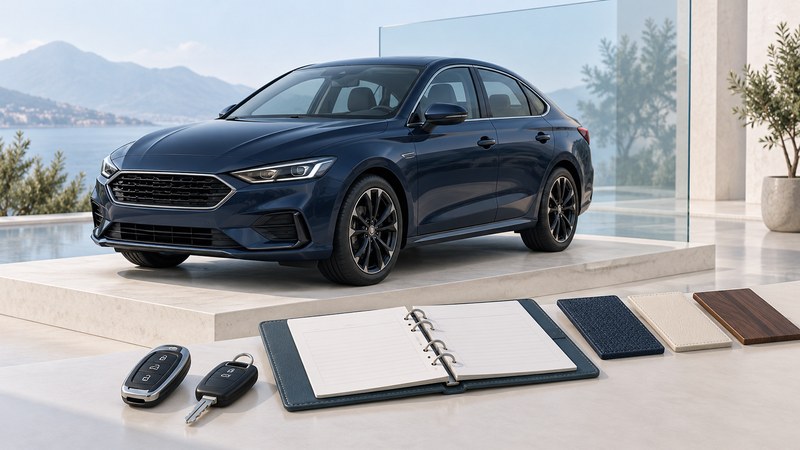
A useful assessment of a US-market 2018 Acura ILX starts with three separate questions: which packages were fitted, how the car has been maintained, and whether its condition and cabin suit your needs. A badge or an attractive set of wheels answers only a small part of that assessment.
Establish the model year and powertrain
Record the VIN from the car and compare it with its title and service records. Keep the original window sticker or another reliable factory equipment record when available. Registration year, an advertisement heading and model year can differ, so resolve the vehicle's identity before ordering parts or comparing specifications.
Acura's US 2018 specifications list a 2.4-liter four-cylinder engine, front-wheel drive and an eight-speed dual-clutch transmission with a torque converter. The published output is 201 horsepower and 180 lb-ft. These identify the model's factory specification; an individual car's health comes from records and inspection.
Keep later model-year styling and equipment out of the comparison. If a seller describes an upgrade, distinguish a factory package from parts or software installed afterward. Save the invoice and installation details for the latter.
Separate appearance, comfort and assistance equipment
The period specification table uses package abbreviations rather than treating every feature as standard. The October 2017 launch announcement also distinguishes the Special Edition from A-Spec-equipped Premium and Technology Plus versions.
On a narrow screen, scroll the table sideways. Keyboard users can focus the table and use the arrow keys.
| Name | Period equipment clue | Viewing question |
|---|---|---|
| Special Edition | 18-inch wheels, side sills and rear spoiler. | Does the factory record support the edition claim? |
| A-Spec | Appearance treatment offered with Premium or Technology Plus. | Which underlying package is fitted? |
| Premium | Leather seating, blind-spot information and rear cross-traffic monitoring. | Are the listed cabin and assistance functions present and working? |
| Technology Plus | Navigation and AcuraWatch among its equipment. | Which connected functions remain supported today? |
| AcuraWatch Plus | Package identified separately in the factory feature table. | Can the fitted warning and assistance functions be confirmed? |
Use the table as a route into the documentation, then inspect the car. Wheels, badges and trim can be replaced. An assistance feature being available for the model does not establish that it is fitted to every example.
Read the correct owner's manual before using assistance controls. Have a qualified technician assess warning messages or uncertain operation. A purchase viewing is not the setting for deliberately triggering emergency braking. The lane-departure guide explains the distinction between a warning and steering assistance.
Try the car around an ordinary trip
- Set the driver's position. Adjust the seat and steering wheel, check sight lines, and try the controls you use daily.
- Test passenger fit. With the front seat in that position, try rear access and seating. Bring representative luggage rather than relying only on a cargo-volume figure.
- Check parked functions. With the seller's permission, try the keys, locks, windows, roof, climate controls, displays, audio and reversing-camera image. Record missing, intermittent or unclear behavior.
- Use your own connectivity needs. Check a compatible phone and the functions you actually want. A feature named in a 2017 brochure may depend on a service or device that has since changed.
- Arrange a suitable road assessment. Describe any unusual engagement, shifting, braking, steering or noise to the inspecting technician, including when it happened. A symptom record helps; it does not establish a diagnosis.
Turn missing evidence into specific inspection questions
Ask for dated, mileage-stamped invoices rather than a general statement that the car was serviced. Match them to the correct manual and maintenance requirements. Record major repairs, collision work, fluid services and modifications. The Honda and Acura owner portal is a starting point for model-specific owner information; select the correct year and vehicle.
Run the actual VIN through NHTSA's recall lookup and save the result with its date. The lookup describes its coverage limits. A result showing no unrepaired recall is not a condition report or a complete service history. Ask an Acura dealer about any unclear campaign or repair documentation.
Download the ILX viewing and records checklist. Use it to compare candidates consistently, then build a condition-aware price range. A well-documented example with the equipment you need is easier to assess than a richer trim whose history is unresolved.