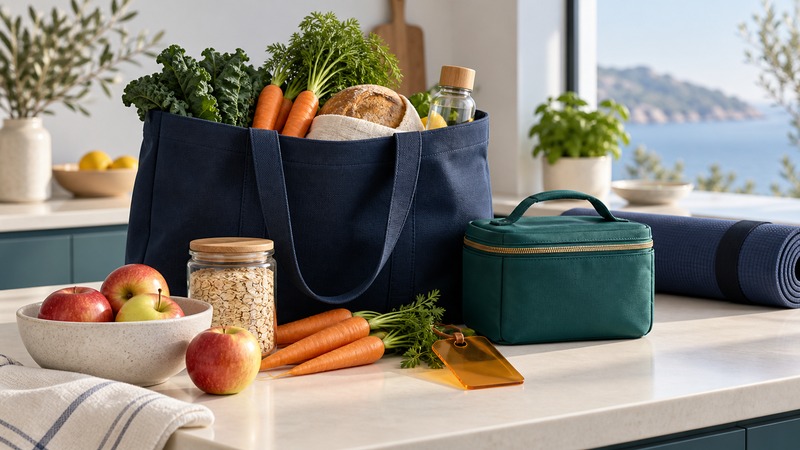
The “Yoga Mama” image links a calm, active parent with natural products, organic foods, and a carefully chosen family lifestyle. It is a useful example of how wellness marketing sells an identity alongside groceries. A clearer shopping decision separates that image from the label’s meaning and the food’s role at home.
Read the lifestyle image as a marketing choice
Mid-2000s Yoga Mama promotion joined yoga, aromatherapy, organic convenience foods, and a language of purity. The appeal was a picture of a less frantic household, expressed through the products a parent bought.
That image invites a useful question: what work is the purchase supposed to do? A lunch ingredient feeds someone. A yoga class offers an activity. A scented bath product has another purpose. Grouping them into a lifestyle does not make evidence for one product transfer to the others.
When an advertisement makes you feel that a good parent buys a particular brand, restate the decision in ordinary terms. “I need an affordable lunch my child will eat” gives you more options than “I need the purest lifestyle.” Families can enjoy organic food or yoga while choosing products on their own terms.
Give each label its actual meaning
In the United States, organic labeling falls under USDA standards. The USDA organic labeling guide distinguishes these categories; percentage calculations exclude water and salt.
On a narrow screen, scroll the table sideways. Keyboard users can focus the table region and use the arrow keys.
| Term | Meaning or policy | Your next check |
|---|---|---|
| 100 percent organic | All ingredients must be organic, apart from excluded water and salt, subject to the applicable rules. | Read ingredients, nutrition, and package size too. |
| Organic | At least 95% organic ingredients; remaining ingredients must meet specified requirements. | Check the certifier and compare the food’s nutritional role. |
| Made with organic [specified ingredients] | At least 70% organic ingredients; the claim names up to three ingredients or categories, and cannot use the USDA organic seal. | Identify which ingredients the claim covers. |
| Natural | FDA’s longstanding policy concerns unexpected artificial or synthetic additions; it does not establish nutritional superiority. | Use the ingredient list and Nutrition Facts for the actual comparison. |
FDA explains the scope of its natural-label policy, including that it does not address farming methods or establish a health benefit. Organic and natural therefore answer different questions. Neither substitutes for checking allergens, added sugars, sodium, or an appropriate portion.
Worked example: separate the budget and nutrition decisions
Imagine two bags of frozen plain vegetables, each weighing 500 g. The fictional conventional bag costs $2.00; the fictional organic bag costs $3.00. Their unit prices are $0.40 and $0.60 per 100 g. The organic choice adds $1.00 per bag to this particular shopping trip.
Now examine the rest of the decision. Do the actual labels show different ingredients or seasoning? Will your household eat both? Does buying the organic bag leave room in the budget for the other ingredients? If organic production is a priority you can afford, you can choose it deliberately. If budget is the constraint, the comparison helps you buy the vegetables you will use.
This example assigns no measured nutritional difference to the two bags. It demonstrates a way to calculate the price difference and ask the remaining questions separately. Repeat it with real labels and prices in your own store.
Judge the purchase in the kitchen
After shopping, try the ingredient in a familiar meal. Record whether it was eaten, how much preparation it required, and whether any was wasted. A product’s practical value becomes clearer after the package is opened.
- Use a familiar base: add vegetables to a sauce, soup, grain dish, or other meal your household already knows.
- Change one feature: trying a different seasoning with a familiar food is easier to evaluate than replacing every lunch item at once.
- Plan the remainder: decide how an opened bag or tub will be used and follow storage instructions.
- Keep claims separate: a food label gives information about that food; household calm, parenting quality, and personal worth are broader matters.
For refrigerated lunches, plan appropriate cold storage. For produce, follow FDA preparation and handling guidance regardless of whether it is organic.
To compare a common lunchbox ingredient, see choosing yogurt. For another historical example of food being linked to identity and personal success, see the reading guide to Edita Kaye’s The Diet.