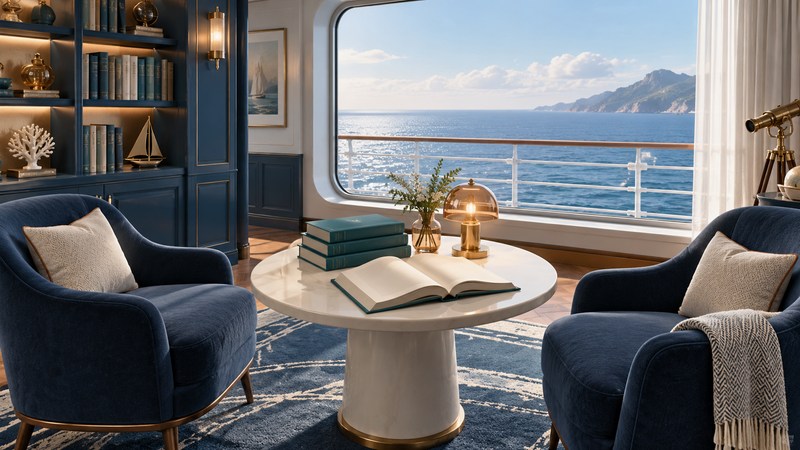
A literature cruise brings authors, conversations and reading time into the rhythm of a sea voyage. Choose the event sailing first, then decide whether its programme and the crossing itself suit you. A familiar author can be an attraction, while the broader experience should remain worthwhile if the lineup changes.
Find the actual literary event voyage
Cunard’s earlier Literature and Liners series brought writers to selected Queen Mary 2 crossings. The current Literature Festival at Sea, created with The Times and Sunday Times Cheltenham Literature Festival, has its own dated sailings and programme.
As checked October 3, 2026, Cunard lists Queen Mary 2 voyages from New York to Southampton on November 28–December 5, 2026 and December 2–9, 2027. Use the current event page to reach the relevant booking. Match the dates, ship, direction and event designation before comparing cabins; a regular crossing may offer a different enrichment programme.
Read the programme as a set of choices
The festival describes panel conversations, author appearances, book signings and workshops. Cunard states that workshops are bookable onboard for an additional charge, and that speakers and activities can change. Check the programme for your sailing and ask which activities require a reservation, payment or early arrival.
Write down the kinds of sessions that interest you: fiction, history, journalism, poetry or writing practice, for example. Then identify a few priorities across those themes. This gives the voyage value beyond a single guest and helps avoid filling every day with consecutive events.
Decide whether the crossing suits you
Consider how you want to spend several days at sea. Talks and reading can provide a satisfying rhythm for someone who enjoys a contained environment. A traveler who chiefly wants frequent shore excursions should examine the actual itinerary carefully before making the event the deciding factor.
Compare the cabin as a place to sleep, read and rest between sessions. Think about quiet, seating, daylight and the route to venues you expect to use. Confirm accessibility features and any assistance needed for events. The Queen Mary 2 crossing guide covers the broader cabin, dining and arrival decisions.
Prepare a small reading plan
Choose one or two books connected to the confirmed programme and one book purely for yourself. Read a representative work before the trip if you want to join a discussion with context. Keep a short note of themes or questions that interest you; a concise, relevant question is easier to use in a public session.
Check the format you will carry and download any digital reading before leaving. Ask the event team about onboard book availability and signing arrangements if those matter to you. Avoid assuming that a specific edition, author signature or private conversation is included in the ticket.
Budget for the voyage and both ends
Compare the quoted fare for the same cabin category, travelers and cancellation terms. Add the journeys to New York and home from Southampton, any hotel nights, transfers and your intended onboard extras. Put workshops in a separate allowance until actual prices and availability are clear. Use one currency and identify any conversions.
Fictional two-person event-trip budget in USD
A cruise quote including its stated taxes and mandatory charges is $4,200. Add $1,600 for flights, $500 for hotels, $250 for ground transport and $150 for workshop and book spending: $6,700. Gratuities and any other planned spending outside those lines still need their own allowance. These are invented figures, not a Cunard offer.
Use the literary voyage planner to keep the event, reading list, budget and booking deadlines together. Keep unresolved costs visible beside the quoted fare.
Create a sea-day rhythm with breathing room
A useful illustrative day has one morning talk, lunch, a reading or rest period and an optional afternoon event. Leave the evening open for dinner and whatever energy remains. Put only confirmed times into the plan once the onboard programme is available.
Recheck the event page before final payment and departure, save essential confirmations offline and use onboard notices for the day’s arrangements. If a guest or session changes, the themes you selected and the time you protected for reading can still make the crossing rewarding.
Related travel resources
Researched and updated October 3, 2026. Check the linked official information for your dates, party and booking terms.