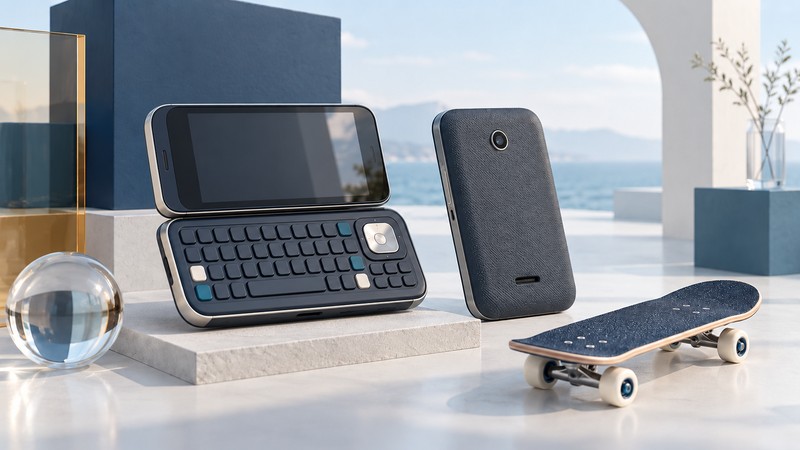
The Tony Hawk Sidekick LX combined a distinctive exterior and theme with the Sidekick’s swivel-screen messaging design. For a collection or historical record, separate three questions: what the edition was advertised to include, what is present on the device, and what evidence connects that device to the edition.
Start with the June 2008 announcement
T-Mobile’s June 5, 2008 announcement described a slate-grey shell with blue-and-white graphics, a hawk motif and a back designed to resemble skateboard grip tape with eight simulated screws. The supplied theme included a video, a background and skate-related swivel sounds.
The release also advertised video recording, playback and sharing with the edition. It said other Sidekick LX customers would receive an over-the-air update that summer with video functions, an alarm clock and Bluetooth enhancements. Those software abilities therefore require a different interpretation from the edition’s physical design.
Separate styling from function
| Observed feature | Useful interpretation | Next check |
|---|---|---|
| Textured back and matching graphics | Consistent with the announced edition appearance | Compare detailed photographs with contemporary official material; record wear and replacement parts. |
| Tony Hawk theme or swivel sounds | Consistent with the announced software presentation | Record the installed theme and software state separately from the shell. |
| Video or Bluetooth functions | Shared LX functionality was announced for the wider range | Check the software version; this feature alone cannot identify the special edition. |
| Swivel screen and keyboard | Identifies a design family, with model still to establish | Read model markings and compare model-specific documentation. |
A useful description may say “appearance consistent with the announced Tony Hawk edition; provenance incomplete.” That separates an observation from a conclusion and gives the next researcher a clear starting point.
Make a reproducible device record
- Photograph the object. Capture the front, rear, sides, keyboard and visible labels in even light. Keep unedited originals and note which images belong to which device.
- Transcribe identifiers privately. Record model markings exactly. Redact serial and account-related identifiers from public listings while retaining the full record securely.
- Document condition and changes. Note loose parts, replacement covers, repairs, missing accessories and the source of that information. Avoid presenting an inference as a known repair history.
- Connect paperwork to the device. Compare packaging and purchase records with the device’s identifiers where possible. Keep a separate record of seller statements.
Matching graphics or a theme are clues. A stronger provenance record combines consistent hardware identification, period documentation and a traceable history. The June announcement gives no production count or basis for a present-day valuation.
Keep the model and service history in view
Use the full edition name and 2008 date in a catalogue entry. A document about a later Sidekick generation may describe a different radio, display or operating environment even when the family name looks familiar. Match the exact model before borrowing specifications.
For the wider platform story, including hosted-service dependence, read T-Mobile Sidekick: messaging design and cloud services. Keep operational claims about a surviving handset separate from its value as a design artifact.