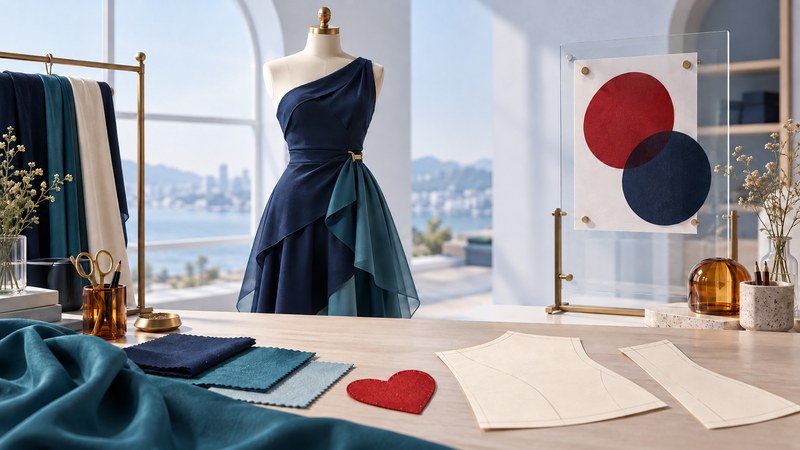
The 2010 Pucca designer collaboration treated a cartoon character as a starting point for fashion design. Its distinctive idea was to translate a visual identity into clothing and jewelry through several designers, giving readers a useful case study in the difference between literal character graphics and broader design interpretation.
Establish the particular collaboration
In a release dated February 10, 2010, and distributed February 12, Warner Bros. Consumer Products and VOOZ announced a U.S. apparel launch associated with Curve boutiques. Curve’s Nevena Borissova helped select the designers. The named participants were Preen, Mark Fast, Raquel Allegra, Unconditional, Not Rational, Genetic Denim and I.R.O., with jewelry by Erickson Beamon.
The announcement described interpretations of Pucca’s red-and-black identity and heart imagery, with Curve exclusivity planned for that spring. Those details identify the announced project’s participants and direction. A general Pucca label or a later character collaboration is a different evidentiary starting point.
Follow the design translation
A character can enter clothing in several ways. A printed face is literal representation. A color pairing can evoke the character without reproducing it. A repeated heart can carry a narrative association, while a silhouette or decorative treatment may become the designer’s main contribution. Ask which mechanism is visible in the particular piece.
Jeannine Morris’s February 11, 2010 firsthand account of the Curve launch describes interviewing Borissova and attending the New York event. Her account helps place the collaboration in a boutique setting, alongside the issuer’s statement of intent. Keep a firsthand event observation distinct from an independently established claim about the collection’s long-term influence.
When examining a documented image, begin with what you can see: shape, proportion, color placement and the relation of a motif to the garment. Then use its caption or designer record to identify the maker and materials. A dark dress alone offers too little information to attribute a piece to the project.
Build a useful record of a piece
- Identify the object. Record designer, garment type, style number and label wording where available.
- Locate dated evidence. Prefer a designer record, original boutique listing, catalog or contemporary event image with a reliable caption.
- Match specific details. Compare seams, closures, silhouette and motif placement, allowing for different photographic views.
- State the conclusion narrowly. Separate an exact documented match, a plausible resemblance and an unresolved attribution.
For a secondhand listing, request clear photographs of the actual item and its labels. The seller’s description can guide the search, but the strongest record explains why the identified object belongs to the named project. Keep condition, attribution and price as separate questions.
Use the collaboration as a design-reading exercise
This exercise helps distinguish the designer’s work on the garment from the licensing story around it. Several designers can begin with the same character and arrive at different objects; compare the individual pieces before describing an entire collaboration as one style.
The 2010 announcement also discussed future expansion into other merchandise. Treat those statements as plans from that date. The apparel project’s documented history stands on its own without assuming that every proposed category or retail arrangement followed.