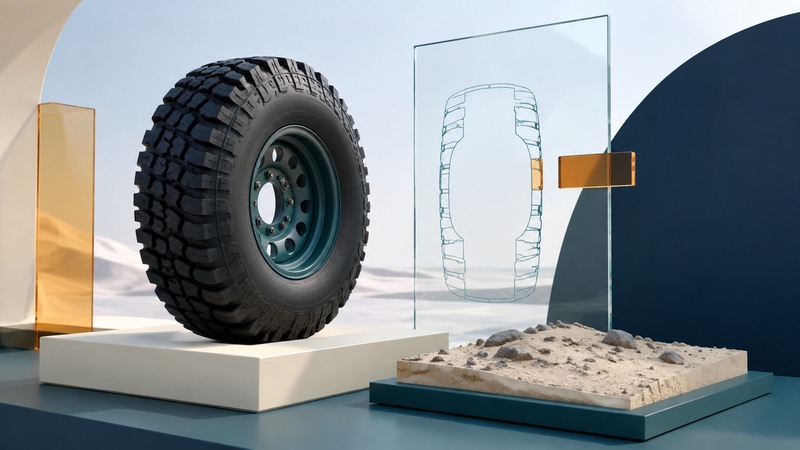
Select desert racing tires by narrowing the eligible choices before comparing performance. Start with the event and class rules, then confirm the exact tire and wheel combination for the vehicle’s load and intended use. Finish with a documented setup and a repeatable evaluation.
This guide is for a team preparing a discussion with its tire supplier and technical inspector. It focuses on off-road truck, buggy, and UTV competition. Their classes and equipment differ, so each selection brief needs its own vehicle and rulebook details.
Resolve event eligibility first
Write down the organizer, event, class, rule revision, and any supplementary regulations. Search both the general technical rules and the class-specific rules. Record the relevant sections and send an exact part number and size to the technical inspector when wording leaves a question.
For a concrete example checked September 7, 2026, Best in the Desert’s UTV Pro Stock rules, section UTR13, state a maximum wheel diameter of 16 inches and maximum tire size of 35×10.5. That example applies to the named class; it supplies no tire limit for another UTV category or a racing truck. Recheck the published rules and event bulletins before ordering.
Next, record whether the vehicle will encounter public-road travel and what approvals that use requires. Keep road-use compliance and race eligibility as separate entries. A part can satisfy one question while leaving the other unresolved.
Order an exact variant, not just a family name
The BFGoodrich Baja T/A KR3 catalog distinguishes race-only competition tires from DOT “Blue Label” variants. Its table also lists different dimensions, compounds, and product identifiers. Use those identifiers when requesting specifications; a photo or the name KR3 does not identify a complete fitment.
On a narrow screen, focus this table and scroll sideways to read all columns.
| Item | Record before ordering | Question to resolve |
|---|---|---|
| Event and class | Rules, revision, class, and inspector clarification. | Does this exact assembly meet the applicable requirements? |
| Tire identity | Manufacturer, family, part number, size, compound, and use designation. | Which variant is being quoted and supplied? |
| Wheel and clearance | Wheel dimensions, part number, and vehicle configuration. | Is the assembly compatible throughout intended steering and suspension movement? |
| Vehicle and use | Loaded weights, terrain, stage length, and service opportunities. | What application-specific guidance does the supplier require? |
| Support plan | Inspection criteria, spares, repair policy, and supplier contact. | Can the team maintain and evaluate the assembly at the event? |
Ask the supplier to review the intended wheel width and construction, loaded vehicle information, expected conditions, and service plan together. Record any information still needed rather than substituting a road-tire table or another team’s pressure. Competition use needs guidance for the actual equipment and operating conditions.
Have a qualified shop verify clearance through the vehicle’s intended steering and suspension movement, along with wheel compatibility and mounting instructions. Static clearance in a parked vehicle is only one observation. Record the exact assembly used for the check so a later wheel or suspension change triggers a review.
Turn terrain descriptions into useful questions
“Desert” can include sharp rock, sand, hardpack, ruts, and long fast sections. Describe which surfaces dominate, how long the stages run, where service is available, and what failed or wore on the previous setup. Photos of damage and tire positions are more useful to a supplier than an unsupported claim that one compound is “best.”
Ask how the available constructions and compounds trade grip, wear, damage resistance, and sustained operating demands for your application. Treat those as questions to resolve with evidence. The catalog’s soft, medium, or hard labels describe choices within a product range; their practical behavior needs the manufacturer’s context.
Keep a setup and condition log
Agree on the test venue, driver, route, loading, inspection criteria, and supplier-supported starting setup. Choose a venue and test plan appropriate for the equipment and team. Change one consequential variable at a time where practical, and document unavoidable changes such as weather or route condition.
Record the tire’s exact identifier, position, service history, wheel, and the conditions associated with each measurement. When recording pressure, name the units and whether the tire was cold or had just completed a run. Ask the supplier how and when it wants temperature and pressure observations collected. This guide gives no universal pressure setting.
Log cuts, impact evidence, unusual wear, vibration, pressure loss, and the circumstances in which they appeared. Have damaged assemblies evaluated under the manufacturer’s service criteria before further use. A faster run and an acceptable inspection are separate results; retain both in the decision record.
Carry the desert tire selection brief and test log into the supplier conversation. Complete the rule and fitment sections before ordering, then reuse the log to compare the approved candidates under documented conditions.
For a wider U.S. tire-care and recall reference, consult NHTSA’s tire safety guidance. Competition-specific limits and service decisions still require the relevant tire, wheel, vehicle, and organizer documentation.
Plan the support vehicle too
Spare wheels, tools, and service equipment also affect transport weight and space. Use the race-weekend RV support and loading guide to plan that side of the event, or return to motorsports resources.
Researched and updated September 7, 2026. Model, market, equipment, and rule details should be rechecked against the linked documentation.