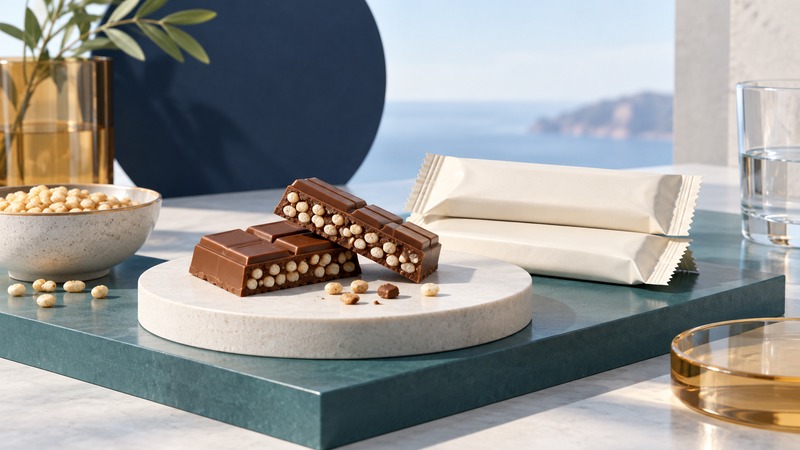
The documented 2015 U.S. Crunch change concerned flavoring: Nestlé announced that natural vanilla flavor would replace artificial vanillin. To investigate a bar sold today, begin with its country, exact product and ingredient label, then compare evidence from matching versions.
Read the historical claim at its actual scope
In its February 17, 2015 announcement, Nestlé USA described a program to remove artificial flavors and FDA-certified colors from its chocolate confectionery portfolio by the end of that year. It named the vanilla-flavor substitution for Crunch specifically.
The announcement establishes the company’s stated change and schedule. It supplies neither the complete before-and-after formula nor ingredient percentages. Nestlé also reported consumer testing and an intention to preserve taste; that is a manufacturer statement, with no detailed test results in the release.
Ferrero’s January 2018 acquisition announcement included U.S. rights to the Crunch brand in specified categories. That geography matters: a U.S. package, an imported bar and a licensed ice-cream product can belong to different product histories.
Build a package comparison that can answer the question
Photograph the complete front, ingredient list, Nutrition Facts panel, net weight and date or lot markings. Record where and when each package was purchased. Save the maker’s response if you ask about a formulation change, and include the product code in the question.
| Evidence | What it supports | What still needs checking |
|---|---|---|
| A dated company announcement | A stated change for the named market and products | Whether a particular package was made before or after implementation |
| Two dated ingredient panels | A difference in declared ingredients or wording | Ingredient quantities and any undocumented process changes |
| Nutrition values normalized to equal grams | An approximate comparison of listed nutrients | Rounding, serving-size changes and product differences |
| A current tasting | Preferences and observations for the samples tasted | A historical cause or a change across all production batches |
Use the current U.S. Crunch product page as a starting point, with the package itself as the exact item record. If a website summary and a full package panel disagree, ask the maker to confirm the product and serving basis before calculating.
Normalize the serving before comparing
Fictional label example: bar A lists 200 calories per 40 g; bar B lists 180 per 36 g. At 20 g, A gives 200 × 20 ÷ 40 = 100 calories and B gives 180 × 20 ÷ 36 = 100. The different per-serving numbers alone show a serving-weight difference in this example. They are not historical Crunch measurements.
Apply the same method to total sugar, saturated fat or another label value you want to compare. An ingredient-list change and a nutrient change answer different questions. Similar rounded values can occur with different formulas.
Make a tasting useful without overstating it
For a home preference exercise, use fresh, intact packages and equal-size pieces served at the same temperature. Ask another person to label them A and B while keeping the identities hidden from tasters. Provide water and write observations before revealing the brands or versions.
Record sweetness, chocolate aroma, melt and rice crispness separately, followed by overall preference. Keep storage history and best-before information with the notes. An old bar may have changed during storage, so tasting a years-old sample cannot isolate the recipe effect.
A small informal tasting describes those samples and tasters. A reliable claim about a historical reformulation requires dated formulation evidence or a suitably controlled study. For a related packaging exercise, see comparing snacks on equal portions.