“Multi-seed” describes a mix of seeds, while the nutrition panel describes a particular portion. Begin with the serving weight in grams. Cracker counts vary with size and thickness, so comparing fourteen of one kind with fourteen of another can give a misleading result.
Read one current example
As checked September 18, 2026, Crunchmaster Multi-Seed Original lists 14 crackers (30 g), 130 calories, 150 mg sodium, 2 g fiber and 3 g protein. Its ingredients include brown rice flour, sesame, potato starch, flax, olive oil, amaranth, quinoa and tamari powder. The declared allergens are sesame and soy.
This is an example for that product, not every flavor or package. Read the bag you buy: formulations, serving sizes and claims can change. A prominent seed illustration is a reason to inspect the ingredient list, not a substitute for it.
Compare equal weights
Focus the table and use the arrow keys to scroll sideways.
| Quantity | Calories | Sodium | Fiber | Protein |
|---|---|---|---|---|
| 15 g: half the labeled serving | 65 | 75 mg | 1 g | 1.5 g |
| 30 g: one labeled serving | 130 | 150 mg | 2 g | 3 g |
| 45 g: one and a half servings | 195 | 225 mg | 3 g | 4.5 g |
Calculation: nutrient in your portion = label value × your grams ÷ labeled grams. The figures above are arithmetic estimates from rounded label values, so they are not laboratory measurements of an individual cracker.
For a second cracker with a 28 g serving, multiply its label figures by 30 ÷ 28 to compare at 30 g. Compare sodium and fiber first if those matter to your choice, then account for the dip or topping. A serving size describes the label’s reference quantity; it is not a personal dietary prescription.
Use the printable cracker comparison sheet to record two labels, a chosen weight and your calculations.
Price the portion you will use
For a clearly fictional shopping example, a 120 g package costing $4.80 contains four 30 g portions, at $1.20 each. A 300 g package costing $9 contains ten 30 g portions, at $0.90 each. The larger package saves money per portion only if you use it while its texture remains acceptable.
Calculate package price × chosen grams ÷ net package grams. Use net food weight, the actual shelf price and any relevant delivery charge. Record the date if saving a comparison; these example prices are not current quotations.
Build a snack and keep it crisp
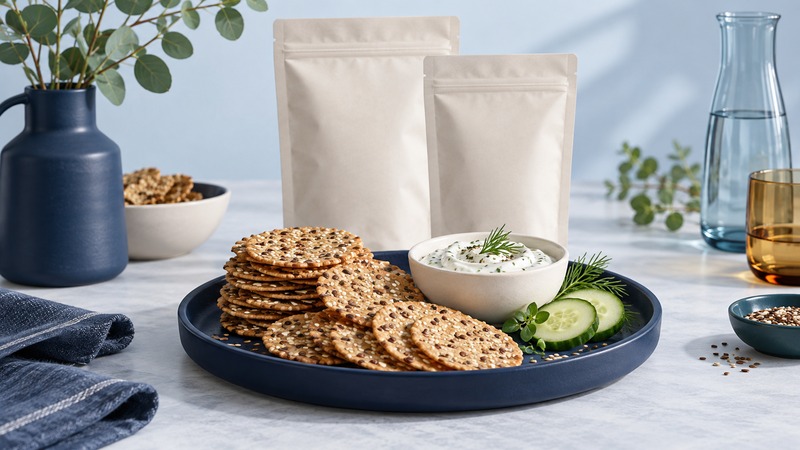
For one snack plate, measure 30 g crackers, ¼ cup herb yogurt dip and ½ cup cucumber slices. These are serving ideas, not a prescribed meal. Compute the combined nutrition from each component when that information matters.
Pack dip and cut vegetables separately, kept cold, and combine at eating time. Wet toppings soften crackers. Reseal the original bag or use a dry airtight container; retain the lot and best-by information rather than discarding the package immediately.
Check the exact product and serving tools
Sesame is a major US food allergen. This example also contains soy; flavored crackers can introduce other ingredients. FDA’s allergen-label guidance helps interpret ingredient and “Contains” statements. Check the dip and toppings independently, and use separate serving utensils when needed.
For a gluten-free requirement, look for a claim on the actual package and review preparation practices. FDA’s gluten-free labeling rule requires less than 20 ppm gluten and other conditions for covered products. A seed-based name alone supplies no assurance. Keep wheat-cracker crumbs out of a shared dip and store suitable crackers separately.