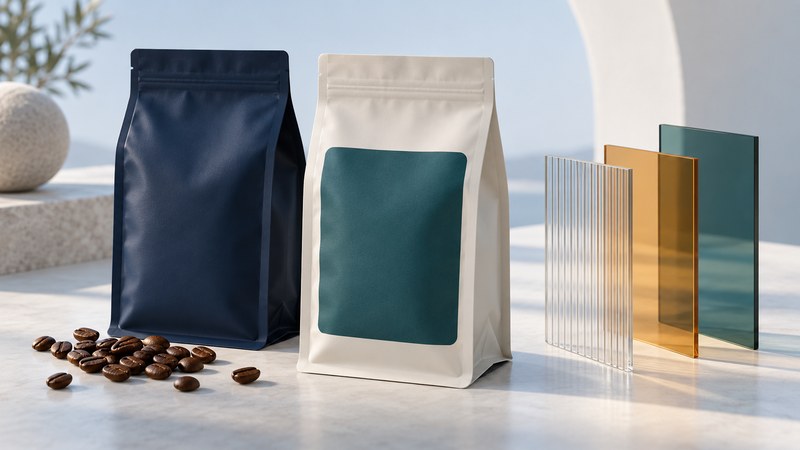
Green Mountain Coffee’s August 2008 bag redesign combined clearer product identification with a claim about plant-based packaging material. It is a useful historical example of two separate design jobs: helping shoppers choose coffee and describing what a package is made from. To decide how to dispose of a bag today, inspect that specific package and your local collection rules.
What changed in August 2008
In its August 28, 2008 company announcement, preserved by VermontBiz, Green Mountain described redesigned 10-ounce and 12-ounce bags for Signature, Fair Trade Organic, Flavored and Seasonal coffees. The rollout followed changes to its Newman’s Own Organics and Single Origin lines.
The announcement emphasized distinct colors and illustrations, an updated logo, and clearer information about roast level, grind, certifications and decaffeinated options. These choices addressed a practical shelf problem: helping a shopper distinguish related products quickly.
The same announcement said the packaging film contained 19.4% polylactic acid (PLA) made from plant-based renewable resources, and asserted an environmental benefit. This is a dated company statement about the film used for that redesign. It provides historical evidence of the claim; the announcement supplies neither a full life-cycle comparison nor instructions establishing a composting route for the complete bag.
Keep each packaging claim attached to its question
On a narrow screen, scroll the table sideways. Keyboard users can focus the table and use the arrow keys.
| Claim | Question it addresses | Evidence still needed |
|---|---|---|
| Plant-based / renewable content | Where does some of the material originate? | The share, its measurement basis, and which package components it covers. |
| Recycled content | Does the material contain recovered feedstock? | The stated percentage and its scope. Plant origin alone does not answer this. |
| Compostable | Will the complete item break down under specified composting conditions? | The whole-package claim, required conditions and facility acceptance. |
| Recyclable | Can the package enter a suitable recycling system? | Instructions for that package format and acceptance in the available program. |
| Lower environmental impact | How does it compare over a stated life cycle? | A named comparison, boundaries, assumptions and the impacts measured. |
The FTC’s Green Guides summary distinguishes renewable-material, recycled-content, compostable and recyclable claims. It calls for specific, supported claims and evidence covering the whole product or package for compostability. Use that distinction when reading the 2008 statement: a percentage of PLA answers a composition question; disposal and comparative environmental performance require additional evidence.
Read the denominator carefully. “19.4% of the film” should stay a film claim unless evidence also covers valves, closures, labels and other parts. It also says nothing by itself about how many packages were collected or processed after use.
Check the bag you have today
- Identify the exact package. Record product, size, country of sale and the material or disposal wording. Photograph both sides if you plan to ask the manufacturer.
- Separate the components described on the label. Check whether directions apply to the bag, valve, tie or outer carton, and follow any preparation instructions.
- Check the receiving program. Look up that exact material and format with your local authority, hauler or named take-back scheme. A program accepting some plastic film may have restrictions on coffee bags.
- Match composting conditions. Confirm whether a claim concerns home or commercial composting, and whether your receiving facility accepts the item.
- Resolve an unknown before sorting. Ask the brand and local service with the package details. If there is no accepted recovery route, follow local residual-waste directions.
The EPA’s plastic recycling and composting FAQ explains that commercial compostability requires different conditions from a typical home pile. It advises against putting compostable plastics into conventional plastics recycling because they can disrupt that stream. A home-compost claim and local collection acceptance are useful facts to establish separately.
A useful lesson for shoppers and packaging designers
For shoppers, readable roast, grind and decaf information helps prevent a mistaken purchase. For designers, the environmental claim deserves similar precision: identify the material, the percentage and scope, then provide a supported disposal route where one exists. Keeping those functions explicit makes packaging easier to use and its claims easier to evaluate.
Keep the 2008 bags separate from current Green Mountain packages and from K-Cup pods. Each format and generation needs its own evidence. Coffee grounds also have a different disposal path: the grounds-and-compost guide explains their use in a mixed compost pile.