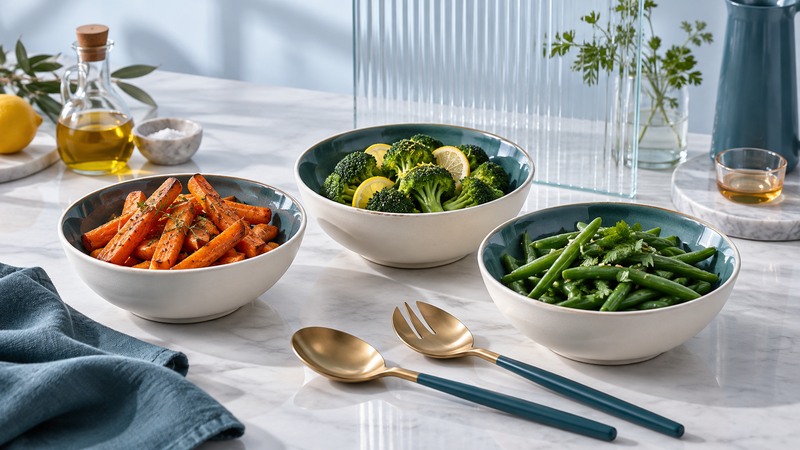
Build a gluten-free side from plain vegetables, a verified oil or fat and clearly identified seasoning. Then protect it during preparation and serving. This guide is for a home cook preparing food for someone who needs to avoid gluten; the guest’s established dietary requirements should guide the final ingredient choices.
Check the additions as carefully as the vegetables
Plain vegetables are naturally gluten-free. Sauces, seasoning mixes, coatings and toppings can introduce wheat, barley, rye or ingredients made from them. Read the full ingredient list and any gluten-free claim, including on broth, soy sauce, mustard and flavored butter. An absence of a wheat allergen statement does not settle the question about barley or rye.
In the United States, an FDA-regulated food bearing a “gluten-free” claim must meet the ingredient requirements and contain less than 20 parts per million gluten. The claim is voluntary; plain produce can be suitable without carrying it. See FDA’s gluten-free labeling explanation. A wheat allergy may require different ingredient decisions from a gluten-free diet.
If a processed ingredient’s status is unclear, choose a confirmed alternative or ask its manufacturer. For example, replace an uncertain bottled sauce with plain olive oil, fresh lemon and a checked single-ingredient herb. Keep packages available so the person eating can review them.
Keep the prepared side separate
- Wash hands and clean the work surface, cutting board, knife, pan and utensils before starting.
- Use clean oil, water and condiments; avoid shared pasta water, fryer oil and a spread containing bread crumbs.
- Prepare and cover the side before handling flour, breading or bread nearby.
- Give it its own serving spoon and a place away from dishes with crumb toppings. A shared spoon can undo careful preparation.
These are practical applications of NIDDK’s advice to check ingredients and prevent cross-contact during storage, preparation and serving. Ingredient choices alone cannot certify a kitchen’s final result.
Choose one of three measured sides
Wash fresh vegetables under running water. For each option, use plain ingredients whose suitability you have checked. Quantities and timing below are adaptations for approximately four side portions; Yenra has not kitchen-tested these adaptations.
Roasted carrot batons
Cut 4 cups prepared carrots, about 450–500 g, into batons no thicker than ½ inch. Toss with 4 teaspoons olive oil, ¼ teaspoon salt and a little black pepper. Spread apart on a rimmed metal tray. Roast at 425°F (about 220°C), turning once, starting checks around 15 minutes and continuing until fork-tender and browned at the edges. Thicker carrots may need longer. This applies Food Hero’s vegetable-roasting proportions and method.
Steamed broccoli with lemon
Use about 450 g broccoli. Peel any tough stalk exterior; slice stalks thinly and separate florets into similar pieces. Bring about 1 inch water to a boil below a steamer basket. Steam stalks, covered, for 2 minutes; add florets and steam roughly 3–5 minutes more, until fork-tender. Drain well, then toss with 2 teaspoons olive oil, 2 teaspoons lemon juice and a small pinch of salt. The staged stem/floret method follows Oregon State’s vegetable cooking guide (PDF).
Green beans with parsley
Trim 1 pound (454 g) fresh green beans. Cover with water in a saucepan, bring to a boil and cook, covered, about 5–7 minutes, until crisp-tender. Drain and toss with 2 teaspoons olive oil, 1 tablespoon chopped parsley and 1 teaspoon lemon juice; season lightly with salt. The bean-cooking step follows Food Hero’s fresh-green-bean preparation note; this version uses a simpler topping.
Adapt the flavor while keeping the process clear
Scroll the table sideways. With a keyboard, focus the table and use the arrow keys.
| Side | Alternative finish | Check |
|---|---|---|
| Carrots | ¼ teaspoon dried thyme before roasting. | Use a checked single-ingredient herb. |
| Broccoli | 1 tablespoon chopped chives after cooking. | Use clean scissors and a separate bowl. |
| Green beans | Fresh lemon zest in place of juice. | Wash the lemon before zesting. |
| Any side | A verified packaged sauce, served separately. | Retain its label and a dedicated spoon. |
Serve promptly and refrigerate leftovers within two hours, using covered shallow containers. Keep at 40°F or below. For later meals, use the cooked-vegetable storage guidance on the sweet-potato guide. Keep gluten-free leftovers labeled and separate so they remain identifiable.