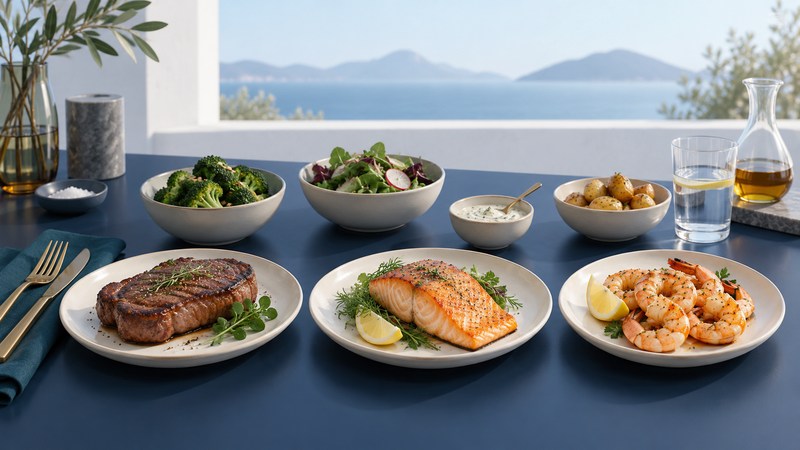
The Black Angus reference in this page’s address describes beef in a 2010 TGI Fridays announcement. It does not identify the Black Angus Steakhouse chain. For a useful steak-versus-seafood comparison today, start with the exact restaurant’s menu and include every side and sauce in the order.
What the 2010 announcement actually said
On February 10, 2010, TGI Fridays announced Black Angus steaks aged at least 21 days, Norwegian salmon and shell-on tiger shrimp among its menu additions. Examples included sirloin-and-salmon and grilled-shrimp-and-salmon combinations, with a choice of two sides. This documents the company’s offering at that time; it does not establish today’s portions, suppliers or availability.
Terms answer different questions. A cut name tells you which portion of beef is offered. A preparation term tells you something about cooking or coating. A grade is a separate quality classification: USDA’s beef standards include Prime, Choice and Select. “Angus” alone is not one of those grades, and “premium” does not specify a portion or a nutrient total.
Make the options comparable
Swipe the table sideways, or focus it and use the arrow keys.
| Part of the meal | Record | Why it matters |
|---|---|---|
| Steak | Exact cut, listed weight and any butter or glaze. | Similar-sounding steak names can describe different cuts or preparations. |
| Salmon | Serving description, sauce and accompaniments. | A fish name alone does not describe the finished plate. |
| Shrimp | Grilled or fried, coating, sauce and shell-on status. | Preparation and edible portion need to be understood. |
| Sides and drink | Exact choices, sizes, dressings and refills. | These complete the meal and can differ between combinations. |
Open TGI Fridays’ official site, choose the restaurant, and follow its Nutrition & Allergen Information link. Match the menu name to the document and read the document’s own date. The chart available for this review is headed February 17, 2026, although its filename contains 2027. A filename is not a reliable substitute for the date printed inside.
Use one controlled comparison
Illustrative ordering exercise: compare a steak plate and a salmon plate with the same two sides and the same drink, if those choices are available locally. Write the included sauces beside each main dish. Check whether the nutrition row includes the sides before adding them. If it excludes sides, add their listed values once; if it includes them, do not add them again.
Next, compare one side substitution while holding the main dish and drink steady. That second comparison answers a different question: what changes when you keep your preferred protein but alter its accompaniments? Do not assign a numerical saving to “sauce on the side” unless you know the amount actually omitted.
If food allergy information is relevant, discuss the exact order with the restaurant. The official chart notes shared preparation areas and possible ingredient substitutions; a menu label cannot establish that cross-contact is absent. For interpreting the beef terminology separately, see USDA grades, Angus branding and advertising claims.