Start WaveRunner VX ownership with the exact model, model year, and matching manual. Those details determine the controls, service instructions, and equipment you should expect. The VX name alone is too broad to select a maintenance procedure or judge a used listing.
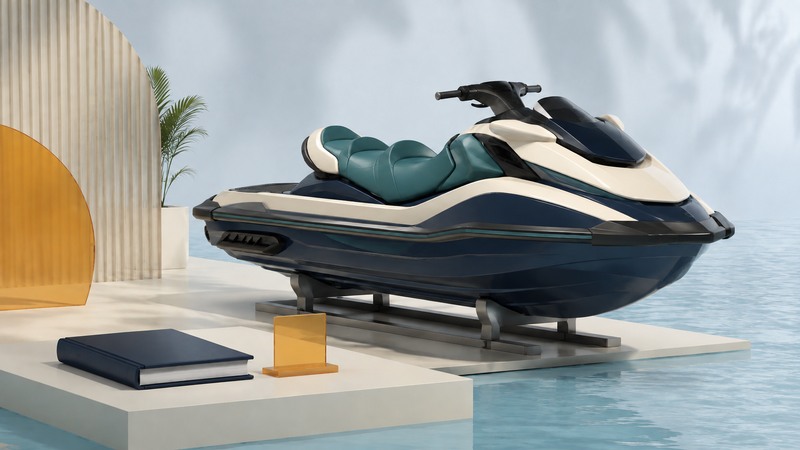
This guide helps a prospective owner build an identification and inspection record and plan routine care with a Yamaha dealer. Yenra’s original coverage concerned the 2005 VX110 Deluxe; the current guide keeps that historical connection while addressing the wider VX family. The illustration is conceptual and does not identify a particular model year.
Make an identification record before collecting specifications
Ask for the complete model designation, model year, hull identification number, primary identification number, and engine identification where available. Match the craft’s identification plates with its documents. Use Yamaha’s official WaveRunner manual finder and confirm the manual’s cover and model list before using its contents.
A useful example of the distinction is Yamaha’s LIT-18626-06-52 manual. Its cover identifies the 2006 VX110 Sport and VX110 Deluxe, even though its copyright and first-edition information refer to 2005. A copyright year and a model year can differ. This document’s identification section records PRI-ID, HIN, and engine serial information.
If a seller describes a craft only as “VX,” resolve the missing year and variant before comparing it with an advertisement for another model. Record whether fitted controls and equipment agree with the matching manual. Ask a Yamaha dealer to investigate discrepancies or unclear identifiers; cosmetic resemblance is weaker evidence than a confirmed model record.
Separate seller statements from inspection evidence
On a narrow screen, focus this table and scroll sideways to read all columns.
| Subject | Evidence to request | Useful next action |
|---|---|---|
| Identity | Model/year, identification plates, and matching documents. | Resolve mismatches with the seller and Yamaha dealer. |
| Use and storage | Hours, water conditions, storage history, and service receipts. | Compare dated records with the applicable maintenance schedule. |
| Hull and propulsion | Damage and repair history; reported vibration, leaks, or alarms. | Have the technician assess condition and the reported symptoms. |
| Controls and equipment | A demonstration of the model’s actual controls and included equipment. | Compare with the matching manual; identify modifications. |
| Trailer and ownership costs | Trailer records, condition, ratings, and immediate work estimates. | Include transport, service, equipment, and storage in the purchase plan. |
Ask what “serviced” means: the date, recorded hours, parts, fluids, and specific work. A low hour reading supplies one piece of history. Storage conditions, corrosion, damage, maintenance records, and equipment condition still need their own evidence.
Arrange an independent inspection by a qualified personal-watercraft technician. Give the technician the listing, records, and unresolved questions before the appointment. Agree on what the inspection includes, whether diagnostic information is available for the model, and what a suitably conducted on-water assessment would add.
A brief run while supported on land cannot establish how the craft performs under load on the water. Any land-running demonstration must use the exact model’s permitted method and limits. Have unexplained alarms, leaks, abnormal behavior, or damage assessed before a purchase decision or further operation.
Build care around the matching manual
Yamaha’s Maintenance Matters guide points owners to their model’s manual for the most specific maintenance intervals. Use it to organize after-use care, periodic service, corrosion control, and storage, then copy the applicable hours and calendar intervals from the manual into a record.
For each recurring task, record the instruction location, required supplies, completion date, and next due point. Include time-based work even when annual running hours are low. Ask the dealer to identify which tasks you can perform with your equipment and which need shop service.
Record fresh-water or salt-water use and storage conditions as context for your service discussion. Use the prescribed cleaning and corrosion-control products and methods for the surfaces and components involved. Avoid treating a general maintenance checklist as permission to improvise hose connections or run an engine dry.
Prepare the operator, equipment, and local plan together
Read the operating and safety sections before launching. Identify the actual throttle, stopping, reverse, and steering behavior of your model; learn the specified procedures in an appropriate setting with qualified instruction where needed. Confirm the passenger and load limits from the craft’s labels and manual.
Use Yamaha’s boating resources and the responsible boating authority for the intended location to check registration, operator education, age restrictions, required equipment, and local operating areas. For U.S. federal requirements, the Coast Guard’s engine cut-off switch FAQ explains the scope of its use rule and how the link connects to the operator. Confirm state requirements too.
Choose life jackets approved and labeled for the intended activity, and follow the craft’s clothing and protective-equipment instructions. Towing a skier or other person needs its own equipment, capacity, observer, and local-rule checks. An old promotional towing claim leaves those questions unresolved.
Before a trip, record the launch and recovery locations, conditions, fuel plan, communication method, and a shore contact. Check the trailer’s identity, ratings, condition, and the manufacturer’s transport instructions as part of ownership, especially if it comes with the purchase.
Finish with a documented next action
Use the WaveRunner VX identification and ownership record to combine the listing, identifiers, manual edition, service evidence, inspection findings, and next due work. Mark a missing fact “unconfirmed,” then assign a next action: request a receipt, identify a part, obtain a dealer assessment, or price the required repair.
Compare the purchase with the known immediate costs of the craft, trailer, equipment, service, and storage. Keep unresolved faults visible instead of treating them as zero-cost work. A useful ownership plan tells you what is ready, what is due, and what must be resolved before going afloat.
Related resources
Use the support-vehicle loading guide for the distinction between vehicle ratings and actual travel weights, and explore boating resources or the motorsports library.
Researched and updated September 7, 2026. Model, market, equipment, and rule details should be rechecked against the linked documentation.