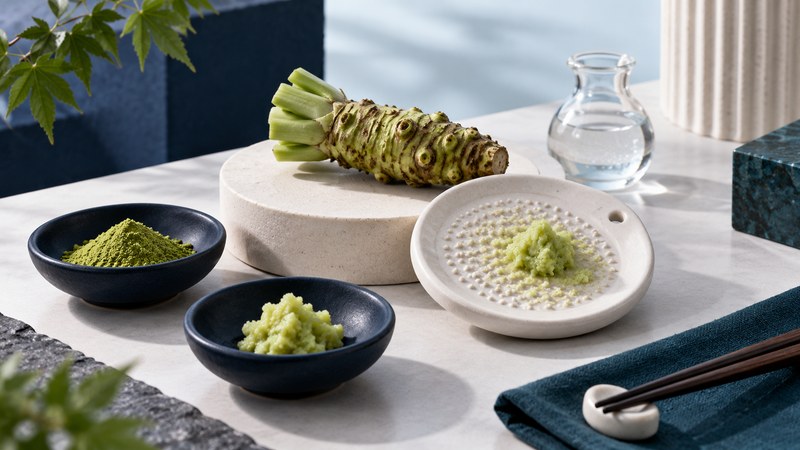
Start with the ingredient list and preparation directions. A fresh wasabi rhizome needs fine grating, a powder needs its specified liquid, and a ready-made paste can be portioned directly. Products sold under the wasabi name can contain very different ingredients, so color and package shape tell only part of the story.
Read the product, including its market
As checked in October 2026, S&B’s 43 g prepared-wasabi page lists horseradish along with wasabi and other ingredients in its US formulation. Its foodservice powder comparison lists wasabi in US Gold powder, while the US Silver formulation lists mustard and horseradish without wasabi. The European formulations differ again.
On a narrow screen, scroll the table sideways. Keyboard users can focus it and use the arrow keys.
| Form | What to inspect | What you need |
|---|---|---|
| Fresh rhizome | Supplier identity, condition and storage guidance. | A very fine grater and preparation time. |
| Powder | Full ingredients, liquid ratio and resting instructions. | Measuring spoons, water and a small bowl. |
| Prepared paste | Ingredients, opening instructions and use-by information. | A clean utensil and a small serving dish. |
These are label examples, not a ranking of the products. Buy the formulation that fits your recipe and preferences, then check the actual package in your country. If an ingredient matters to you, including for an allergy, read the complete current label rather than relying on a photograph or the word “wasabi.”
Grate fresh wasabi close to serving
The Wasabi Company’s preparation guide identifies the rhizome as a swollen stem and recommends a fine paste rather than coarse shreds.
- Rinse the rhizome. Follow the supplier’s trimming directions, removing leaf stems and any dark surface patches as needed.
- Set a suitable fine wasabi grater securely on the work surface. Grate with small circular movements, keeping fingertips clear.
- Gather enough paste for the immediate serving. The grower suggests a short rest of up to five minutes for flavor development.
- Serve promptly and grate more as needed; the aroma changes quickly after grating.
Keep the unused rhizome refrigerated according to its supplier’s packaging directions. Preparing a small serving at a time gives you a more useful result than grating the whole purchase in advance.
Prepare powder according to its instructions
S&B’s 30 g powder directions say to mix with water and leave for one minute. A complete dish may specify a different sequence: its powder dipping-sauce recipe makes a paste first and rests it before incorporating it into the other ingredients. Use one complete set of directions for the product and dish you are making.
- Measure powder into a dry bowl with a dry spoon.
- Add the stated amount of water and stir thoroughly, scraping the bowl to eliminate dry pockets.
- Allow the specified rest before judging the prepared paste.
- Measure the hydrated paste if the next step requests paste. Keep dry-powder and prepared-paste measurements distinct.
If the mixture is lumpy, continue mixing before changing its water content. If you overshoot the specified liquid, starting a small fresh portion may be easier than guessing how much powder will restore the intended proportion.
Season a sample before the whole bowl
Serving paste separately lets each diner adjust a bite. When mixing it through a sauce, make one measured addition at a time and keep some plain base available. Write down the brand, form and amount; “one spoon of wasabi” is difficult to reproduce after changing products.
Recap prepared paste promptly and follow its refrigeration and after-opening instructions. Keep powder dry and closed. A mixed dairy or fish dip has its own storage needs; a dry-powder label does not determine how long the finished dish will keep.
The mustard guide explains another ingredient whose dry and prepared forms behave differently.
Explore all seasoning and ingredient guides · Food, cooking and meal planning