
Walnuts are one of the most distinctive everyday nuts: rich, slightly bitter, buttery, and crisp when fresh. They are also nutritionally unusual because they provide meaningful amounts of polyunsaturated fat, including alpha-linolenic acid, the plant-based omega-3 fat often abbreviated as ALA.
A one-ounce serving, about a small handful or 14 walnut halves, provides roughly 190 calories, 18 grams of fat, 4 grams of protein, 2 grams of fiber, and useful amounts of copper, manganese, magnesium, phosphorus, and other minerals. That combination makes walnuts nutrient-dense, but also energy-dense, so the benefits are easiest to capture when walnuts replace less nutritious snacks rather than simply being added on top of everything else.

Culinary Uses
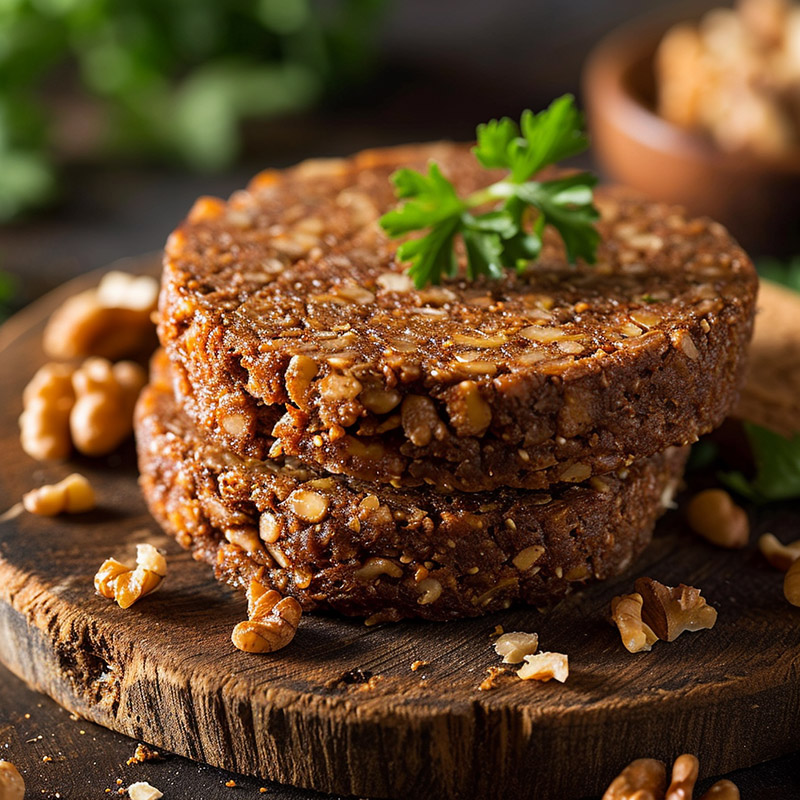
Walnuts work well because they bring both texture and flavor. Toasted walnuts can make oatmeal, yogurt, salads, roasted vegetables, grain bowls, pasta, and baked goods feel more substantial. Finely chopped walnuts can also add body to sauces, stuffings, veggie burgers, lentil dishes, and plant-forward taco fillings.
Walnut oil is more delicate than the whole nut. It is best used as a finishing oil for salad dressings, cooked vegetables, beans, or grains rather than as a high-heat frying oil. Because walnut fats are prone to oxidation, whole walnuts and walnut oil both taste best when kept cool, sealed, and protected from light.

Omega-3 Fats
Walnuts stand out from most tree nuts because they are especially rich in ALA. The body can convert a small portion of ALA into the longer-chain omega-3 fats EPA and DHA, though that conversion is limited. Even so, ALA is an essential fat, meaning it has to come from food, and walnuts are one of the easiest ways to add it to a normal diet.
The fat profile of walnuts is mostly unsaturated, with a large share coming from polyunsaturated fats. That matters because replacing saturated-fat-heavy foods with unsaturated-fat-rich foods is one of the more consistent dietary patterns associated with better cardiovascular risk markers.

Heart Health
Walnuts have been studied most often for heart and metabolic health. Randomized trials and systematic reviews generally show that eating nuts, including walnuts, can improve blood lipid measures such as total cholesterol, LDL cholesterol, and apolipoprotein B, especially when nuts are part of an otherwise heart-conscious eating pattern.
The 2004 Penn State study originally highlighted on this page helped draw attention to walnuts, ALA, inflammation, and cardiovascular risk markers such as C-reactive protein and adhesion molecules. Newer research has broadened that picture: walnuts appear most useful as one part of a diet built around vegetables, fruits, beans, whole grains, fish or other lean proteins, and unsaturated fats.
Plant-Based Meals
For vegetarian and vegan cooking, walnuts can do more than sit on top of a salad. Their fat, protein, and texture help make plant-based meals feel satisfying. They pair especially well with mushrooms, beans, lentils, herbs, garlic, lemon, apples, pears, squash, greens, oats, and dark chocolate.
Walnuts are not a complete substitute for all the nutrients in fish, meat, eggs, or dairy, but they can help fill out meals with healthy fats and minerals. In a plant-based diet, they are especially useful alongside legumes, whole grains, seeds, leafy greens, and fortified foods.
Satiety And Snacking
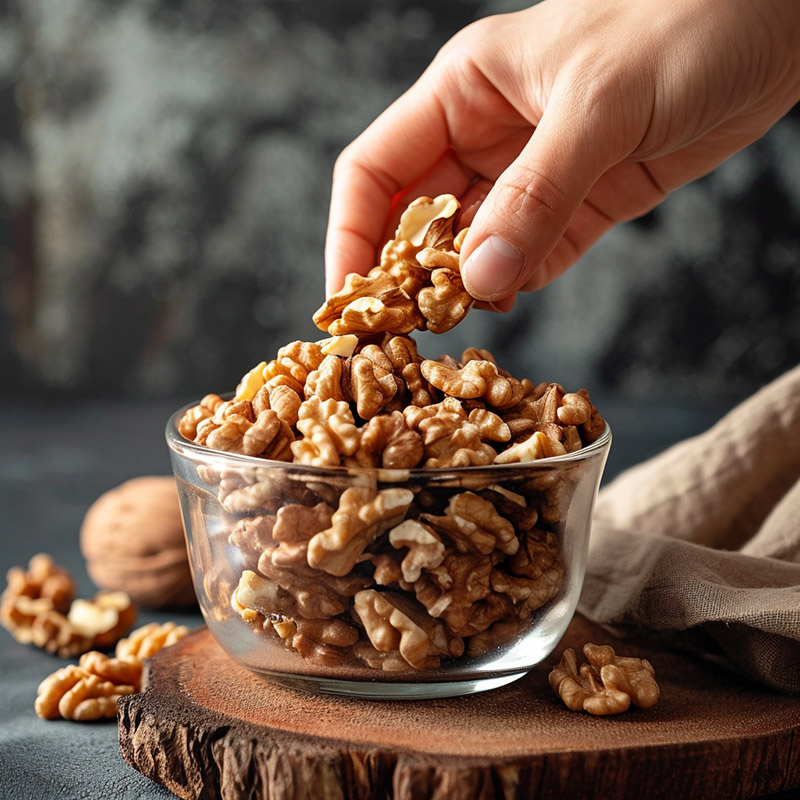
Walnuts can be a smart snack because they combine fat, fiber, protein, and crunch. That mix tends to slow eating and improve fullness compared with many refined snack foods. A small handful with fruit, yogurt, oatmeal, or whole-grain toast can make a simple snack feel more complete.
Portion size still matters. Walnuts are healthy, but they are not low-calorie. People watching total energy intake often do best measuring a one-ounce portion at first, then learning what that looks like in a bowl or in the palm of the hand.

Brain, Gut, And Healthy Aging
Walnuts are often promoted for brain health because they contain ALA, polyphenols, vitamin E compounds, and minerals involved in normal nerve and metabolic function. Research on cognition is interesting but not settled enough to describe walnuts as a treatment for memory problems, depression, or neurological disease.
Gut-health research is also developing. Human studies suggest walnuts can influence the gut microbiome and microbial metabolites, which may be one reason they show favorable effects on inflammation and metabolic markers. The practical takeaway is modest but useful: walnuts are a whole food that brings fiber, unsaturated fats, and polyphenols together in one package.
Here are some of the key nutritional benefits of walnuts:
- Healthy fats - Walnuts contain mostly unsaturated fat, including polyunsaturated fats and the plant-based omega-3 fat ALA.
- Protein and fiber - A one-ounce serving provides about 4 grams of protein and 2 grams of fiber, enough to make snacks and meals more satisfying.
- Minerals - Walnuts provide copper, manganese, magnesium, phosphorus, zinc, and iron in varying amounts.
- Polyphenols - Walnuts contain plant compounds that are being studied for antioxidant and anti-inflammatory effects.
- Heart-health potential - Regular walnut intake is associated with improved cholesterol and other cardiovascular risk markers when it fits into an overall healthy diet.
Practical Tips
 Choose fresh walnuts that smell clean and nutty, not paint-like, bitter, or stale. Store shelled walnuts in the refrigerator or freezer if you will not use them quickly. Toasting improves flavor, but watch them closely because their high fat content makes them brown fast.
An easy routine is to use walnuts several times a week in small portions: on oatmeal, in yogurt, over salads, in homemade trail mix, with roasted vegetables, folded into whole-grain muffins, or chopped into savory sauces. Unsalted walnuts are usually the most flexible choice.
Cautions
Walnuts are a tree nut and can cause serious allergic reactions in people with tree-nut allergy. They can also be a choking hazard for young children unless finely chopped or prepared in an age-appropriate form. Because they are calorie-dense, people using walnuts for heart health or weight management should think in portions rather than unlimited handfuls.
Final note: Walnuts deliver healthy fats, fiber, minerals, and plant compounds in a flavorful, versatile form. They are not a miracle food, but they are an excellent upgrade for many snacks and meals. To learn more about walnuts, visit the site of the Walnut Marketing Board.