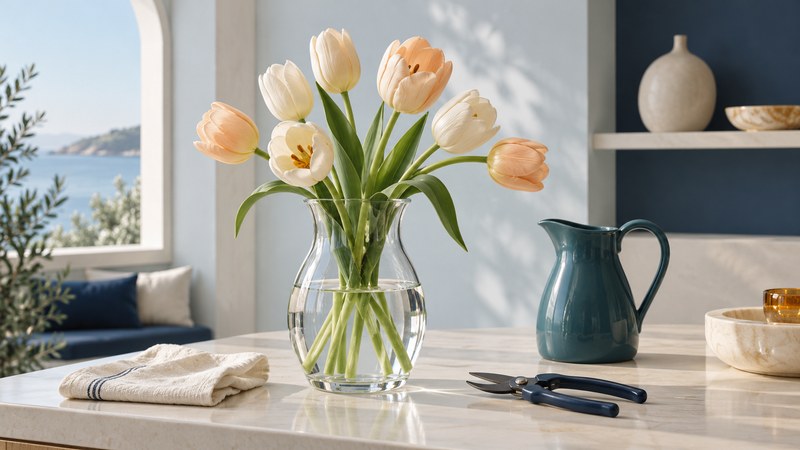
For a gift that opens over the next few days, look for tulips with closed buds already showing color, sound stems and fresh-looking leaves. Once home, give them a clean vase, fresh water and space to change shape. Cut tulips keep growing, so an arrangement can look different tomorrow.
Choose for the person and the occasion
Start with a color they like and a size they can comfortably display. A single-color bunch is easy to arrange; two compatible colors can work just as well. A personal note can say what the flowers mean to you without relying on a supposed universal meaning for a color.
- For a gift that needs time to open: look for buds showing color while still closed. Iowa State Extension's tulip guide describes this harvest stage and explains how cut stems continue to elongate.
- For an event today: more open flowers may suit the display. Inspect their condition and ask when the bunch arrived instead of assuming closed buds will open on schedule.
- Inspect the whole bunch: look at stems and leaves as well as petals. Choose stems without obvious crush damage and pass over bunches with decay or extensive bruising.
- Plan the trip home: support the bunch, protect it from temperature extremes and arrange prompt access to water. Ask the seller to package it for the actual journey.
Cut flowers or a potted plant?
Cut tulips suit someone who wants a bouquet and a straightforward vase routine. Potted tulips include living bulbs and need a suitable place, watering and a decision about what to do after flowering. Ask whether the recipient wants that ongoing project. Future flowering depends on the bulb, treatment and growing conditions; a potted gift should not be sold as a guaranteed annual display.
Check the household: ASPCA lists tulips as toxic to cats and dogs, with the highest toxin concentration in the bulb. Choose a different, verified pet-suitable gift where animals may reach the flowers. If ingestion is suspected, contact a veterinarian promptly.
Set up a clean, supportive vase
Gather a clean vase, clean sharp snips, water and an appropriate commercial floral preservative if supplied. Choose a vase with enough height to support the stems and enough room to arrange them without crushing them.
- Wash and rinse the vase. Start with a clean container so the bouquet is not placed into old residue.
- Remove leaves that would sit below the waterline. Keep healthy foliage above it.
- Make a fresh stem cut. Use clean sharp tools and return the cut ends promptly to water. Trim to suit the vase rather than forcing long stems into a short container.
- Prepare water and preservative as directed. Measure the water volume for the packet's dilution. A concentrated mixture is not an improvement.
- Arrange with room to move. Support stems gently and keep the display in a cool place away from direct sun and heat.
These cleaning and maintenance steps follow Iowa State's cut-flower care guidance. Check water daily; refresh it regularly and whenever it becomes cloudy, cleaning the vase and recutting stems as needed.
Should tulips receive flower food?
Use a commercial preservative suitable for the flowers and follow its directions. Both the Iowa State tulip guide and University of Maryland's cut-tulip production guidance describe placing tulips in water with floral preservative. That supports using an appropriate product; it does not establish that every formula works equally well for every cultivar. Ask the florist about any specific instructions for a supplied packet. If you have no product, begin with clean water and careful water maintenance while checking suitable options.
Keep the routine simple. Avoid improvised mixtures of household chemicals, sugar or other additives; use a labeled floral product as directed.
Read changes in the arrangement
Tulips can lengthen after cutting. Maryland Extension also explains that stems bent while wilting can remain bent after rehydration. A gently curving, firm stem and a limp or damaged stem call for different responses.
On a small screen, swipe the table sideways or focus it and use the arrow keys.
| What you see | What to check | What to do |
|---|---|---|
| Firm stems rising above the arrangement | Continued growth has changed the proportions. | Lift out individual stems, recut to suit the display and return them to water. |
| Limp stems and a low water level | Check whether the cut ends were left above the water and whether the room is warm. | Refresh the water, support stems gently and move the vase to a cooler position. Rehydration may not remove an established bend. |
| Cloudy water or submerged leaves | Look for leaves or deteriorating material below the waterline. | Clean the vase, remove affected material, recut stems as needed and replace the water/product mixture. |
| Crushed stems, decay or falling petals | Check for physical damage and the natural end of a bloom. | Remove deteriorating flowers and rearrange the remaining sound stems. Care cannot reverse damage. |
Use the bouquet's condition as your guide instead of promising a fixed vase life. Cultivar, age at purchase, transport, temperature and handling all affect what you receive.
A care card to share with the gift
Today: clean vase; remove submerged leaves; fresh stem cuts; water and suitable flower food mixed to its directions.
Each day: check water, remove deteriorating material and inspect the stems. Keep away from heat and direct sun.
As the display changes: refresh water and clean the vase; recut and rearrange stems as needed. Allow natural curves.
Household check: keep tulips away from pets, or choose a different gift if access cannot be prevented.
Related reading
For flower sourcing and label questions, see Buying Organic Roses. Pair the bouquet with a meal to share, or explore the Love guides.