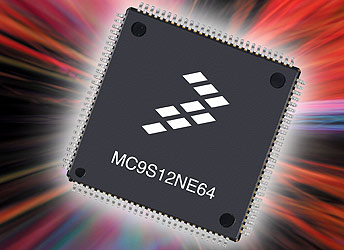
Single-chip Ethernet describes embedded devices that integrate enough Ethernet hardware to connect directly to a network with very few external components. In 2004, that meant putting a microcontroller, Ethernet media access controller, physical-layer transceiver, memory, and software support into one affordable package. In 2026, the idea has expanded into industrial controllers, building systems, appliances, vehicles, sensors, cameras, robotics, energy systems, and edge devices.
The value is not only lower component count. A tightly integrated Ethernet microcontroller can reduce board area, simplify layout, lower bill-of-material cost, improve reliability, and make network connectivity realistic for products that once used serial links, proprietary fieldbuses, or no network connection at all.
What Is Integrated
An embedded Ethernet design may integrate several layers of the connection. Some microcontrollers include only an Ethernet MAC and require an external PHY. Others integrate both MAC and PHY. Some also include hardware checksum offload, DMA, timestamping, cryptographic accelerators, secure boot, flash, SRAM, analog peripherals, motor-control blocks, or industrial protocol support.
- MAC: the media access control block that handles Ethernet framing and link-layer behavior.
- PHY: the physical-layer transceiver that drives the copper or fiber interface.
- Magnetics and connector: conventional twisted-pair Ethernet usually still needs isolation magnetics and an RJ-45 or other connector.
- TCP/IP stack: embedded software that provides IP, TCP, UDP, DHCP, DNS, HTTP, MQTT, SNMP, TLS, and application protocols.
- Security functions: secure boot, firmware signing, hardware keys, TLS acceleration, random-number generation, and lifecycle controls.
Why Embedded Ethernet Won
Ethernet won in embedded systems for the same reasons it won in offices and data centers: interoperability, a large component ecosystem, standard tools, long cable reach, scalable speed, and easy connection to IP networks. A device with Ethernet can be managed by ordinary network infrastructure, monitored by IT tools, and connected to applications without a special gateway in every case.
Typical applications include industrial controls, HVAC systems, irrigation, security panels, access control, point-of-sale terminals, vending machines, building automation, energy management, medical devices, lab instruments, solar inverters, EV chargers, and factory sensors. Many of those devices do not need gigabit speeds; they need predictable connectivity, long lifecycle support, secure updates, and low power, especially in harsh-environment networks.
Industrial Ethernet
Industrial Ethernet brought Ethernet into environments that previously depended on fieldbus systems. Protocols such as EtherNet/IP, PROFINET, Modbus TCP, EtherCAT, POWERLINK, and OPC UA use Ethernet or IP networking to connect controllers, drives, sensors, actuators, HMIs, and supervisory systems. Some are ordinary TCP/IP applications. Others require tight timing, special frame handling, or dedicated controller support.
Time-Sensitive Networking has also become important for deterministic industrial Ethernet. TSN is not one protocol; it is a family of IEEE 802.1 features for time synchronization, scheduling, traffic shaping, redundancy, and bounded latency. For microcontroller designers, that can mean hardware timestamping, IEEE 1588/PTP support, queue scheduling, and careful interrupt and DMA design.
Single-Pair Ethernet
One of the biggest developments since 2004 is single-pair Ethernet. Instead of four-pair or two-pair cabling with an RJ-45 connector, single-pair Ethernet uses one balanced pair. IEEE 802.3cg standardized 10 Mb/s single-pair Ethernet variants including 10BASE-T1L, which can reach up to 1000 meters, and 10BASE-T1S for short multidrop or point-to-point links. This makes Ethernet practical for field instruments, building automation, process plants, and industrial sensors where old fieldbus and 4-20 mA loops have long dominated.
Power over Data Lines, or PoDL, lets certain single-pair Ethernet systems deliver power and data over the same pair. That matters for low-power sensors and actuators because it gives Ethernet a path into places where separate power wiring would make the device too expensive or inconvenient.
Automotive Ethernet
Automotive Ethernet is another major branch. Standards such as 100BASE-T1 and 1000BASE-T1 support Ethernet over a single twisted pair for vehicles. Cars now include cameras, radar, lidar, infotainment, diagnostics, gateways, zonal controllers, and software-defined vehicle platforms that need higher bandwidth and more standardized networking than older in-vehicle buses alone could provide.
Automotive Ethernet is not just office Ethernet in a car. It has different cabling, electromagnetic compatibility demands, temperature requirements, safety goals, and validation processes. Still, it shows how deeply Ethernet has moved into embedded systems.
The 2004 Freescale MC9S12NE64 Story
In 2004, Freescale Semiconductor introduced the industry's first complete, single-chip 10/100 Mbps Ethernet device. The 16-bit MC9S12NE64 microcontroller replaced more complex multi-chip Ethernet offerings by integrating Ethernet connectivity into a low-pin-count embedded controller.
"Designers who choose the MC9S12NE64 can expect to reap the benefits of a single-chip Fast Ethernet (100Mbps) solution, increasing reliability and reducing the size of the Ethernet control footprint within a system," said Daniel Hoste, vice president and general manager of Freescale's 8/16-bit Products Division. "These benefits help make Ethernet connectivity an easy option for new applications and low-cost systems where it may not have been practical in the past."
"Freescale has propelled the industry forward significantly with the introduction of this device," said analyst Fred Zieber of Pathfinder Research. "The combination of a single chip with a rich peripheral set and Fast Ethernet connectivity -- all at a new price point -- can potentially change the rules of game."
Ethernet was already the leading local-area networking technology. The MC9S12NE64 helped move it into embedded devices that performed monitoring and control functions, such as gathering data from sensors or controlling motors, valves, switches, and equipment. With Ethernet, those devices could be controlled remotely or publish data across a network.
Ethernet's infrastructure, performance, interoperability, scalability, and ease of deployment made it attractive in industrial settings. Typical embedded Ethernet applications included industrial controls, security systems, building automation, lighting controls, power supply monitors, vending machines, and point-of-sale terminals.
The MC9S12NE64 was based on Freescale's HCS12 CPU platform. It offered the core pieces needed for Ethernet connectivity, including flash memory, RAM, a communications stack, an Ethernet MAC, and a PHY transceiver in one package.
"The NE64's on-chip Ethernet was a key factor for EBTRON," said Len Damiano, vice president of sales and marketing for EBTRON, a manufacturer of sensors for HVAC and irrigation control. "Our Web-based, demand-controlled irrigation system uses a Web-enabled device to remotely program and monitor water valves or pumps. The MC9S12NE64 reads the sensors and calculates soil moisture and temperature, then determines the control action required based on this data and programmed input. In short, the system is smart enough to prevent watering soil that doesn't need it."
What Changed Since 2004
Freescale itself became part of NXP after NXP completed its merger with Freescale in 2015. NXP's current MC9S12NE64 product page marks the part as discontinued, which is normal for a device from that era. The broader idea, however, became ordinary. Ethernet MACs and PHYs are now available across many microcontroller, processor, FPGA, and system-on-chip families.
The embedded Ethernet problem also became more complicated. A 2004 design might have exposed a simple web page on a local network. A 2026 design may need secure boot, signed firmware updates, TLS, certificate provisioning, IPv6, MQTT, cloud onboarding, vulnerability management, SBOM tracking, device identity, and a patch management plan for products that remain installed for 10 or 20 years.
Design Checklist
- Choose the Ethernet type first: 10/100BASE-TX, 1000BASE-T, single-pair Ethernet, automotive Ethernet, fiber, or an industrial variant.
- Decide whether the MCU needs an integrated PHY or whether an external PHY is better for isolation, temperature, cable reach, diagnostics, or lifecycle flexibility.
- Plan magnetics, ESD protection, surge protection, common-mode noise, connector choice, cable shield strategy, and PCB layout early.
- Use hardware timestamping if the application needs PTP, TSN, synchronized sampling, or deterministic control.
- Budget memory for the network stack. TLS, IPv6, web interfaces, OTA updates, and logging can consume far more flash and RAM than simple UDP control.
- Build security into manufacturing: unique device identity, protected keys, signed firmware, debug lockout, secure update, and recovery behavior.
- Check part lifecycle and second sources. Embedded networked products often remain in the field longer than consumer electronics.
Single-chip Ethernet mattered because it lowered the threshold for making ordinary devices network-aware. The modern lesson is similar but stricter: connectivity is easy to add, but reliable, secure, maintainable connectivity has to be designed from the first schematic and the first line of firmware.
References
- NXP: MC9S12NE64 16-bit Ethernet flash microcontrollers
- NXP and Freescale announce completion of merger
- IEEE P802.3cg: 10 Mb/s single-pair Ethernet Task Force
- IEEE P802.3bw: 100BASE-T1 Task Force
- IEEE P802.3bp: 1000BASE-T1 Task Force
- IEEE P802.3bu: Power over Data Lines Task Force
- Ethernet Alliance: single-pair Ethernet and operational technology networks
- IEEE 802.1 Time-Sensitive Networking Task Group