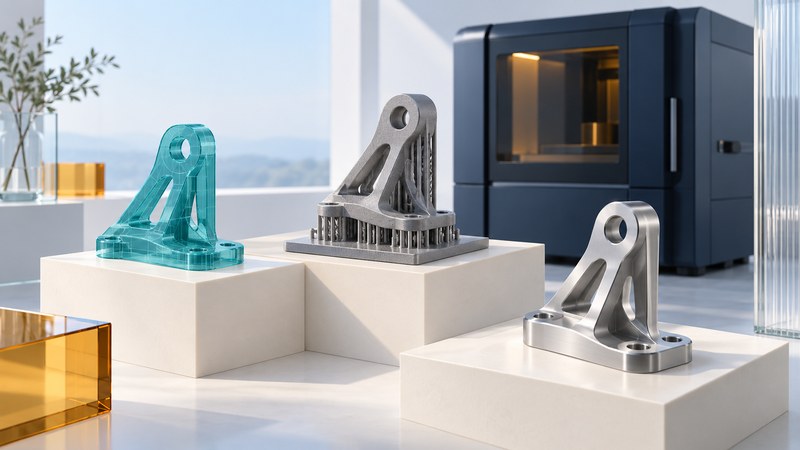
A CAD file is the beginning of a metal additive manufacturing order. A useful quotation also defines the alloy and condition, build approach, finishing route, inspection requirements, and the evidence needed to accept the finished part.
This guide helps product engineers order a prototype or assess an end-use component. Start with the controlled design revision, intended use, loads and environment relevant to the part, critical features, quantity, and required documentation. Regulated or safety-critical applications need the qualification route required by their responsible engineering authority.
Choose a process around the part
Powder-bed fusion builds a component by selectively fusing layers of powder. NIST's process overview covers laser and electron-beam approaches. Electron-beam powder-bed fusion is one route to metal parts, including titanium components; its process conditions, material options, and finishing needs should be reviewed with the actual supplier.
Describe why additive manufacturing is being considered: internal geometry, integration of several components, low-volume tooling, a rapid design iteration, or another concrete advantage. Ask for a comparison with machining, casting, or a fabricated assembly when those could meet the same need. Evaluate the complete finished route, including inspection and rework.
On a narrow screen, scroll the table horizontally. Keyboard users can focus it and use the arrow keys.
| Package element | Specify | Ask the supplier to return |
|---|---|---|
| Controlled geometry | Revision, native/exchange model, drawing, units, datums and critical features. | Geometry questions, proposed modifications and approval points. |
| Material and process | Alloy, required condition/properties and intended service. | Proposed process, machine, feedstock controls and qualification evidence. |
| Finishing | Functional surfaces, tolerances, texture, cleanliness and interfaces. | Orientation, supports, removal access, machining allowance and route. |
| Acceptance | Inspection plan, required records, delivery condition and quantity. | Methods, sampling, traceability, exclusions and finished-part price. |
Review orientation and access before freezing geometry
Ask the supplier to show the proposed orientation, supports, and surfaces that need subsequent finishing. Discuss the effects on access, build stability, surface quality, and inspection. Features that look equivalent in CAD can have different manufacturing consequences depending on their orientation and support strategy.
Internal channels need a credible powder-removal and verification plan. Agree how retained material will be detected and what evidence establishes cleanliness for the intended use. A closed cavity that cannot be cleaned or inspected may require a design change. Powder handling belongs within the supplier's documented equipment and hazard controls.
Provide stock where later machining needs it, and establish datums that remain available through the route. Identify the surfaces that may stay as-built and those that must be machined, polished, or otherwise finished. Keep any supplier design change linked to an approved revision.
Include the steps after printing
Map removal from the build, powder recovery, support removal, thermal processing where required, machining, cleaning, and inspection. The sequence matters: a subsequent operation can change dimensions, residual stress, surface condition, or material properties. NIST's metal-additive measurement program treats feedstock, machine/process behavior, and final-part inspection as connected qualification needs.
A NIST study of electron-beam Ti-6Al-4V found a surface microstructural effect from powder-removal blasting followed by hot isostatic pressing in the studied material and conditions. It is a specific example of why post-processing belongs in the process definition. It does not establish a universal treatment recipe or performance improvement.
Compare delivered parts and retained evidence
Ask quotations to separate build, support removal, thermal processing, machining, inspection, and documentation. State who owns subcontracted operations and who resolves a failed inspection. Compare lead time to delivery of accepted parts, including the time for qualification and review.
For the first article, reconcile the delivered part identity with material/build records, approved revisions, post-processing records, and inspection results. Test coupons may support a defined qualification plan, but their relevance to the actual part must be established. Record any agreed deviation before accepting it.
Keep the approved route with the part definition and reassess changes in supplier, machine, feedstock, orientation, thermal treatment, or inspection. For broader process choices, use the 3D manufacturing overview; for deciding what a prototype should prove, use rapid prototyping.
Use the working record
Download the editable metal additive quote record. Save a copy, complete the actual requirements and evidence fields, and review open issues with the responsible owner. The plain-text record includes instructions, units where needed, the fictional example, and source references.